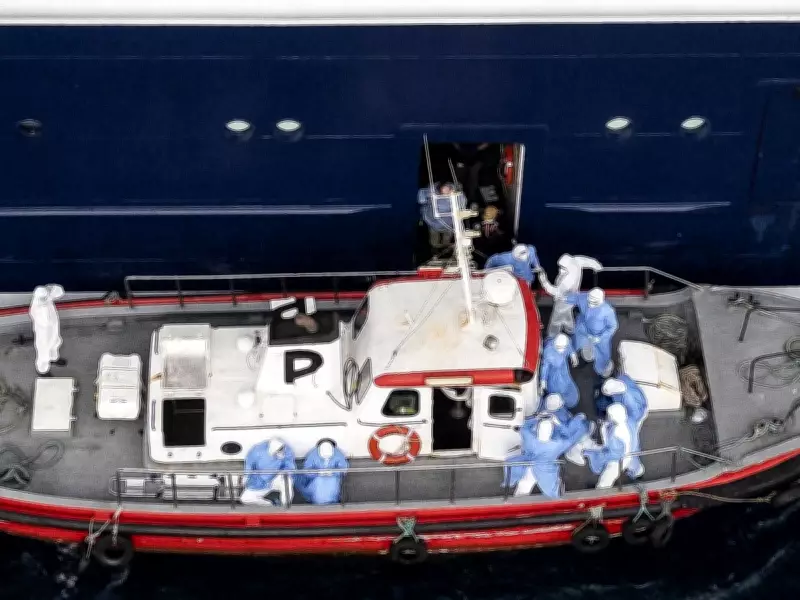
A former passenger on a cruise ship affected by a deadly hantavirus outbreak is receiving treatment at a hospital in Zurich after testing positive for the disease, Swiss authorities confirmed on Wednesday.
Swiss Nationals Return Home
The man and his wife, both Swiss nationals, returned to Switzerland after disembarking from the MV Hondius at the Atlantic Ocean island of Saint Helena, according to the Swiss health ministry. The ministry stated that one person has tested positive for hantavirus in Switzerland and is being treated at the University Hospital Zurich (USZ), which is prepared to handle such cases. Officials emphasized that there is currently no risk to the Swiss public.
Details of the Outbreak
The MV Hondius, a Dutch-flagged vessel, departed from Ushuaia, Argentina, on April 1 and has been anchored off Cape Verde since Sunday. The ship visited Saint Helena from April 22 to 24, and a weekly scheduled flight left for Johannesburg on April 25. One passenger on that flight died in South Africa, while a British patient from the ship is hospitalized. Both tested positive for hantavirus.

The Swiss couple returned home at the end of April after traveling on the cruise ship where several hantavirus cases occurred. The patient's wife has not shown symptoms but is self-isolating as a precaution. The World Health Organization (WHO) reported that there are now three confirmed and five suspected hantavirus cases linked to the ship.
Patient's Symptoms and Diagnosis
The Swiss man responded to an email from the ship's operator, Oceanwide Expeditions, informing passengers of the health event, and presented himself at a hospital in Zurich. Samples were sent to Geneva University Hospital, the Swiss reference center for emerging viral infections. Manuel Schibler, head of the virology laboratory, said the patient presented with mild respiratory symptoms and tested positive for the Andes strain of hantavirus. This strain, normally found in rodents in South America, is the only hantavirus known to be transmitted between humans.
Schibler explained that the Andes virus can cause a pulmonary syndrome with respiratory symptoms, potentially leading to respiratory distress and death in severe cases. The case fatality rate is estimated at 30 to 50 percent, though this may be inflated due to underdiagnosis of mild cases. Symptoms typically appear one to three weeks after exposure, and deterioration can be rapid in severe cases.
Global Response
The WHO has been involved in the response, with epidemic and pandemic preparedness chief Maria Van Kerkhove noting that the specific hantavirus species on board has yet to be confirmed. The situation remains under investigation as health authorities monitor for additional cases.