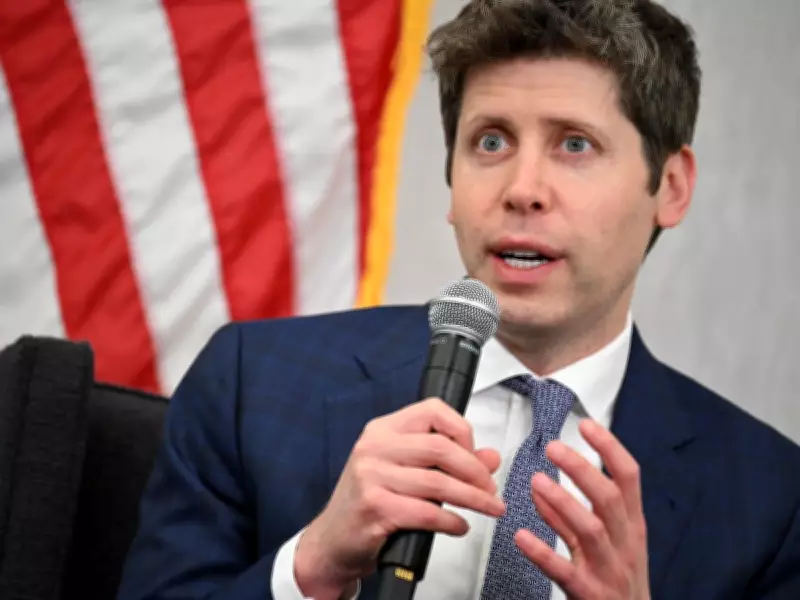
Artificial intelligence proponents are reversing their dire predictions about job losses, acknowledging that the anticipated wave of unemployment has not materialized. OpenAI CEO Sam Altman and Anthropic CEO Dario Amodei have both softened their earlier warnings, suggesting that AI's impact on the workforce will be less severe than initially feared.
Altman's Change of Heart
Speaking at a conference in Sydney, Altman expressed relief that his previous predictions of widespread job elimination have not come true. "I don't think we're going to have the kind of jobs apocalypse that some of the companies in our space advocate or talk about," he said during a virtual interview with Matt Comyn, CEO of Commonwealth Bank of Australia. Altman admitted his intuitions were off, particularly regarding entry-level white-collar jobs, which have not been eliminated as expected. "I'm delighted to be wrong about this," he added.
Amodei's New Perspective
Similarly, Dario Amodei has revised his earlier claim that AI would eliminate half of white-collar jobs. Instead, he now views AI as a productivity booster. "If you automate 90 per cent of the job, then everyone does the 10 per cent of the job. And the 10 per cent kind of expands to be 100 per cent of what people do and kind of 10 times their productivity," Amodei explained earlier this month.

Timing and Public Sentiment
The shift in tone coincides with plans for OpenAI and Anthropic to go public, with valuations exceeding $1 trillion. The companies need broader public support, especially as sentiment against AI has grown. University commencement speakers promoting AI have faced backlash from students, including boos and eye rolls. This resistance may have influenced the CEOs' reassessments.
Lack of Job Disruption
Despite advances in AI models, significant job losses have not occurred. Joshua Gans, a professor at the University of Toronto, noted, "There haven't been any dire consequences for jobs over the last year, despite AI models getting to levels that their CEOs thought might actually have an impact." He suggested that the earlier predictions were based on technology that is now available but has not caused the expected disruption.
Research Supports Worker Adaptability
A study by the U.S. National Bureau of Economic Research found that workers in jobs most exposed to AI are often well-positioned to transition to new roles. The study analyzed 356 occupations and found that among 37 million workers with high AI exposure, 26.5 million could adapt after job loss. Higher-paid workers with post-secondary education, such as managers and computer specialists, were most adaptable. However, the study highlighted uneven disruption: 6.1 million workers in vulnerable roles, concentrated in clerical and administrative positions, are disproportionately female (81.3 percent compared to 48 percent in other occupations).