Brainwave-Reading App Transforms Lives of Children with Disabilities
For ten-year-old Claire Sonnenberg from Okotoks, a groundbreaking mobile application that interprets her brainwaves to control devices and facilitate communication has fundamentally altered her daily existence. This innovative technology, now available for home use worldwide, empowers children with severe physical limitations to engage with their environment in unprecedented ways.
From Laboratory to Living Room: Making Neurotechnology Accessible
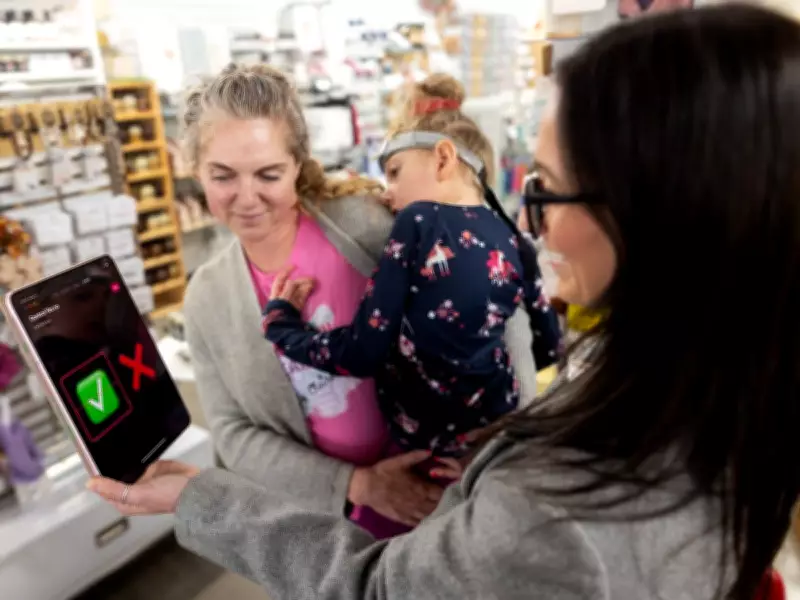
Claire, who was born with cerebral palsy affecting her motor functions and is non-verbal, utilizes a specialized headband connected to an iPad running the Think2Switch application. This system enables her to select from multiple options displayed on the screen simply by focusing her thoughts, allowing her to answer questions, solve mathematical problems, operate household appliances like mixers for baking, and even participate in classroom activities.
"Brain-computer interface technology itself isn't a new concept," explained Dr. Dion Kelly, co-founder and CEO of Possibility Neurotechnologies, the Alberta-based company behind the app. "It's been around for over 50 years now, but it's been confined largely to research laboratories until recently."

Dr. Kelly and her team have dedicated the past seven years to adapting this sophisticated technology for practical, at-home applications. The project originated from a research collaboration with co-founder Dr. Adam Kirton at the Alberta Children's Hospital, where Claire was among the earliest participants.
Democratizing Assistive Technology Through Simplicity
The COVID-19 pandemic accelerated the development timeline dramatically. "When COVID hit, and parents and kids couldn't come into our research lab anymore, we had to figure out how we could continue to provide access to the technology," Dr. Kelly noted. "To achieve that, we had to make it as simple and usable as possible for families without technical expertise."
Unlike traditional BCI systems that require specialized equipment and trained technicians, Think2Switch leverages mainstream technology including ordinary tablets and commercially available headsets typically used for meditation or sleep tracking. This approach has significantly reduced costs and increased accessibility.
"Traditionally, these systems have not been very accessible or affordable, or even usable," Dr. Kelly emphasized. "All previous systems were developed with the assumption that there would be somebody with technical expertise present to set them up and control them. We've flipped that paradigm entirely."
A New Era of Independence and Communication
For Claire, who uses a robotic walker for mobility and has relied on BCI technology since age three, the app represents more than just convenience—it represents autonomy. She can now:
- Communicate with classmates and teachers
- Control an iPad to read books independently
- Operate household appliances for activities like baking with her mother
- Participate fully in educational and recreational activities
Beyond her physical limitations, Claire enjoys typical childhood pursuits including crafts, baking cookies, and spending time with friends. The Think2Switch technology bridges the gap between her cognitive abilities and physical constraints, providing what her mother Stephanie describes as "something that comes from science but feels like magic."
While most BCI research has historically focused on increasing technological complexity, Possibility Neurotechnologists took a different approach by designing specifically for children. "Because we were developing it for use with children, we were able to use simplicity as an advantage rather than a limitation," Dr. Kelly explained.
The global rollout of Think2Switch marks a significant milestone in assistive technology, transforming specialized laboratory equipment into practical tools that families can use daily to enhance communication, learning, and independence for children with disabilities.