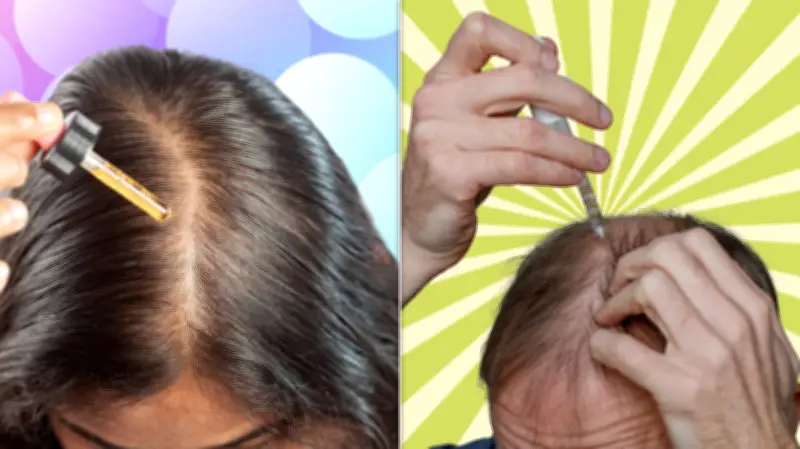
Hair loss and thinning were once stigmatized or hidden under baseball caps, rarely discussed in public. However, minoxidil, the over-the-counter medication that promotes hair growth, has gained new popularity online. Influencers now apply it along their hairlines and eyebrows, even using it preventively, framing it as a routine beauty step.
This shift is largely positive, but it raises questions for those without noticeable thinning: Should they use minoxidil preventively, like Botox or retinol for wrinkles? Could it make averagely thick hair even more luscious? HuffPost consulted dermatologists to clarify who benefits from minoxidil and what happens when it is used without a medical need.
What Minoxidil Does and Who It Is For
Originally developed as a blood pressure medication, minoxidil's hair growth effects were discovered by accident. Today, it is available over-the-counter in 2% and 5% strengths, in foam, dropper, and spray forms. Unlike styling products, minoxidil affects hair growth directly.

Dr. Michelle Pratt, clinical assistant professor of dermatology at Memorial University of Newfoundland, Canada, explained: "Minoxidil’s mechanism is multifactorial. It shortens the telogen (resting) phase so follicles re-enter the anagen (growth) phase sooner, prolongs anagen so hairs grow longer and thicker, and increases blood flow and growth-factor activity at the follicle."
Minoxidil acts like fertilizer for a lawn: it helps existing hair grow better but cannot regrow hair where follicles are completely gone. This distinction is crucial, as online discussions often blur the lines.
Dr. Adam Friedman, professor and chair of dermatology at George Washington University School of Medicine, stated: "The clearest candidates are people with confirmed androgenetic alopecia, male or female pattern hair loss, where the diagnosis has been properly established. The earlier you intervene, the more you have to work with. Once follicles are gone, minoxidil cannot bring them back; it can only support and prolong what’s still functioning."
Can You Use Minoxidil Preventively?
Dr. Jeff Donovan, a board-certified dermatologist specializing in hair loss in Whistler, Canada, warned against preventive use: "That’s a bad idea. I have seen many dozen patients who have used it preventively, and the stories are not good. Most of the time, they have simply accelerated their own natural hair loss." Rather than preventing hair loss, it may create problems. One reason is the initial shedding phase minoxidil can trigger. While this resets the hair cycle for those with androgenetic alopecia, in individuals without existing hair loss, it may unmask or accelerate thinning in those genetically predisposed. Another issue is practicality: minoxidil only works as long as it is used, leading to an indefinite and costly commitment.
Dr. Friedman added: "If someone starts minoxidil when they have no real hair loss, they’re committing to an indefinite course of a medication with no clear endpoint and no clear benefit beyond possibly delaying something that may or may not have progressed meaningfully on its own." Not all thinning is due to the type of hair loss minoxidil treats; causes like iron deficiency, thyroid disease, or nutritional deficiencies are not addressed by topical treatment. "Minoxidil will not address the root cause, and it creates a dependency they don’t need," Friedman emphasized.
Side Effects Often Overlooked Online
As minoxidil becomes normalized in beauty routines, dermatologists note that physical trade-offs are often ignored. Dr. Viktoryia Kazlouskaya, board-certified dermatologist and owner of Dermatology Circle in New York, listed common side effects: "Initial shedding, scalp irritation, dryness, and, in some cases, unwanted facial hair growth." Additionally, headaches, heart palpitations, and chest pain can occur, with higher strengths increasing risks. Minoxidil is not recommended during pregnancy. Dr. Donovan stressed: "This is a pretty safe medication, but it’s not for experimentation. This is a drug with side effects like any drug."
For those without a medical need, the trade-off is significant, especially given the long-term commitment and cost. Rogaine, a well-known brand, ranges from $30 to $50 per bottle, adding up to hundreds of dollars annually.

What Happens When You Stop Using It
Consistency is key for maintaining results. Dr. Friedman explained: "Once you stop these medicines, you will start thinning again. It’s not a fast process, but the hard work you’ve been putting in will start to get reversed." A study found that after discontinuing minoxidil, participants lost not only gained hair but also some thicker hairs, sometimes dropping below baseline counts.
Is the 5% Version Safe for Everyone?
Dr. Kazlouskaya noted: "Historically, we recommended 5% minoxidil for men and 2% for women. More recently, 5% formulations are commonly used for both, often with once-daily application in women to improve tolerability." The right strength depends on hair loss level, skin sensitivity, and tolerance. Higher strengths may offer greater efficacy but increase side effects like irritation. Dermatologists advise tailoring treatment rather than a one-size-fits-all approach.
Is There Any Reason to Use It Without Hair Loss?
For people without noticeable thinning, there are specific situations where starting minoxidil may make sense. Dr. Kazlouskaya said: "In individuals with a strong family history of hair loss, there may be value in early evaluation. Subtle thinning can begin before it becomes visible, and this is something that often requires professional assessment to detect." This means seeing a dermatologist to establish a baseline and identify early changes, not self-prescribing long-term treatment "just in case."