Montreal Physician's Memoir Champions Humanistic Medicine Through Personal Struggles
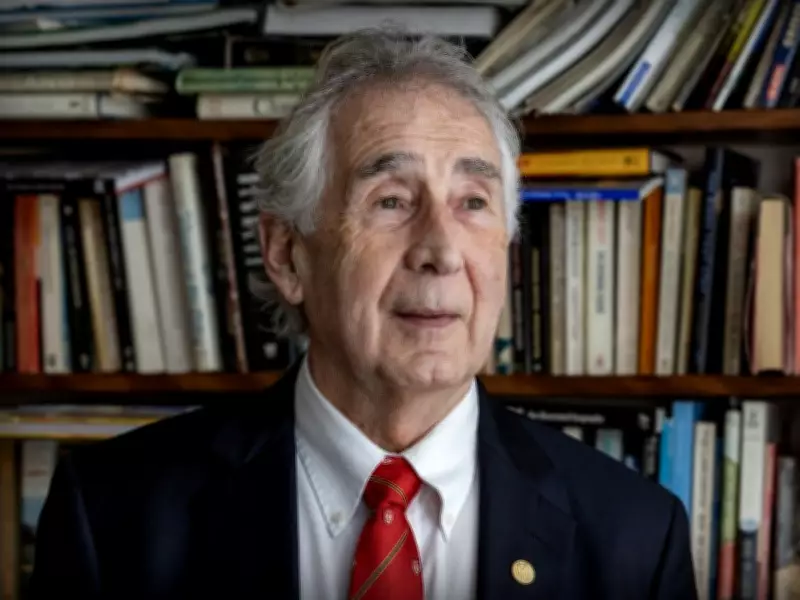
In a deeply personal memoir published upon his retirement, Montreal physician and scholar Dr. Tom Hutchinson reveals how his own vulnerabilities became unexpected gifts for practicing whole-person care. The 78-year-old author of The Craft of Medicine believes in standing for a humanistic approach to medicine that resists being crushed by what he describes as a "machine-like system."
Personal Struggles as Professional Assets
Dr. Hutchinson shares intimate details from his life journey, including wounding childhood treatment from his mother in Ireland, feelings of inadequacy during medical training, distressing experiences with burnout, his father's drinking problems, and his own participation in Al-Anon. "This was me revealing how my vulnerabilities were unexpected gifts for my practice of whole-person care," Hutchinson explained in a recent interview. "I wanted to make it obvious that doctors have all these struggles that everyone else has."
The physician emphasizes that difficult personal experiences, particularly those involving illness and death within families, become "greatest treasures" for medical students learning to relate compassionately to patients. While acknowledging that not everyone benefits from facing their own mortality, Hutchinson asserts that "everyone is open to being treated with kindness and respect as a valuable and vulnerable human being."

From Nephrology to Palliative Care: Finding Purpose
Hutchinson trained and practiced for years as a nephrologist before realizing he was unhappy in his work. Despite engaging in various activities from home brewing to marathon running, he experienced "a deep distress because he did not know where he was or what his life was really about." A transformative experience came when he volunteered for a month on the palliative care unit at Royal Victoria Hospital, where he spent lunchtimes with Dr. Balfour Mount, the pioneering director who established North America's first comprehensive palliative care unit in Montreal.
In 2002, Hutchinson made the significant career shift from nephrology to palliative care, discovering a new sense of purpose. "He gave his all to individual patients and their families," he writes. "Something about this process brought him down to Earth and connected him in a powerful way to the world around him."
Developing Whole-Person Care Programs
Hutchinson joined Mount in developing the McGill Programs in Whole Person Care, instituted in 1999 through the initiative of Mount and then-dean Abraham Fuks. These programs were "based on the premise that in situations in which treatment is unable to change the disease outcome, it may be possible to create a space in which healing can occur."
"Bal Mount wanted to bring the best of palliative care to the rest of medicine," Hutchinson said. "His vision was that 'we need to take this healing aspect to the rest of medicine.'" The physician believes society, including medicine, is often scared of death, but that "part of the healing in palliative care is acknowledging that people die — and it's OK that they die."
Addressing Physician Burnout and Systemic Challenges
With approximately 46 percent of Canadian doctors reporting high levels of burnout in 2025 and patients often dissatisfied with their care, Hutchinson's book serves as a plea for whole-person care. During his tenure as director of McGill's programs in whole-person care from 2004 to 2024, activities included biennial congresses, seminar series, film series, and book publications.
However, Hutchinson notes that funding challenges have impacted these initiatives. "A lot of that depended on having a coordinator who was fully employed. That is now gone," he revealed. He believes McGill could make a significant difference by devoting more resources to whole-person care.
A McGill spokesperson responded that while whole-person care has never been an official program at the Faculty of Medicine and Health Sciences, it remains "a diverse set of ongoing research and other scholarly activities aimed at promoting holistic health and well-being," with most funding sourced externally. The faculty continues to incorporate a healer content expert role in the undergraduate medical curriculum.

Resisting Bureaucratic Medical Systems
Hutchinson argues that medicine "has become too bureaucratic, too top down" and that doctors need to assert more control over how the system operates. "Doctors need to take more power to say how the system should be and what they need to do their work … to say, 'Here is what we need to practise the craft of our profession,'" he emphasized.
The physician references Bill 2, passed in October, which would have imposed strict government-defined performance targets on compensation, tied pay to performance, mandated high patient volumes, and threatened heavy fines for non-compliance. Following intense backlash from doctors, the government delayed implementation to the end of February and agreed in principle to remove some of the most contested penalties.
Despite systemic challenges, Hutchinson maintains that "the system we have is amazing" but requires finding "a way for people to have the time and space to practise the way they want to." He concludes that "a crucial aspect of what it means to be a doctor is our human relationship with ourselves and with those for whom we care."