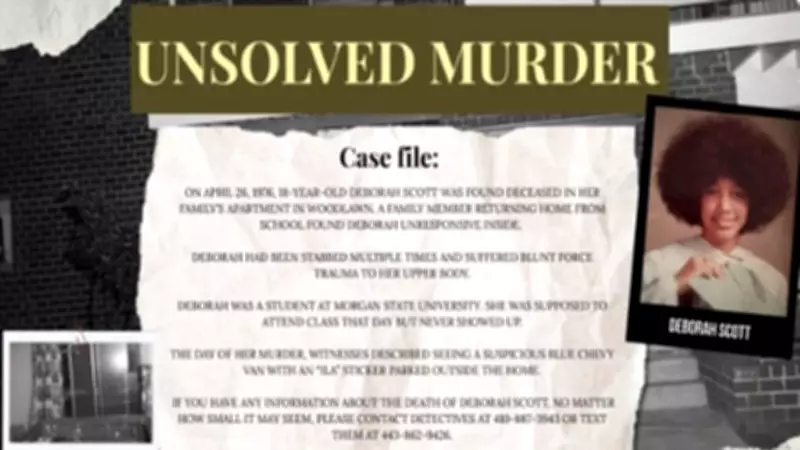
Police believe they are closer than ever to identifying a potential suspect in a 50-year-old cold case murder after new evidence was sent out for DNA testing. The development marks a significant breakthrough in a case that has remained unsolved for half a century, leaving a family without answers and a community in search of justice.
Renewed hope for resolution
Investigators have been re-examining the case using modern forensic techniques, and the latest DNA analysis could provide the crucial link needed to identify the perpetrator. Authorities have not disclosed specific details about the evidence but expressed optimism that scientific advances will finally yield results.
"We are hopeful that this new evidence will bring us closer to solving this case and providing closure to the victim's loved ones," a police spokesperson said. The investigation has been a priority for the cold case unit, which has been working diligently to apply new technologies to old evidence.

Community impact
The murder, which occurred 50 years ago, has haunted the local community. Family members have waited decades for answers, and the news of potential progress has been met with cautious optimism. "It's been a long time, but we never gave up hope," a relative said. "We just want to know who did this and why."
Police are urging anyone with information about the case to come forward, no matter how insignificant it may seem. Even small details could prove vital in building a case.
Advances in forensic science
The use of DNA testing in cold cases has revolutionized law enforcement's ability to solve historic crimes. Techniques such as genetic genealogy have helped identify suspects in cases that were once considered unsolvable. In this instance, investigators are hopeful that similar methods will lead to a breakthrough.
"DNA technology has come a long way in the past few decades," a forensic expert noted. "Even degraded or limited samples can now be analyzed with greater accuracy, giving us a better chance of identifying individuals."
The police department has allocated additional resources to the case, including dedicated personnel and funding for advanced testing. The results of the DNA analysis are expected in the coming weeks, and authorities are prepared to act swiftly on any leads.
As the investigation progresses, the community remains vigilant, hoping that justice will finally be served after 50 years of uncertainty.