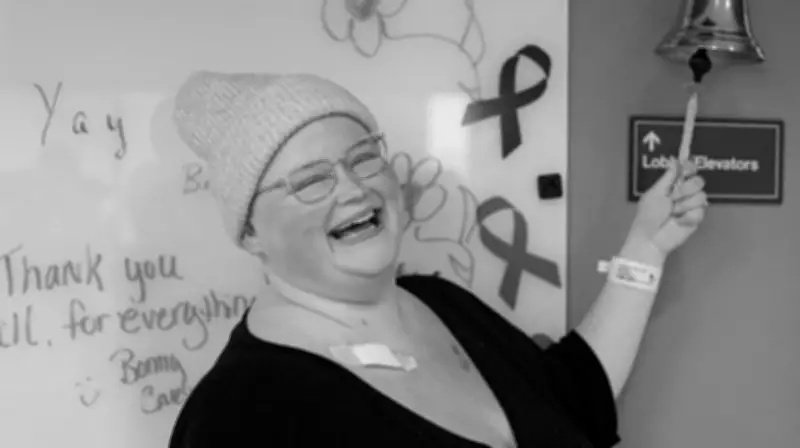
A Nurse's Battle with Endometrial Cancer: From Diagnosis to Advocacy
In a startling moment, an oncologist delivered news that would change a life forever: "Your tumor is about the size of a watermelon." This was the beginning of a profound journey for Casey Halterman, a nurse who faced endometrial cancer head-on, transforming her personal struggle into a powerful message of awareness and resilience.
The Unshakable Feeling and Initial Dismissal
Back in 2020, Casey woke up with a persistent intuition that she had cancer, despite having no major symptoms beyond fatigue—a common ailment in that tumultuous year. As a nurse, she was accustomed to avoiding doctor visits, but this feeling compelled her to schedule an appointment with her primary care physician. Initial bloodwork returned normal, leading her to dismiss her fears as paranoia. Yet, a deep-seated sense that something was wrong lingered, driving her to seek answers repeatedly over the years, though each visit left her embarrassed and without explanations.
Symptoms Escalate and the Shocking Discovery
Eventually, her symptoms worsened dramatically, including extreme fatigue, severe acid reflux, pelvic and abdominal pain, constant bloating, and irregular periods. Feeling increasingly unwell, she revisited her doctor, who immediately sent her to the emergency room. A pelvic ultrasound and abdominal CT scan revealed the shocking truth: a watermelon-sized tumor. During surgery, the oncologist removed an eight-pound tumor and one ovary, but the operation resulted in significant blood loss and a life-altering diagnosis—it was cancer.

Diagnosis and Aggressive Treatment
Further pathology reports and a dilation and curettage (D&C) indicated the tumor likely originated in her uterus, necessitating a total hysterectomy and bilateral salpingo-oophorectomy at just 28 years old. This plunged her into surgical menopause, bringing on severe symptoms like hot flashes, insomnia, and depression. She was officially diagnosed with stage 3A endometrial adenocarcinoma, the most common gynecologic cancer in the U.S., typically affecting women over 45. Treatment included chemotherapy and pelvic radiation, adding to her previous surgeries.
Finding Community and Sharing Her Story
Seeking support, Casey turned to social media but found few discussions on endometrial cancer, possibly due to stigma or embarrassment. Determined to change this, she began sharing her journey through videos, starting with a "Get Ready With Me" (GRWM) for her hysterectomy party, where friends gathered to celebrate and say goodbye to her uterus. The positive response encouraged her to continue documenting her chemotherapy rounds, symptoms, victories, and practical tips, fostering an online community that provided crucial support during her hardest months.
Life After Treatment and Ongoing Challenges
After five months of chemotherapy and two months of radiation, with clear scans indicating no evidence of disease, Casey thought her battle was over. However, she soon realized that life after cancer treatment presents its own difficulties, feeling "other" as friends moved on with milestones like marriage and children while her focus remained on staying cancer-free. Reassembling her identity proved challenging, but over time, she learned to accept and even love this new version of herself, shaped by trauma and survival.
A Call to Action for Women's Health
Casey believes her experience serves a greater purpose: to empower others to advocate for their health. She urges women to speak up about uncomfortable symptoms, emphasizing that endometrial cancer is most treatable when caught early. Her story underscores the importance of trusting one's instincts and initiating conversations with healthcare providers. For anyone navigating a cancer journey, she offers a reminder: you are not alone. Casey Halterman, now a paid spokesperson for GSK's Don't Be Embarrassed campaign, continues to spread awareness and break the stigma surrounding gynecologic cancers.