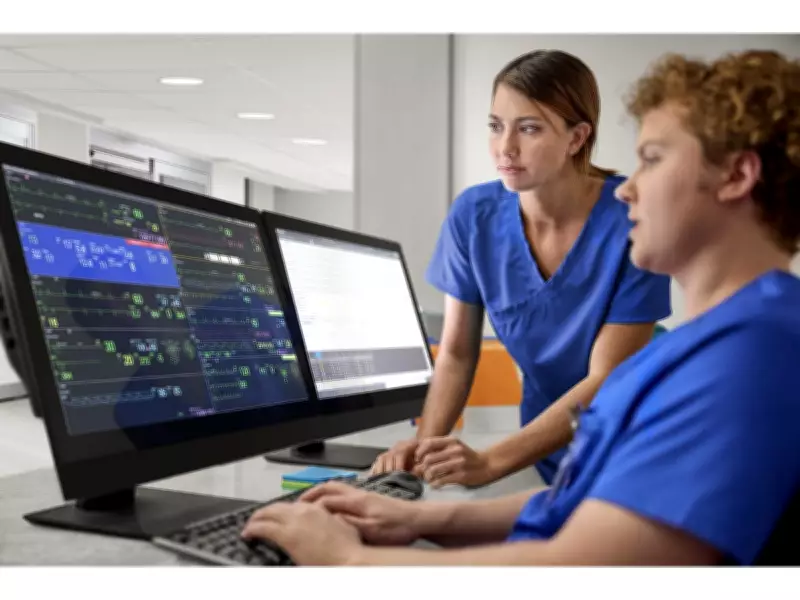
Philips Advances Platform-Based Care Intelligence at HIMSS26
Royal Philips, a global leader in health technology, has unveiled its latest innovations in open, interoperable, and AI-enabled platforms at the HIMSS26 conference. The company is focusing on connecting continuous patient monitoring with diagnostic insights to create a more holistic view of patient health across various care settings and specialties.
Addressing Healthcare Data Fragmentation
Health systems worldwide are grappling with unprecedented pressures, including rapidly increasing data volumes that strain clinical capacity and contribute to care delays. Fragmented data across monitoring systems, imaging platforms, and clinical applications often exacerbates these issues. According to Philips’ Future Health Index 2025, a staggering 77% of healthcare professionals have lost valuable clinical time due to incomplete or inaccessible patient data.
As providers seek to expand capacity without adding burden, artificial intelligence is being increasingly adopted to automate routine tasks and surface relevant insights more quickly. However, scaling AI effectively requires trusted, interoperable, and longitudinal data that can be seamlessly integrated into clinical workflows.

Philips’ Connected Care Solutions
Philips’ platforms are designed to bridge the gap between data, devices, and care teams across different settings and diagnostic domains. By linking medical devices, patient monitoring systems, imaging platforms, and health information systems—including electronic medical records (EMRs) and third-party technologies—Philips enables health systems to establish a unified data foundation. This foundation supports continuous visibility and longitudinal insight throughout the enterprise.
At HIMSS26, Philips is showcasing two core capabilities that facilitate this connected care intelligence: enterprise patient monitoring for longitudinal care intelligence and Integrated Diagnostics for unifying imaging and diagnostic data across the enterprise.
Expert Insights on Longitudinal Care
Julia Strandberg, Chief Business Leader of Connected Care at Royal Philips, emphasized the importance of connected data in healthcare. “Care is longitudinal—it doesn’t begin or end at the hospital door,” she stated. “When data is connected across environments, clinicians can see a more continuous patient trajectory rather than disconnected snapshots. That broader context helps reduce noise, improve situational awareness, and allow care teams to focus their time on what matters most: earlier intervention and better patient outcomes.”
Enterprise Patient Monitoring in Action
Across the acute and post-acute continuum, clinicians require continuous visibility that follows the patient throughout their journey. Philips is advancing longitudinal care intelligence by connecting enterprise monitoring with interoperable clinical data. This ensures that physiological signals remain visible as patients move across care settings, including high-acuity environments, during transitions of care, and after discharge.
By integrating medical devices and health information systems, such as EMRs and a broad ecosystem of third-party devices, Philips helps create a connected data thread. This thread supports central monitoring and surveillance workflows that enhance clinical decision-making across encounters and over time. The longitudinal foundation can reduce workflow friction for care teams and support strategies to alleviate pressure on high-acuity environments by enabling safe, early discharge with oversight beyond hospital walls.