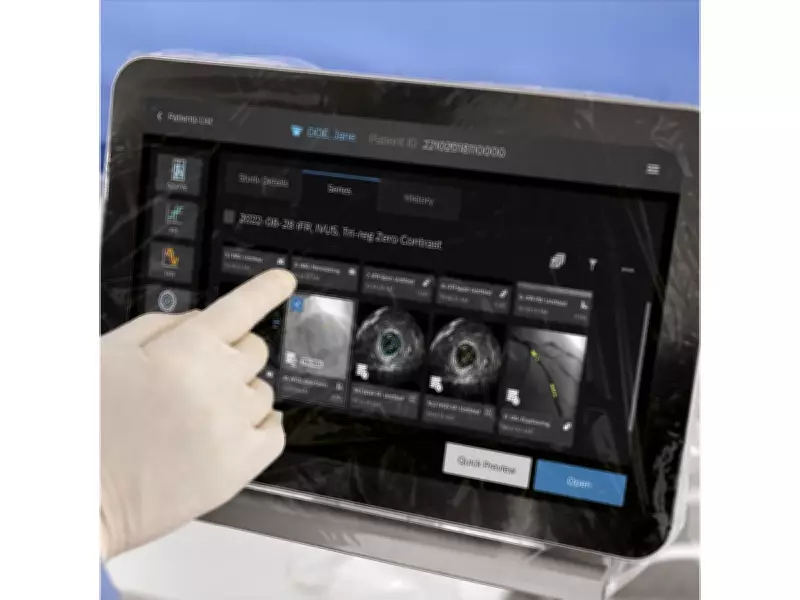
Royal Philips, a global leader in health technology, has officially launched its groundbreaking IntraSight Plus platform, designed to transform coronary interventions through enhanced integration and workflow efficiency. The intuitive interventional guidance system has received both FDA clearance and CE marking, making it available for clinical use in both the United States and European markets.
Streamlining Complex Coronary Procedures
The newly redesigned IntraSight Plus platform represents a significant advancement in interventional cardiology by combining the most comprehensive set of diagnostic and treatment planning tools into a single, intuitive system. This integration addresses a longstanding challenge in busy catheterization laboratories where physicians have traditionally relied on separate systems for angiography, intravascular ultrasound, and physiological measurements.
By bringing all essential tools to a single screen interface, the platform enables clinicians to diagnose conditions, virtually plan treatments, guide device placement, and verify results without switching between different systems. This streamlined approach not only simplifies complex procedures but also supports more confident clinical decision-making and improved patient outcomes.

Substantial Time Savings and Enhanced Control
One of the most compelling aspects of the IntraSight Plus platform is its potential to dramatically reduce procedure time. According to Philips, the system can enable up to 47% savings in system operation time, allowing physicians to focus more on patient care rather than navigating multiple technological interfaces.
The platform also features enhanced bedside control capabilities, giving interventional cardiologists complete command of the procedure from the patient's side. This represents a fundamental shift from traditional approaches where physicians often needed to move between different workstations during complex coronary interventions.
Clinical Implementation and Expert Endorsement
The first clinical use of IntraSight Plus occurred on March 19, 2026, when Professor Dr. Jan-Malte Sinning performed an initial patient case at Cellitinnen-Krankenhaus St. Vinzenz in Cologne, Germany. The hospital had recently upgraded its catheterization lab infrastructure with Philips' Azurion interventional suites, creating an ideal ecosystem for implementing the new platform.
"Modern percutaneous coronary interventions are becoming increasingly complex," explained Professor Dr. Sinning. "What distinguishes IntraSight Plus is its design philosophy - it's clearly built around how we actually work in the cath lab. The platform integrates physiology, imaging, and decision-making support in a way that fits naturally into our clinical workflow."
Customer-Driven Innovation
Stacy Beske, Business Leader for Image Guided Therapy Devices at Philips, emphasized that IntraSight Plus was developed through extensive collaboration with healthcare professionals. "As more advanced technology enters the cath lab, connectivity between imaging tools becomes increasingly crucial," Beske noted. "This platform represents a fundamental shift toward integrated intelligence that allows physicians to concentrate on the decision-making that only they can perform."
The platform's development incorporated direct feedback from medical professionals, ensuring that it addresses real-world clinical challenges rather than simply adding technological complexity. This customer-centric approach has resulted in a system that promises to make advanced interventional techniques more accessible and efficient for medical teams worldwide.
Advancing Precision Care in Cardiology
IntraSight Plus arrives at a critical moment in cardiovascular medicine, where guidelines increasingly support the combined use of intravascular ultrasound and physiological measurements during percutaneous coronary interventions. However, adoption of these advanced techniques has been limited by the fragmented nature of existing systems and the perceived complexity of integrating multiple data sources.

By providing a unified platform that simplifies access to these sophisticated tools, Philips aims to accelerate the adoption of precision medicine approaches in interventional cardiology. The system's ability to deliver comprehensive diagnostic information while maintaining workflow efficiency could potentially transform how coronary procedures are performed, making advanced interventions more accessible to a broader range of patients and medical centers.