Hollywood's Problematic Portrayals of Dementia: From Horror Tropes to Harmful Stereotypes
In contemporary film and television, depictions of dementia frequently fall short of accuracy and sensitivity. There exists a troubling, increasingly prevalent trope within horror cinema where elderly characters, typically grandmothers diagnosed with Alzheimer's disease, undergo terrifying transformations into demonic figures reminiscent of "The Exorcist." A prime example is the 2014 found-footage horror film "The Taking of Deborah Logan," which follows a grandmother with Alzheimer's whose condition manifests as possession-like behavior. She exhibits disturbing actions including violently opening and slamming doors, stripping naked while clawing at walls and her own skin, and delivering jump-scares during nighttime sequences.
Even Well-Intentioned Films Miss the Mark
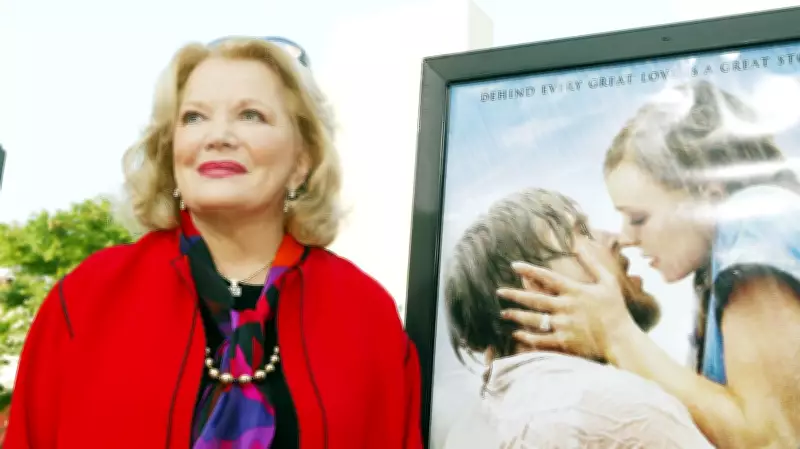
Even productions aiming for emotional depth and humanity often misrepresent dementia's reality. In the romantic drama "The Notebook," audiences meet Allie, portrayed by Gena Rowlands, only during the advanced stages of Alzheimer's. The narrative completely bypasses the disease's earlier, gradual progression—the intermittent memory lapses and slow functional decline that can unfold over ten, fifteen, or even twenty years. Consequently, viewers might incorrectly assume dementia manifests almost overnight, rather than as a prolonged neurological process.
"In television and film, dementia progression is rapid, with characters experiencing a straight, linear decline where memory loss serves as the central, often sole symptom, similar to 'The Notebook,'" explained Tom Kiely, a neuropsychologist practicing in both California and New York and host of The Psych Studio Podcast. Kiely further noted that characters with dementia are typically portrayed as one-dimensional figures. "When we see characters with dementia, they're usually depicted in a weak and fragile manner. They appear childlike, emotionally vacant, and empty. Their confusion makes them seem lost or as if they're 'disappearing' before our eyes."

The Dangerous Horror Movie Convention
Beyond sentimental dramas, the horror genre frequently conflates dementia diagnoses with malevolence. "One academic has described these depictions as 'vulnerable monsters,' and while this is a generalization, I would agree with it," stated Lee-Fay Low, a professor specializing in aging, health, dementia care, rehabilitation, and stigma reduction at Australia's University of Sydney. Low cited an episode from ABC's procedural drama "The Rookie," where a character with dementia is revealed to be a serial killer who assaults a main character, reinforcing harmful associations between cognitive decline and violence.
Why These Pop Culture Depictions Are Harmful
The public's limited understanding of dementia means families and individuals affected by the condition often turn to television and movies for information. When these portrayals are simplified for dramatic effect, compressed for narrative convenience, or exploited for horror scares, they create false expectations about the disease's progression. Pop culture suggests dementia patients become lost souls prone to violent outbursts, which is medically inaccurate and socially damaging.
"I believe pop culture has conditioned us to think a dementia diagnosis equals immediate loss of personhood," Kiely remarked. "People assume dementia only involves forgetting names and faces, and that individuals with dementia lack acute insight. They're portrayed as humorless, incapable of meaningful human connection, like empty shells." These grim depictions reinforce fear and stigma, potentially causing family members to view loved ones with dementia as already gone or mere shadows of their former selves.
Moreover, pop culture representations can influence how early symptoms are interpreted, when medical help is sought, and what families expect regarding illness progression. Alzheimer's disease, the most common dementia type affecting approximately seven million Americans, does not involve sudden absence one day and full presence the next, contrary to cinematic portrayals.

The Reality of Dementia Progression
Unlike film depictions, dementia typically develops gradually. During the initial "stealth" phase, only vulnerable brain cells are affected, and memory loss is rare. Cognitive decline becomes pronounced in the second stage, which may progress more aggressively, impairing memory, thinking, and daily functioning enough to disrupt independent living and quality of life.
Movies excessively emphasize memory impairments at all disease stages, often presenting waning memories as the sole symptom. "Memory loss may not be the earliest or most prominent Alzheimer's symptom, despite media portrayals," Kiely clarified. "Non-memory symptoms rarely depicted include personality changes, loss of inhibition, emotional volatility, and language alterations."
Pathways to Better Representation
Fortunately, some productions demonstrate how Hollywood can improve dementia portrayals. "I've noticed when filmmakers intend to explore the lived experience of dementia, they tend to show it more nuanced and rounded," Low observed. She appreciates depictions balancing positive and negative aspects for both individuals and families, citing "Still Alice" as a standout example. This 2014 drama stars Julianne Moore as a fifty-year-old linguistics professor navigating early-onset Alzheimer's while striving to live meaningfully with her family. Moore won the 2015 Academy Award for Best Actress for this role.
"It effectively shows loss of identity from a patient's perspective, especially early on when Julianne Moore's character must step away from her career," Kiely noted. "That was devastating, and I was captivated as an audience member." He believes any content where dementia characters are central figures, rather than mere caretaking responsibilities, represents improvement.
"The biggest improvement filmmakers could make is moving away from dementia as a single-storyline device toward dementia as a lived experience, like 'Still Alice,'" Kiely suggested. He also praised "The Father," a 2020 film starring Anthony Hopkins as a patriarch refusing help despite advancing dementia. "It's one of the most accurate depictions of cognitive disorientation's internal experience, placing audiences inside the confusion rather than observing externally."
Kiely advocates for showing moments of competence alongside impairments—small victories, flashes of clarity, and adaptation strategies. "How do characters adjust to their new normal? What strategies preserve agency or functional independence? I'd love stories showing families and caregivers struggling not just with loss, but with role changes and future ambiguity."
Documentaries offer particularly effective avenues for exploring dementia's complexities. Low mentioned Chris Hemsworth's 2025 National Geographic documentary "A Road Trip to Remember," documenting his father Craig's early-stage Alzheimer's and the family's experience with reminiscence therapy—using sensory prompts like music, photos, and familiar objects to recall positive memories.
Low added that negative dementia portrayals often intertwine with ageism, making her encouraged by shows centering older adults living dynamic lives, like "Only Murders in the Building," starring Steve Martin and Martin Short as amateur detectives. "I hope as media becomes less ageist overall, they'll also present dementia less stereotypically," she concluded.