The Resurgence of Seances and Modern Grief: A Personal and Historical Exploration
In an era that prides itself on rationality, our society often falters when it comes to handling sadness and loss. The recent revival of seances offers a poignant lens into how we navigate grief, blending personal narratives with historical insights to challenge conventional approaches to mourning.
A Personal Encounter in Kanata
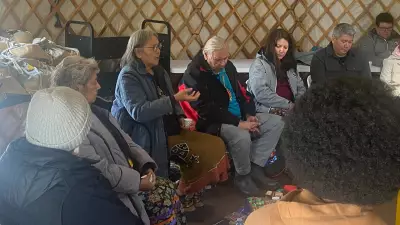
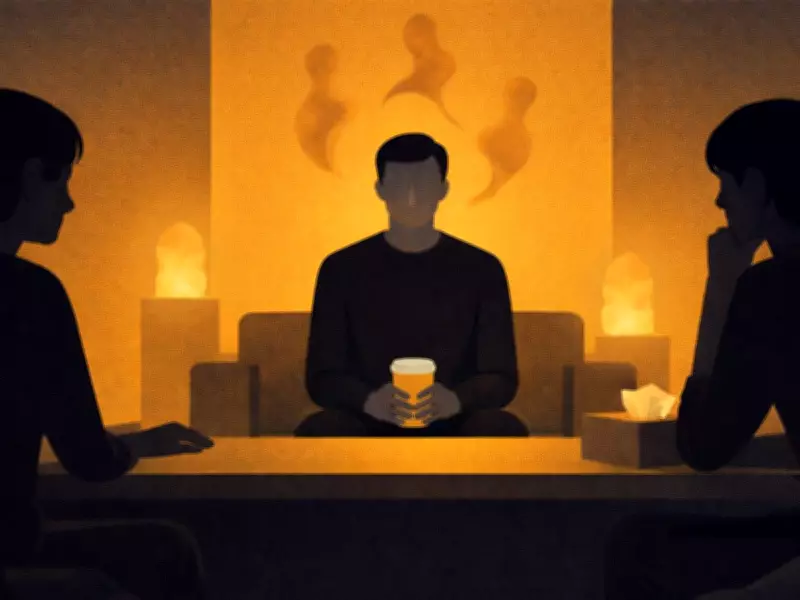
In a living room in Kanata, a group of about ten individuals gathered, with eight present in person and two joining via video call from out of province. The host, a friend, had extended an invitation, and the attendees sat in a circle, awaiting the medium. He arrived as a young man clutching a Tim Hortons to-go cup, settling between Himalayan salt lamps with an air of calm anticipation.
Initially, expectations leaned toward a theatrical performance—perhaps a darkened room, a trembling table, or dramatic revelations. However, the medium set a different tone from the start. He explained that voices and images came to him without clear origins, and the session would span three hours with a break. He sensed numerous spirits already present and warned of his eventual exhaustion.

The evening unfolded through a call-and-response dynamic. The medium would offer vague prompts, and participants would meet him halfway, sharing stories of loss. For instance, when he mentioned two spirits who died in quick succession, a woman identified them as her parents. This interactive structure initially sparked suspicion—couldn't anyone claim such ambiguous cues? Yet, as the hours passed, the focus shifted from skepticism to a shared willingness to listen and speak openly about grief among strangers.
Historical Context: Prime Minister Mackenzie King and Spiritualism
Grief has always required outlets, and the Victorians excelled at this through elaborate mourning rituals like wearing black for years and holding seances. The twentieth century, marked by the First World War and the 1918 influenza pandemic, saw spiritualism gain desperate fervor as it addressed waves of mass death.
Ottawa holds a unique place in this history through William Lyon Mackenzie King, Canada's longest-serving prime minister and a committed spiritualist. His interest is preserved at Laurier House, a National Historic Site, where a crystal ball rests on a piano belonging to his mother, Isabel. After her death in 1917, King spent decades trying to contact her, consulting over 130 mediums and psychics. According to biographer Anton Wagner, these beliefs were integral to King's identity, enabling his political resilience and leadership through two world wars.
In 2022, the American Psychiatric Association added prolonged grief disorder to the DSM, with criteria that mirror King's experiences—intense yearning, preoccupation with memories, and hallucinations like hearing the deceased's voice. What historians once dismissed as eccentricity might now be seen as unresolved grief, with seances serving as an unconventional coping mechanism. King's mourning even informed his governance, as he consulted spirits on major decisions, blending statecraft with spiritual hope.
A Personal Grief Shared
During the Kanata seance, the medium invited participants to contact specific spirits. One attendee volunteered to connect with their uncle, Antonio, who had died two years prior in Portugal. Antonio was remembered as a charismatic, humorous figure who deflected personal demons with wit, making others feel seen in a family of high expectations.
The medium asked questions about what was loved and remembered, then channeled a message in Antonio's recognizable tone—dismissive yet affectionate, urging the attendee to stop worrying. This moment elicited both laughter and tears, providing a cathartic release for grief that had been carried silently. The experience highlighted how seances can create spaces for vocalizing loss, something often suppressed in daily life.

The Cost of Societal Silence on Grief
Western societies have increasingly struggled with grief over the past century, shortening mourning periods, moving death out of homes into hospitals, and valuing stoicism. Eunice Gorman, chair of the thanatology program at King's University College in London, Ontario, emphasizes that grief is not just emotional but physiological and neurobiological, affecting cognition and immune function.
Historically, death was a domestic constant in multi-generational homes, but professionalization and linguistic shifts—like rebranding the 'death room' as the 'living room'—have led to cultural avoidance. Canadians are entitled to only three days of bereavement leave for relatives, with expectations to quickly 'move on.' Gorman critiques myths like the 'stages of grief' or 'closure,' noting that grief is a lifelong process that adapts but never fully disappears.
Gorman teaches courses on extraordinary experiences in bereavement, including deathbed visions and signs from beyond. While other cultures embrace 'continuing bonds' with the dead, Western rationality often labels such encounters as 'woo-woo,' forcing mourners to choose between sanity and connection. A 2025 University of British Columbia survey found that 44% of Canadians believe in paranormal phenomena, with many reporting spirit encounters tied to loss, offering comfort in grief.
Seances as Community and Play
The seance in Kanata functioned as a grief circle with theatrical elements, allowing strangers to recognize shared losses. The medium acted as a facilitator, encouraging participants to take what resonated and leave the rest, similar to practices like astrology. Gorman sees no harm in occasional seances, viewing them as play that engages imagination to approach grief from a new angle.
However, she warns against compulsion, where seeking contact becomes financially or emotionally draining, blurring into prolonged grief disorder. The key is balance—using seances as occasional tools for healing rather than dependencies. The medium concluded by sharing his belief that spirits are free and luminous, and that remembering them is an act of generosity benefiting both the living and the dead.
Ultimately, whether the medium truly connected with spirits remains uncertain, but the experience provided a safe space to grieve aloud. In a society that often hurries mourning, seances offer a reminder that grief, when shared, can foster connection and healing, bridging personal pain with historical traditions.