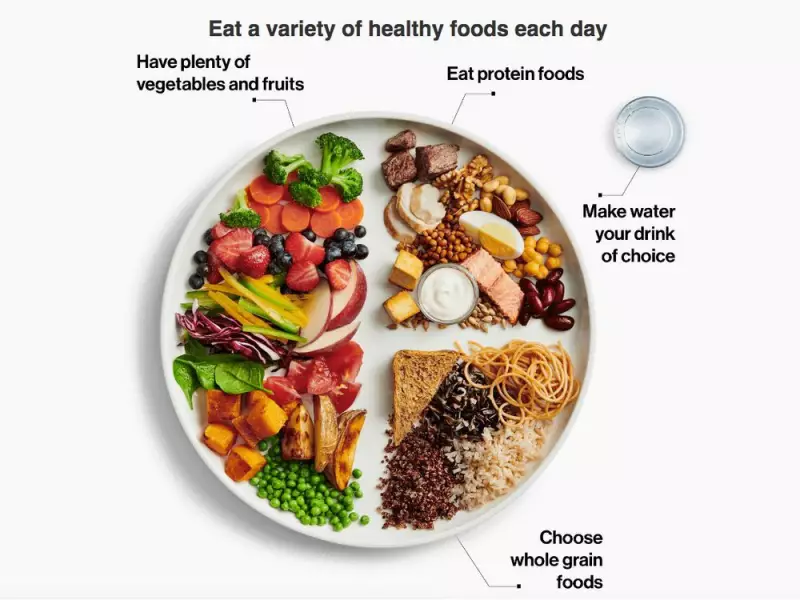
Seven years after its launch, Canada's Food Guide remains unchanged, a stark contrast to the United States' newly released, pragmatic dietary framework. The 2019 Canadian guide, celebrated by health professionals for its plant-based focus, has failed to undergo its mandated five-year review, leaving it disconnected from today's economic and cultural realities.
A Guide Frozen in Time
Health Canada committed to revising the Food Guide within five years of its January 22, 2019, introduction. That deadline passed in 2024 with no update. The guide, which replaced traditional food groups with a plate model—half fruits and vegetables, a quarter protein, and a quarter whole grains—now exists in a vacuum, untouched by soaring food inflation, regional accessibility issues, and shifting consumer habits.
While the shift away from food groups like dairy and toward water as the preferred beverage was hailed as modern, it faced criticism for being culturally detached. The guide's emphasis on produce, the most price-volatile food category, was launched without an accompanying affordability assessment, a oversight experts argue is fundamental to practical nutrition policy.

Philosophical Divide: Adversary vs. Partner
The 2019 guide positioned the food industry as an antagonist, criticizing marketing practices and framing processed foods with suspicion. This approach largely portrayed farmers, processors, and retailers as part of the problem rather than essential partners in a functional food system.
"Food is not consumed in policy frameworks; it is consumed in homes shaped by habit, income, access, and tradition," notes Dr. Sylvain Charlebois, director of the Agri-Food Analytics Lab at Dalhousie University. He argues the guide's "aspirational thinking" overlooked the economic and social ecosystems that shape real-world diets.
The U.S. Reset: Pragmatism Over Ideology
This week, the United States unveiled a contrasting model. Its new food guide is described as a genuine reset grounded in science, cultural realism, and practicality. Instead of vilifying industry, it focuses on collaborative improvement, setting clear targets to reduce sugar, sodium, and unnecessary additives within the existing food system.
This key philosophical difference treats the food system as something to refine, not restrain. The U.S. framework acknowledges that effective food policy must be humble, recognizing trade-offs and respecting how people actually live and eat.
The Path Forward for Canada
The stagnation of Canada's Food Guide highlights a significant policy gap. As the U.S. embraces a more adaptable and inclusive model, Canada's guide risks becoming increasingly irrelevant. Experts urge a revision that balances nutritional science with affordability, regional diversity, and cultural food traditions.
The core lesson is clear: successful food policy must work with the food system and the people it serves, not lecture them. For now, Canada's primary dietary roadmap remains a relic from a pre-pandemic, pre-inflation era, while its closest neighbor charts a new, more realistic course.