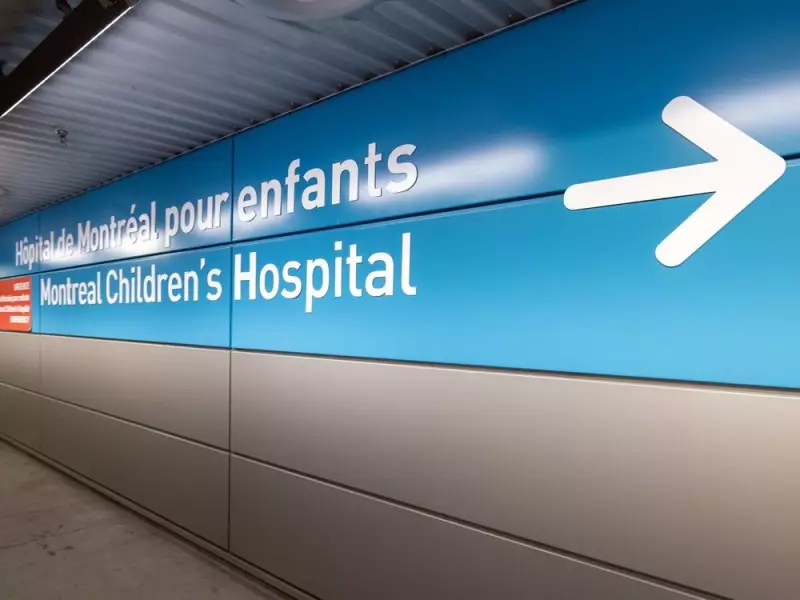
Montreal's two major pediatric hospitals are issuing a direct appeal to parents: please avoid bringing children to the emergency department unless they are facing a genuine medical emergency. The request comes as a significant surge in seasonal viruses and respiratory infections has led to extreme overcrowding.
Overwhelmed Emergency Departments
CHU Sainte-Justine and the Montreal Children's Hospital have been compelled to make this public reminder due to a sharp increase in patient visits. For the week of December 8 to 14, more than 40% of visits to the Montreal Children's Hospital ER were for minor health problems. During that same period, the average occupancy rate for stretchers soared to over 130%.
The situation at Sainte-Justine was similarly strained. Between December 7 and 13, minor issues also accounted for roughly 40% of visits, while the ER operated at an average occupancy of a staggering 147%.

Alternative Care Options for Parents
Hospital officials are urging families to consider other avenues for care when a child's condition is not serious. Dr. Harley Eisman, Medical Director of the Montreal Children's Hospital ER, emphasized that emergency services must be prioritized for those needing immediate care.
"For children who are not seriously ill or injured, other solutions can be considered, such as the 8-1-1 line or walk-in clinics," Dr. Eisman stated.
The 8-1-1 line, Info-Santé, connects callers with a nurse who can provide advice and help assess whether a trip to the ER is necessary. Local walk-in clinics and family doctors are also appropriate resources for non-urgent issues like colds, mild flu symptoms, or minor gastroenteritis.
No Child Will Be Turned Away
Both institutions strongly reassure parents that every child in need of medical care will be seen. However, those with less urgent conditions should expect long waits.
"Upon arrival at the ER, each child is assessed by a member of the nursing staff, then seen by the doctor in order of priority," explained Dr. Antonio D'Angelo, Medical Chief of the CHU Sainte-Justine ER. "Children with colds, flu or gastroenteritis and mild symptoms will need to be patient before they can see a doctor."
To help reduce the spread of infections and prevent unnecessary ER visits, officials recommend preventive measures like vaccination and diligent handwashing.
When You Should Go to the Emergency Room
Parents are advised to seek immediate emergency care for their children in specific serious situations, including:
- Fever in a baby under three months of age, especially if accompanied by unusual sleepiness or confusion.
- Difficulty breathing.
- Vomiting or diarrhea with an inability to retain fluids and/or signs of dehydration.
- Injuries such as:
- Head trauma with loss of consciousness, confusion, or repeated vomiting.
- A cut that may require stitches.
- Suspected broken bones (evidenced by swelling or inability to use the limb).
- Eye injuries.
- Burns that cause blistering.
- Ingestion of a poison, drug, or unknown substance (after calling the Centre antipoison du Québec at 1-800-463-5060).
The hospitals' message is clear: using the right resource for the level of care needed ensures that critically ill children receive fast, lifesaving attention while keeping waiting times manageable for everyone.