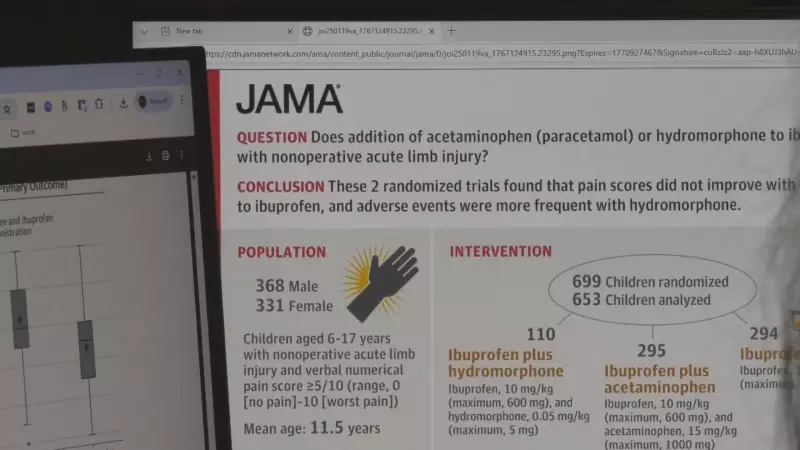
A landmark study from the University of Alberta is prompting a major rethink in how emergency departments treat pain in children with simple broken bones. The research, led by pediatrics professor Dr. Samina Ali, concludes that adding prescription opioids to standard pain management protocols offers no meaningful benefit for young patients with minor, non-operative fractures.
Questioning Common Emergency Room Practice
The findings, released on January 8, 2026, challenge a common practice in many hospitals. When a child arrives in the ER with a painful but stable fracture, such as in the forearm or ankle, doctors often layer medications. They typically start with ibuprofen or acetaminophen, but for more severe pain, a prescription opioid like oxycodone is frequently added upon discharge.
Dr. Ali's team set out to rigorously test whether this additional step actually improves a child's recovery and comfort in the crucial days following the injury. The study compared outcomes for children who received the standard combination treatment against those who received only the ibuprofen/acetaminophen regimen, with the option of a placebo instead of the opioid.

Key Findings and Implications for Care
The results were clear and significant. Children who received the added opioid did not experience less pain or demonstrate better function in the week after their injury compared to those on the simpler, non-opioid plan. This held true even when accounting for the initial severity of the pain.
This research carries substantial weight for both clinical practice and parental peace of mind. It provides evidence that doctors can confidently manage these common injuries without exposing children and their families to the risks associated with prescription opioids, which include side effects like nausea, constipation, and the potential for misuse or accidental ingestion at home.
A Push for Safer, Evidence-Based Pediatric Care
Dr. Samina Ali's work reinforces a growing movement in medicine toward minimizing opioid use, especially in populations where the long-term impacts are not fully understood. The study advocates for a conservative, stepped approach to pediatric pain, maximizing the use of safer, first-line medications and non-pharmacological comfort measures.
For parents in Edmonton and across Canada, the message is reassuring: effective pain relief for a child's minor fracture does not necessarily require the strongest tools in the medicine cabinet. The University of Alberta study empowers healthcare providers to offer care that is both compassionate and rigorously grounded in evidence, prioritizing patient safety without compromising on comfort.