B.C. Marks 10 Years of Toxic Drug Crisis with Over 18,000 Lives Lost
British Columbia has reached a grim milestone, commemorating the 10th anniversary of its public health emergency declaration as the toxic drug crisis continues to claim lives at alarming rates. Over the past decade, more than 18,000 British Columbians have died from drug overdoses, with experts warning that the unpredictable and potent drug supply makes prevention efforts increasingly difficult.
A Decade of Emergency Response
On April 14, 2016, B.C. declared a public health emergency following a surge in overdose deaths primarily caused by synthetic opioids like fentanyl. The province pledged to collaborate with health authorities, emergency room doctors, first responders, and the B.C. Coroners Service to implement targeted outreach, bad-drug warnings, awareness campaigns, and naloxone distribution.
"We cannot keep up with how the drugs are changing, and it continues to make our work more difficult," said Dr. Paxton Bach, an addiction medicine specialist at St. Paul's Hospital in Vancouver. "People are still dying at unimaginable rates. It's very scary."

While 2025 saw a 21 percent decline in deaths from unregulated drug toxicity to 1,826 lives lost in B.C.—a trend mirrored across North America possibly due to reduced fentanyl concentrations—rates of addiction have not changed substantially according to medical experts.
Policy Responses and Mixed Results
In 2017, Dr. Perry Kendall, then B.C.'s chief medical officer who declared the crisis, suggested adopting Portugal's four-pillar approach focused on harm reduction, prevention, mandatory treatment, and enforcement. Over the years, B.C. implemented several initiatives:
- A safer supply program providing prescribed opioids, stimulants, or benzodiazepines
- Overdose prevention sites
- A three-year pilot program decriminalizing personal drug possession
- Expanded treatment and recovery programs
- Increased access to naloxone kits and training
However, the results have been mixed. The prescribed safer supply program, introduced in 2021 as Canada's first provincial initiative, faced challenges when a 2025 health audit revealed significant diversion of prescribed opioids like hydromorphone and oxydocone into the community.
Community Impact and Memorialization
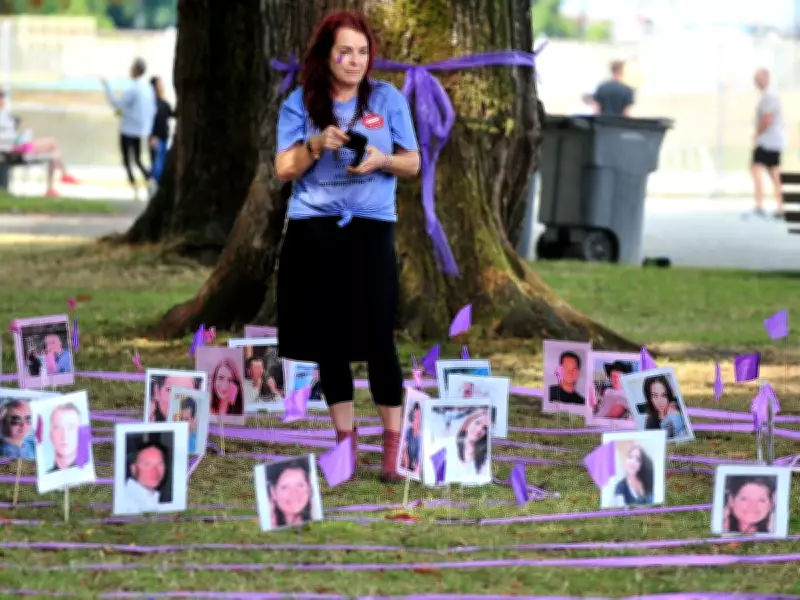
The human toll of the crisis remains devastating. In 2023, Vicki Cartwright and members of Moms Stop the Harm tied purple ribbons with memorial messages at Kits Beach to honor those lost to overdoses. These personal tragedies underscore the ongoing emergency.
Surrey MLA Elenore Sturko, a former RCMP officer, criticized the focus on supply-side solutions: "Through the misrepresentation of drugs as 'safe supply,' we created a black market for dealers to market their own drugs as safe supply."
Following the audit findings, B.C. modified the safer supply program to require witnessed consumption by health professionals rather than take-home distribution. This change drew criticism from advocates like Leslie McBain, whose son died from an overdose in 2014 after developing an addiction to prescribed opioids following a work accident.
As B.C. enters its second decade of this public health emergency, medical professionals and community advocates continue grappling with an evolving crisis that shows no signs of abating despite numerous interventions and policy changes.