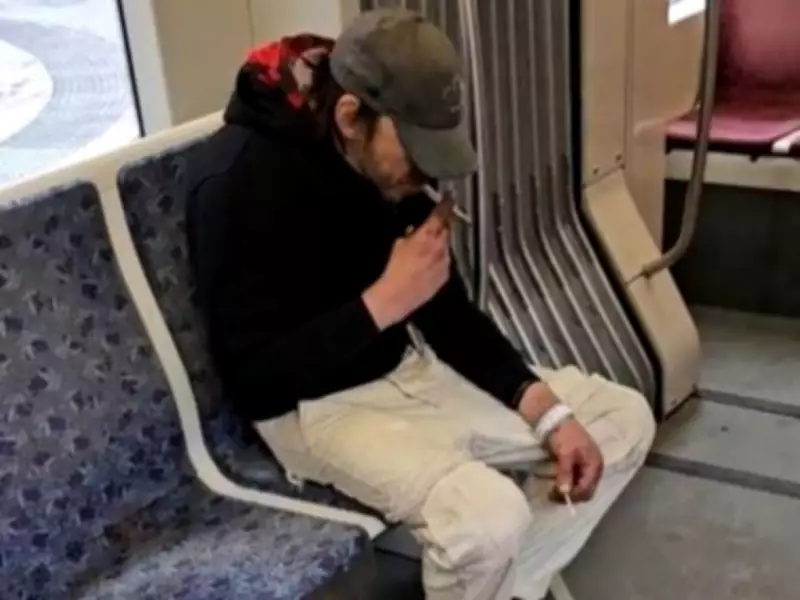
Just after 8:30 on a Friday morning, as students and commuters near Bay Street and Avenue Road attempted to get their morning coffee, they encountered a man hunched over in a zombie-like state, swaying in a doorway. He held a crack pipe in one hand and a cigarette in the other, unable to light either or move. This scene has become sadly common in Toronto.
Open Drug Use Becoming Normalized
Open drug use, not just marijuana but crack and meth, is increasingly visible on street corners, in doorways, parks, streetcars, and the subway. Last month, while watching someone curled up on a subway car floor, a visitor from Barbados remarked, "I've never been to a city where everything that is wrong has been normalized." He noted that Toronto is not the same city he knew a decade ago, a sentiment many residents share.
Taxpayer Funding of Paraphernalia
Under the guise of harm reduction, the City of Toronto has distributed millions of crack pipes, meth pipes, and syringes. According to Freedom of Information documents obtained by Integrity TO and shared with the Toronto Sun, between 2021 and 2025, the city procured:

- 3.45 million crack pipes
- 2.34 million meth pipes
- 14.92 million syringes
This averages to nearly 700,000 crack pipes, almost 500,000 meth pipes, and close to three million syringes per year. Critics argue that this approach, rather than reducing harm, enables addiction and worsens the crisis.
Harm Reduction: A Failed Policy?
Proponents claim harm reduction saves lives, but opponents call it a lie pushed by those wanting to liberalize drug laws. In British Columbia, which decriminalized all drugs and offered safer supplies, overdose deaths increased. Toronto Mayor Olivia Chow endorsed a similar path, requesting decriminalization in 2024, but the federal government rejected it after observing B.C.'s outcomes.
Overdose deaths in Toronto remain elevated. In 2015, there were 137 opioid overdose deaths; by 2024, that number rose to 467, though down from a pandemic peak of 601. Preliminary 2025 data suggests a decline, coinciding with the provincial government's closure of several safe injection sites in late 2024.
Brian Lilley, the author, argues that current policies are not working and calls for change at City Hall. He urges voters to replace Mayor Chow and her progressive councillors in the upcoming October election.