Lethbridge Senior Takes Matters Into Her Own Hands After Guide Dog Program Delays
Faced with extensive waiting lists from free service dog programs, Emily Lawson, a legally blind resident of Lethbridge, made a decisive move two years ago to fund her own guide dog. The senior, who experiences deteriorating low vision, emphasizes that a guide dog is crucial for her independence and safety.
"It will give me more freedom to walk without fear," Lawson stated, explaining that a guide dog would enhance her confidence in navigating stairs, dark areas, and unfamiliar indoor spaces. Her determination stems from a desire to avoid isolation and maintain an active lifestyle.
Frustration with Lengthy Waiting Lists
Lawson explored numerous options, contacting Canadian, U.S., and Scottish programs that offer free guide dogs, only to encounter the same issue: indefinite waiting periods. "They were happy to have me fill out an application, but absolutely nobody could give me any timeline at all," she recounted. Despite praising the quality of dogs trained by Canadian organizations, she highlighted the overwhelming demand, noting, "The problem is there are so many of us."

A prior spinal injury and a frightening fall off a curb while using her white cane—which resulted in a hospital visit and a warning about potential hip damage—further solidified her resolve. "I don't want to sit at home and be isolated like so many people I know," Lawson affirmed, underscoring her commitment to mobility and community engagement.
Funding the Journey to Independence
Unwilling to wait any longer, Lawson committed to obtaining a certified service dog through Aspen Service Dogs, which has training centres in Edmonton and Calgary. The total cost is $30,000, and she has already contributed $10,000 from her savings. As a pensioner in her 60s, she is now raising an additional $11,000 through a crowdfunding campaign, which has garnered nearly $3,000 in donations so far.
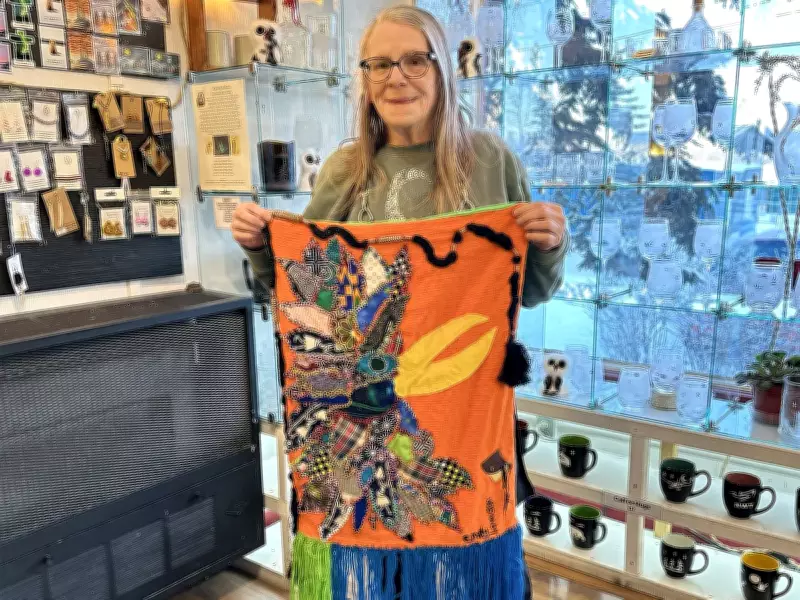
To supplement these efforts, Lawson, an artist, plans to sell her multimedia pieces—created using fabric textile designs, alcohol ink, and acrylic paint—as detailed on her GoFundMe page. Aspen Service Dogs CEO Caelan Snow explained that training a dog typically takes about two years, involving 2,000 to 3,000 hours of one-on-one instruction, though not all dogs complete the program.
Staying Active Amid the Pursuit
Despite the challenges, Lawson has remained vibrant and involved in her community. She walks with a white cane and founded a dragon boat team named "Blind Ambition," now in its fourth year, which is preparing for Lethbridge's late June festival. She also rides a bike, following her partner who guides her with verbal cues.
Lawson credits organizations like the Lethbridge Association of the Blind, which runs a bowling league, with helping her stay active post-pandemic. "That's one of those things that just kind of helps you to get out there and get moving and face the fears of getting around and being an active community member despite the vision loss," she reflected.
Her story highlights broader issues of accessibility and the lengths individuals must sometimes go to secure essential supports for independence.