A Shocking Suggestion That Began a Two-Year Nightmare
I was absolutely stunned when the nursing home administrator at my mother's rehabilitation facility looked me directly in the eyes and uttered the chilling words, "Let your mother die." This came without any medical justification, clinical evidence, or compassionate reasoning. My mother—an active, intelligent, and resilient woman—had recently survived a major stroke. Though she couldn't speak and struggled to walk, her medical team had been cautiously optimistic about her recovery prospects. It had only been a couple of months since her emergency hospitalization, and every sign pointed toward meaningful improvement.
The Administrator's Personal Trauma Spilled Into Professional Decisions
Only later did I discover what motivated his shocking advice: His own mother had recently died in a nursing home, and he was drowning in guilt, convinced he had failed her. In his distorted reasoning, allowing my mother to die would somehow spare me the guilt he believed I would inevitably experience. When I attempted to discuss this rationally, he shut down completely, unable or unwilling to separate his unresolved grief from the care my mother deserved. His private burden contaminated every decision about her treatment, transforming personal anguish into a dangerous lens through which he viewed her life.
Systemic Failures and Bureaucratic Indifference
I had naively believed that entering a rehabilitation facility meant my mother would be surrounded by trained professionals committed to her well-being. Instead, I encountered a health care system whose structural failings systematically stripped her of dignity, harmed her medically, and ultimately contributed to her death. As her son and patient advocate, I learned about the living hell she endured through the terror in her eyes, her tears, and her strained attempts at forming words.

My mother had been a legendary social worker in our community—a woman admired for her bold ideas and tireless advocacy. She created nationally recognized programs that improved care for elderly patients, yet she found herself subjected to precisely the kind of neglect she had devoted her life to preventing.
Misdiagnosis and Medication Errors
Despite being an intelligent and vital woman, she was labeled "psychotic" by one of the facility's psychiatrists simply because she couldn't respond to his questions—an obvious consequence of her stroke. Instead of recognizing this as a medical limitation, he pathologized it, resulting in harmful medications, misdiagnoses, and cavalier disregard for her dignity. At times, she received entirely wrong medications, leading to severe side effects. I would frequently find her alone in the dining room long after other residents had been escorted away, left like an abandoned object rather than a human being.
Research Confirms Widespread Problems in Long-Term Care
Tragically, my mother's case was not isolated. Research demonstrates how systemic understaffing and medication mismanagement plague long-term-care facilities. A 2021 study of nursing homes found that staff across multiple levels acknowledged frequent errors and risks connected to medication management. Wrong dosing, missing doses, and incorrect medications rank among the most common administration errors in these settings.
A 2024 analysis revealed that during 2017–18, 91% of U.S. nursing homes were short-staffed for registered nurses more than 40% of the time, contributing to neglectful care in basic tasks like feeding, hydration, mobility support, bathing, and medication administration.
The Critical Importance of Family Advocacy
I quickly learned the most essential rule of advocacy: Be present physically, often, and unexpectedly. A health care team may mean well, but without active family oversight, misinterpretations can rapidly escalate into medical errors. One day, a social worker assigned to my mother met with me about her care plan. When I mentioned that my mother had complained about unbearable heat in her room—communicated through garbled, effortful speech the social worker had ignored—she responded with indignation: "Why would she tell you and not me?" When I explained that my mother might feel more comfortable expressing herself to her own son, she accused me of fabricating the entire conversation.

This wasn't an isolated incident but part of a pattern: refusal to listen, default assumptions that patients with impairments lack credible voices, and readiness to disregard family concerns as inconvenient disruptions.
Medication Errors Requiring Hospital Treatment
Another time, I found my mother unusually lethargic and barely conscious. Alarmed, I asked nurses which medications she had received that day. They claimed they couldn't reach her doctor and therefore couldn't provide information. Only when I insisted on speaking with the administrator was the physician contacted, discovering she had been given entirely wrong medication.
Studies confirm that medication errors in long-term care are widespread and serious. One retrospective observational study concluded that administering drugs to wrong nursing home residents occurred frequently enough to require hospital treatment, sometimes for life-threatening reactions.
Policy Implications and Systemic Reforms Needed
My mother's experience offers powerful lessons for families, medical professionals, and policymakers. Families must understand that the health care system isn't infallible—you cannot assume appropriate care is always given. Vigilance is essential: ask questions, request documentation, build relationships with staff, visit often, and most importantly, listen to your loved one even when their words are imperfect or fragmented.
For medical professionals, this story underscores the importance of humility and respect. A patient who cannot speak is still communicating. A family member raising concerns isn't an adversary but an ally in care.
For policymakers, this narrative reminds us that elder-care oversight remains dangerously inadequate. Staffing ratios, training standards, whistleblower protections, and transparent reporting must be strengthened to protect our most vulnerable citizens. A 2018 report revealed that some widely used public evaluation tools for nursing homes fail to capture the full extent of patient safety risks, including underreported medication errors.
A Final Moment of Connection and Peace
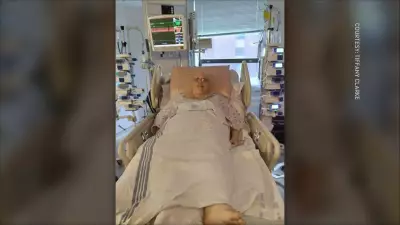
The last time I saw my mother remains vividly painful. I received a call from a nurse informing me she had been taken to the emergency room with breathing difficulties. Something in my gut told me this time was different. When I arrived and saw her lying there, I immediately understood the seriousness. She was barely able to open her eyes, breathing shallowly and slowly. But when she recognized me, her eyes filled with tears, and she began to cry. I took her hand and cried too—both of us wordlessly acknowledging what we had been fighting against for so long.
In that moment, the roles between us dissolved. We were simply a mother and son who loved each other fiercely, silently grieving the end of a long, unjust struggle. Though she couldn't speak, I could feel her relief—relief that she wasn't alone, relief that I was there, relief that the fear and pain she had endured were finally ending.
Legacy of Advocacy and Dignity
As I held her hand in those final hours, I fully understood what she had always taught others: that dignity at the end of life isn't about machines, medications, or clinical reports—it's about presence, compassion, and being seen. In the quiet of that hospital room, my mother finally found the peace denied to her for far too long.
My mother's legacy isn't erased by what happened to her. If anything, the injustice she endured highlights the urgency of the work she devoted her life to. She would want her experience—not her suffering—to be the lasting lesson. She would want families to fight harder, professionals to listen deeper, and institutions to be held accountable.
She spent her life standing up for those who couldn't stand for themselves. When her time came, I stood for her. And in doing so, I learned what she had always known: that every human being, regardless of age or ability, deserves not only care but dignity, respect, and a voice that is truly heard.