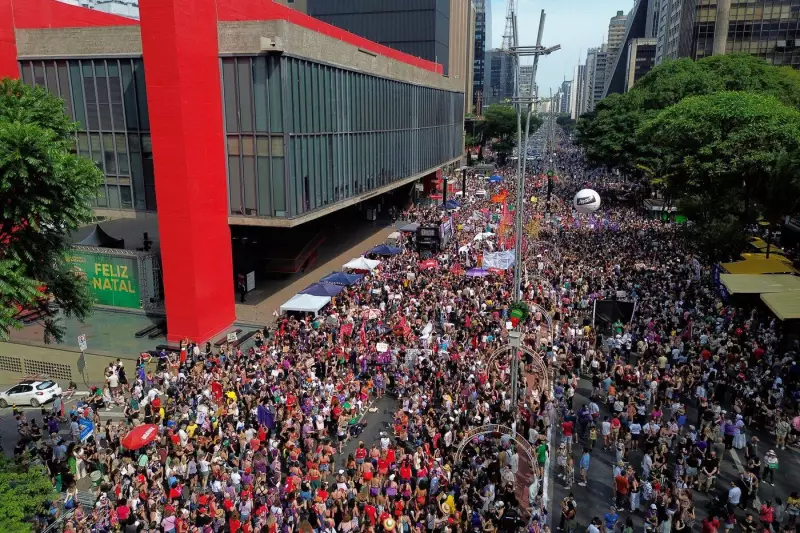
Thousands of women and allies took to the streets in cities across Brazil on Sunday, December 7, 2025, in a powerful display of anger and grief following a series of shocking cases of gender-based violence and femicide. The nationwide protests, one of the largest seen in recent years, were a direct response to high-profile incidents that have ignited public outrage and renewed calls for systemic change.
A Nationwide Outcry for Justice
The focal point of the demonstrations was a major march in São Paulo, where a dense crowd of protesters gathered. They carried signs with slogans condemning violence against women and demanding justice for the victims. The protest was organized swiftly through social media and women's rights networks, channeling widespread public dismay into a coordinated public action.
While the specific triggering cases were not detailed in the initial report, the scale of the response indicates they involved particularly brutal or high-profile acts of femicide—the killing of women because of their gender. Such cases have persistently plagued Brazil, which consistently ranks among the countries with the highest number of femicides globally.

The Persistent Shadow of Femicide in Brazil
Brazil has long struggled with epidemic levels of violence targeting women. Official data frequently shows that a woman is killed every few hours in the country, often by a current or former intimate partner. Activists have repeatedly criticized what they see as inadequate legislation, slow judicial processes, and a culture of impunity that fails to protect women.
The protest on December 7 serves as a stark reminder that despite existing laws like the Maria da Penha Law, which strengthened penalties for domestic violence, implementation and cultural change lag far behind. Demonstrators are calling not just for punishment after the fact, but for preventative measures and a fundamental shift in societal attitudes.
Global Context and Local Solidarity
This wave of protests in Brazil resonates with a global movement against gender-based violence, seen in campaigns like Ni Una Menos (Not One Less) in Latin America and others worldwide. The visual documentation of the São Paulo march, credited to photographer Ettore Chiereguini, captures the determination and collective strength of the movement.
The timing of the protest, during the global 16 Days of Activism against Gender-Based Violence, adds a layer of international solidarity to the national demand for action. It underscores that the fight for women's safety is both a local emergency and a universal human rights issue.
The Brazilian government now faces renewed pressure to address the crisis with more than just rhetoric. Protesters are demanding concrete steps, including increased funding for women's shelters, more robust enforcement of protection orders, and comprehensive educational programs aimed at preventing violence before it starts. The massive turnout on the streets signals that public patience has run out, and tangible results are expected.