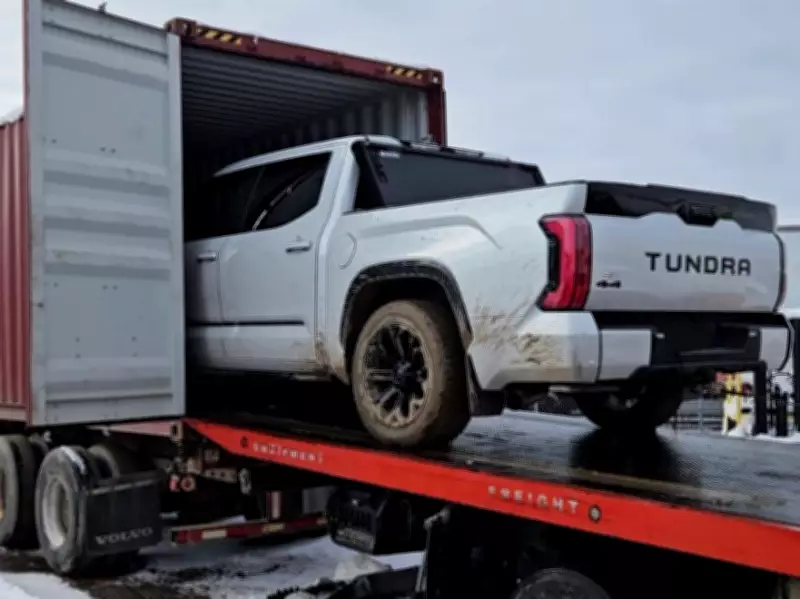
New statistics from the Equite Association, an insurance crime watchdog, indicate a significant 18% reduction in vehicle thefts across Canada during 2025 compared to the previous year. Despite this positive trend, the recovery rate for stolen automobiles remains critically low, with more than one-third of pilfered vehicles never being returned to their owners.
Steep Decline in Theft Numbers
According to the comprehensive report, Canadians reported 46,999 vehicle thefts in 2025, a notable drop from 57,359 incidents in 2024. This represents a 33% decrease compared to the peak year of 2024 when over 70,000 vehicles were reported stolen nationwide.
"The good news is we have seen a reduction in the number of vehicles stolen, but I would say that we still have a long way to go," stated Bryan Gast, vice-president of investigative services for Equite Association. "The numbers are still high. Organized crime is still targeting Canadian vehicles."

Financial Impact Remains Substantial
Despite the decreasing theft numbers, the financial consequences continue to be severe. Insurance claims related to auto theft reached an estimated $900 million in 2025, highlighting the ongoing economic burden on both insurers and vehicle owners.
Regional Variations in Theft Reduction
The report reveals significant geographical differences in theft reduction across Canadian provinces:
- Quebec experienced the most substantial decrease at 25%
- Ontario followed closely with a 22% reduction
- Western Canada saw an 11% decline
- Atlantic Canada recorded only a minimal 2% decrease
Gast attributed Atlantic Canada's modest improvement to the region having fewer vehicles available for theft, despite the Port of Halifax serving as a significant export point for stolen automobiles.
Recovery Rates Paint Concerning Picture
While theft numbers have declined, the recovery statistics present a troubling scenario. Nationally, only 59% of stolen vehicles are successfully recovered. The situation is particularly dire in Ontario and Quebec, where approximately half of stolen vehicles are never returned to their rightful owners.
Alberta demonstrates a more promising recovery rate of 71%, though the province continues to function as a "feeder province" where vehicles stolen from other regions are frequently registered before being dismantled or exported.
Government Response and Organized Crime Challenges
The report credits much of the theft reduction to enhanced law enforcement strategies implemented in 2024 as part of a broader federal action plan. These measures included improved coordination between police agencies, increased inspections of shipping containers at ports, and stricter criminal penalties for auto theft offenses.
Public Safety Minister Gary Anandasangaree recently responded to a House of Commons committee report on auto theft, agreeing with 22 of their recommendations while requesting further study on ten others. The government has committed to strengthening measures against money laundering and terrorist financing while enhancing intelligence-sharing with law enforcement partners.
However, authorities continue to face challenges from sophisticated organized crime networks that employ both traditional methods—such as dismantling vehicles for parts or shipping them overseas—and newer tactics like fraudulent financing schemes that impact financial institutions and insurance companies.
Gast emphasized the need for continued collaboration between the automotive industry, government agencies, and law enforcement to develop more effective theft prevention technologies and strategies. "Organized crime groups are adapting their methods," he noted, "and we must remain vigilant in our efforts to protect Canadian vehicles and consumers."