Canada and South Korea Forge Industrial Partnership with Focus on Automotive Sector
In a significant development for international trade and industrial cooperation, the governments of Canada and South Korea have signed a memorandum of understanding aimed at fostering Korean automotive manufacturing and investment within Canadian borders. This agreement emerges as South Korea actively pursues a multibillion-dollar contract to construct up to 12 submarines for the Royal Canadian Navy, highlighting the strategic interplay between defense procurement and economic partnerships.
Details of the Memorandum of Understanding
The document, titled Korea-Canada Industrial Collaboration on Future Mobility and the Establishment of the Korea-Canada Industrial Cooperation Committee, was formally signed this week by Industry Minister Mélanie Joly and her South Korean counterpart, Kim Jung-kwan, Minister of Trade, Industry and Resources. The signing ceremony occurred on Tuesday during a visit by a high-level South Korean delegation to Ottawa, which included discussions regarding the submarine bid.
Although non-binding, the MOU commits both nations to collaborative efforts in several key areas of the automotive industry. Specifically, it pledges to promote the manufacturing of automobiles, electric vehicles, battery production, and hydrogen-powered vehicles. The agreement explicitly mentions advancing a Korean automotive industrial footprint in Canada and exploring electric vehicle manufacturing opportunities.

Broader Industrial and Economic Cooperation
Beyond the automotive sector, the memorandum outlines cooperation in the battery supply chain, encompassing critical mineral extraction and refinement, research, and development. It also addresses collaboration on hydrogen-powered commercial vehicles and establishing a stable hydrogen production and supply chain. The accord recognizes the complementarity of the two economies and their significant potential for cooperation in the industrial sector.
Additionally, the MOU extends to other industries, including artificial intelligence, steel, cement, nuclear power, and liquefied natural gas. This broad scope underscores the comprehensive nature of the proposed partnership between Canada and South Korea.
Context of the Submarine Procurement Competition
This industrial agreement is closely linked to Canada's ongoing procurement process for new submarines. As previously reported, Ottawa has requested both South Korea and Germany, the two remaining contenders for the submarine contract, to facilitate auto industry production commitments in Canada as part of their bids. The submarine deal, potentially worth tens of billions of dollars, could lead to a long-term international partnership lasting over 50 years, with a total value exceeding $100 billion including acquisition, maintenance, and upkeep.
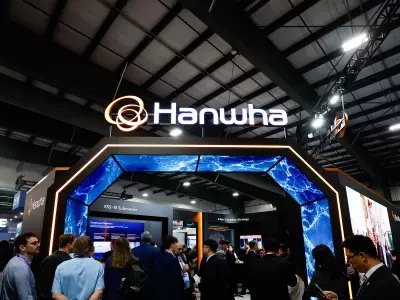
Canada has narrowed its selection to two options: South Korea's Hanwha Group, offering the KSS-III Batch-II submarine, and a German-Norwegian bid featuring ThyssenKrupp Marine Systems (TKMS) with the 212CD model. Both are diesel-electric submarines, as Canada has excluded nuclear-powered vessels from consideration.
Historical and Current Korean Investment in Canada
The MOU builds upon existing Korean industrial presence in Canada. Notably, in the late 1980s, Hyundai briefly operated a stamping and assembly plant in Bromont, Quebec, with support from federal and provincial governments before its closure. More recently, Korea's LG Corp. has made investments in Canada's electric vehicle supply chain. Currently, Hyundai does not have auto production facilities in Canada, whereas Volkswagen, through its PowerCo subsidiary, has committed to building an EV battery factory in St. Thomas, Ontario.
The South Korean delegation visiting Ottawa this week includes key figures such as Kang Hoon-sik, South Korea's presidential chief of staff, and Minister of Defense Acquisition Program Administration Lee Yong-cheol. Although not part of the official government delegation, Hyundai Motor Group executive chair Euisun Chung is also participating in the visit, signaling the importance of automotive industry involvement in these discussions.

This memorandum of understanding represents a strategic move by both countries to leverage economic cooperation in support of broader geopolitical and defense objectives, potentially reshaping industrial landscapes and international trade relations in the automotive and defense sectors.