Canada Shifts Auto Strategy Toward Asia Amid U.S. Tariff Pressure
As General Motors Co. permanently shuttered the assembly line where he had worked for over two decades, Mike Horne confronted a harsh new reality. Sitting in a union office established to assist laid-off workers in Ingersoll, Ontario, the fifty-something automotive veteran began accepting that his position at the CAMI plant might never return.
The End of an Era for Canadian Auto Manufacturing
The factory, located approximately two hours from Detroit, once produced hundreds of Chevrolet Equinox SUVs daily. For local residents, securing employment there felt comparable to winning the lottery. However, General Motors removed the Equinox from production, transitioning instead to electric delivery vans that failed to gain market traction. Compounding these challenges, United States tariffs on Canadian-manufactured vehicles have made sustaining operations increasingly difficult.
"It's just time to get back out and maybe put CAMI in the rear-view mirror and focus on something else," Horne reflected, echoing sentiments shared by many displaced workers across Ontario's automotive regions.

Fractured Relations with Detroit Automakers
Canada's longstanding partnership with Detroit-based automotive manufacturers has grown increasingly contentious following President Donald Trump's tariff policies. These measures prompted swift reductions in both employment and production throughout Ontario facilities. Industry Minister Melanie Joly has threatened legal action against General Motors and Stellantis NV, Chrysler's parent company, accusing them of violating previous commitments made when accepting government financial support.
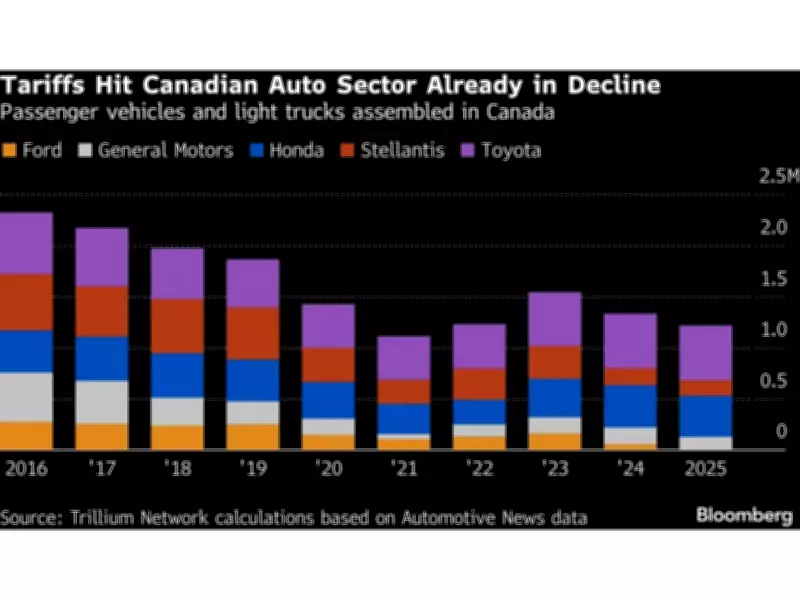
Historically dominant in Canadian automotive manufacturing, the Detroit Three—General Motors, Stellantis, and Ford Motor Co.—now account for merely 23 percent of cars and light trucks produced nationally, according to Ontario research data. This represents a dramatic decline from 56 percent just ten years ago. Japanese automotive giants Honda Motor Co. and Toyota Motor Corp. have emerged as the industry's most significant players in the Canadian market.
A Strategic Pivot Toward Asian Partnerships
Within Prime Minister Mark Carney's administration, a growing consensus suggests that if major U.S. automakers continue withdrawing from Canadian manufacturing, there exists little justification for extending preferential treatment. Consequently, the government has undertaken two unprecedented initiatives that would have been unimaginable fifteen months prior to Trump's return to the White House and his repeated declarations opposing U.S. purchases of Canadian-made automobiles.
First, Carney and Joly have actively courted Chinese investment in Canada's automotive sector during diplomatic visits to Beijing. This outreach potentially opens doors for future Canadian production of BYD or Chery vehicles that could eventually navigate Toronto and Montreal streets.
Second, earlier this month, the government introduced a comprehensive new automotive strategy featuring a proposed import credit system. While complex in implementation, this framework aims to communicate a clear message to automotive manufacturers: companies wishing to sell vehicles in Canada without incurring tariffs must establish domestic production facilities.
Warning Shots and Future Implications
This policy shift serves as a direct warning to corporations like General Motors, which maintains the largest Canadian market share despite selling approximately 300,000 cars and trucks nationally last year. With the closure of Horne's CAMI facility, General Motors now operates just a single Canadian assembly plant manufacturing Chevrolet pickup trucks, importing the majority of its vehicles from the United States.
The strategic realignment represents a fundamental transformation for Canada's automotive heartland, signaling reduced dependence on traditional U.S. manufacturing partnerships and increased openness to Asian investment and production collaborations. As displaced workers like Mike Horne contemplate career transitions, the entire Canadian automotive sector faces a period of significant restructuring and adaptation to new global economic realities.