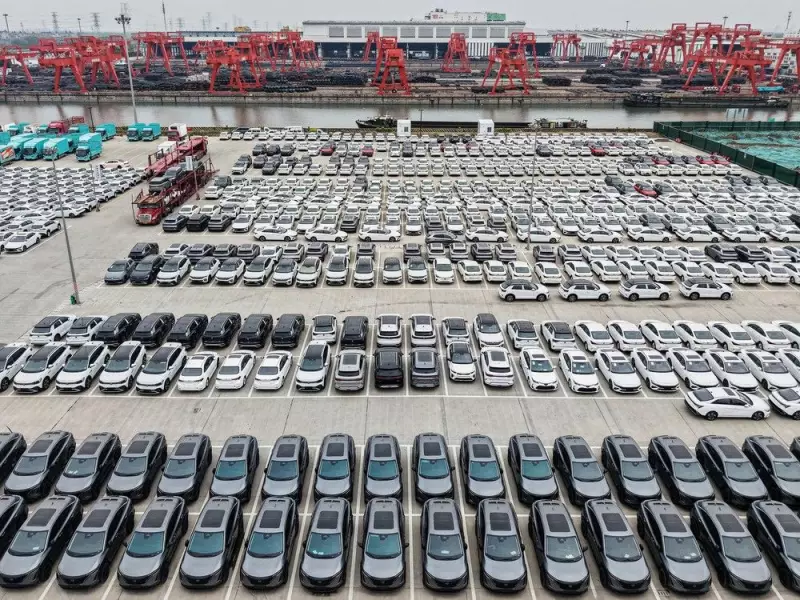
The Canadian government is crafting a bold new automotive strategy designed to reward companies that manufacture vehicles within its borders, a direct response to pressure from the Trump administration to shift production south of the border.
A Strategic Counter-Move
Expected to be unveiled by Industry Minister Melanie Joly in February 2026, the plan aims to halt the exodus of factories and jobs that began after U.S. President Donald Trump imposed tariffs on foreign-made vehicles in April 2025. A government official, speaking on condition of anonymity, stated the strategy seeks to attract new plants and expand existing production where possible.
The policy shift comes after a difficult year for Canada's auto sector. General Motors Co. shut down one Ontario plant and threatened cuts at another, while Stellantis NV canceled plans to build Jeeps near Toronto, opting for Illinois instead. The new framework would grant better market access in Canada—where 1.9 million new vehicles were sold last year—to automakers with local assembly lines.

Opening the Door to Chinese Investment
In a significant development, the strategy will for the first time allow Chinese companies to assemble vehicles in Canada, but under strict conditions. These may include mandates to use Canadian software and form joint ventures with domestic firms, the official indicated.
This move aligns with Prime Minister Mark Carney's recent efforts to reset relations with China. On January 16, 2026, following a meeting with Chinese President Xi Jinping in Beijing, Carney announced a trade truce. The deal allows approximately 49,000 Chinese electric vehicles to enter Canada under a preferential tariff rate of about 6%. In return, China is expected to reduce tariffs on Canadian agricultural products and permit visa-free travel for Canadians.
During the trip, Minister Joly met with Chinese automakers BYD Co. and Chery Automobile Co., as well as Canadian auto parts giant Magna International Inc..
Reshaping a Vulnerable Market
Canada's auto market, comparable in size to California's, remains heavily reliant on imports. It is the largest importer of U.S.-made automobiles, yet major players like Tesla Inc., Nissan Motor Co., and Kia Corp. have no manufacturing footprint in the country. Currently, only five companies operate assembly plants in Canada: GM, Stellantis, Ford Motor Co., Toyota Motor Corp., and Honda Motor Co., with most of their output destined for the U.S.
Since the start of the Trump trade war, however, U.S. factories' market share in Canada has declined, with gains made by auto plants in Mexico and South Korea, according to Statistics Canada data.
The broader auto strategy will also address electric vehicle sales mandates and consumer incentives, as the Carney government seeks to bolster a manufacturing sector struggling under U.S. tariffs and facing an upcoming review of the U.S.-Mexico-Canada Agreement.