Canada Forges Independent Path on Electric Vehicles with New Automotive Strategy
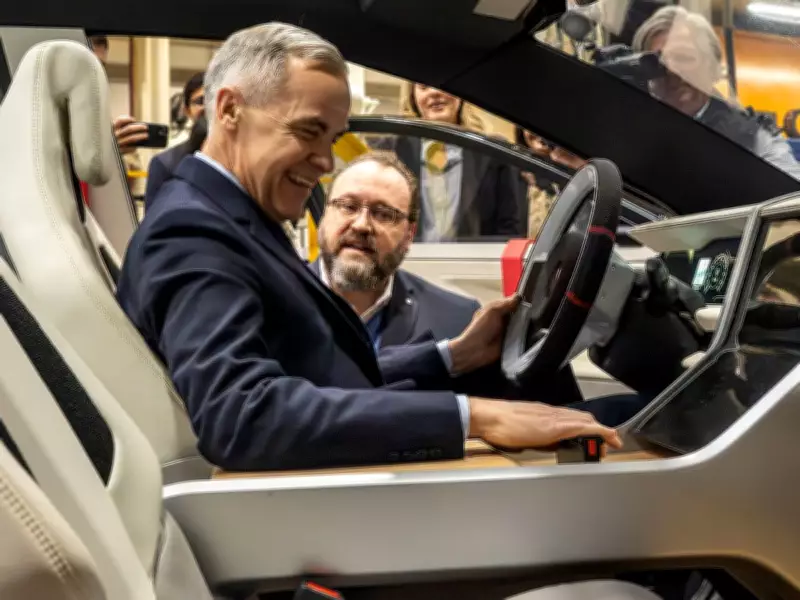
Prime Minister Mark Carney has unveiled a comprehensive new automotive strategy that signals a significant departure from United States policies on electric vehicles. The announcement, made during a tour of an auto-parts plant in Woodbridge, Ontario, establishes Canada's intention to pursue an independent course in the rapidly evolving EV landscape.
Diverging Policies Between Neighbors
The federal government's strategy makes clear that Canada will not follow the American approach to electric vehicle adoption. Since President Donald Trump returned to office last year, the United States has moved in nearly the opposite direction by terminating federal consumer tax credits for EVs, revoking the goal of achieving fifty percent EV adoption by 2030, and halting expansion of national charging networks.
Perhaps more significantly, the U.S. has drafted policies that will likely eliminate a credit-trading program that allowed pure-play EV manufacturers like Tesla to boost revenues by selling emission credits to traditional automakers.

Canada's Proactive EV Measures
In contrast to American policies, Prime Minister Carney announced several proactive measures designed to revitalize lagging EV sales in Canada. These include reinstating cash rebates for consumers who purchase electric vehicles, encouraging investment in domestic EV production, and committing substantial resources to developing a national EV charging infrastructure.
Carney also committed to developing a new Canadian system of regulations for tailpipe emissions, marking a departure from years of essentially adopting U.S. standards. This contrasts sharply with American actions that have included rescinding California's waiver to set stricter emissions standards and attempting to lower national fuel economy requirements.
Economic Independence and Trade Realities
The prime minister described the new auto strategy as part of his broader plan to make Canada more economically independent and less reliant on a single trading partner. The United States currently accounts for more than three-quarters of Canada's exports, creating what Carney called "a serious vulnerability."
"There's no greater symbol of how closely the Canadian and American economies have been intertwined than automobiles," Carney stated during a press conference in Vaughan, Ontario. "That trade relationship that once was a great strength has now become a serious vulnerability."
Questioning North American Integration
While repeatedly expressing preference for an integrated North American auto manufacturing sector that allows vehicles to move freely across the U.S.-Canada border, Carney cast doubt on whether this traditional model remains viable under current conditions.
"We recognize that that is not the current objective of the U.S. administration," he explained. "Their approach has changed. They have that right, so we have to prepare for all possibilities. We must take care of ourselves."
Contrasting Approaches to Chinese EVs
The divergence between Canadian and American policies becomes even more apparent when examining approaches to Chinese electric vehicles. In January, Carney agreed to allow 49,000 Chinese EVs per year into Canada at the most favoured nation duty rate of 6.1 percent.
This represents a significant break from the United States' policy of imposing 100 percent tariffs on Chinese EVs, a move that has already drawn warnings from President Trump. Canada had previously enacted similar 100 percent tariffs on Chinese EVs in late 2024 under former Prime Minister Justin Trudeau, who described the policy as being enacted "in alignment, in parallel, with other economies around the world"—a clear reference to the United States.
Market Implications and Strategic Positioning
Although Carney has noted that 49,000 EVs represent only about three percent of the 1.8 to 1.9 million vehicles sold annually in Canada, this number constitutes a far larger share of the electric vehicle market specifically. The new strategy positions Canada to develop its own automotive ecosystem while navigating the complex realities of North American trade relations.

The comprehensive approach includes not only consumer incentives and infrastructure development but also signals a broader shift toward regulatory independence in an industry that has long been closely integrated across the Canada-U.S. border.