Chinese 'Knock-Down' Car Kits Could Devastate Canadian Auto Manufacturing
Prime Minister Mark Carney has championed the arrival of Chinese-made electric vehicles as a means to provide affordable cars and create new automotive manufacturing opportunities for Canadian workers. However, many within the auto industry express deep concerns that this move could instead displace existing manufacturing operations and result in the loss of thousands of jobs across the country.
Industry Fears Over Scaled-Down Assembly Plants
Labor union officials, Ontario Premier Doug Ford, and industry leaders have voiced significant apprehension about Chinese companies potentially shipping "knock-down kits" to Canada. These kits, often referred to as CKDs (Complete Knock Downs), would involve vehicles being manufactured entirely in China before being shipped to Canada for final reassembly.
Flavio Volpe, president of the Auto Parts Manufacturers' Association of Canada, explained the concern: "The general public doesn't understand the difference between knock-down kits and full assembly. When you buy furniture from Ikea, you bring it home and you put it together. That's not you manufacturing a sofa and that's what a CKD kit is from China."

Potential Economic Impact and Job Losses
In the most concerning scenario, these knock-down kits could create a significant void for Ontario's extensive network of auto-parts companies that currently supply components and services to established assembly plants. Volpe has provided calculations suggesting that CKD plants could erase billions of dollars in economic activity and eliminate thousands of Canadian jobs.
Earlier this month, Unifor, Canada's largest labor union representing auto workers, revealed that Stellantis NV is considering a plan to reopen its Brampton, Ontario plant using CKD kits. While Stellantis has neither confirmed nor denied these plans, the company stated: "We are in active discussions with government officials and key stakeholders to ensure that the conditions for success are in place to support continued investment in Canada."
Government Response and Industry Uncertainty
Federal Industry Minister Mélanie Joly has expressed opposition to shipping cars in kits to Ontario. However, the federal government has provided limited details about its plan for China to ship 49,000 electric vehicles to Canada at a 6.1 percent duty rate, including which models will be selected and how the process will function.
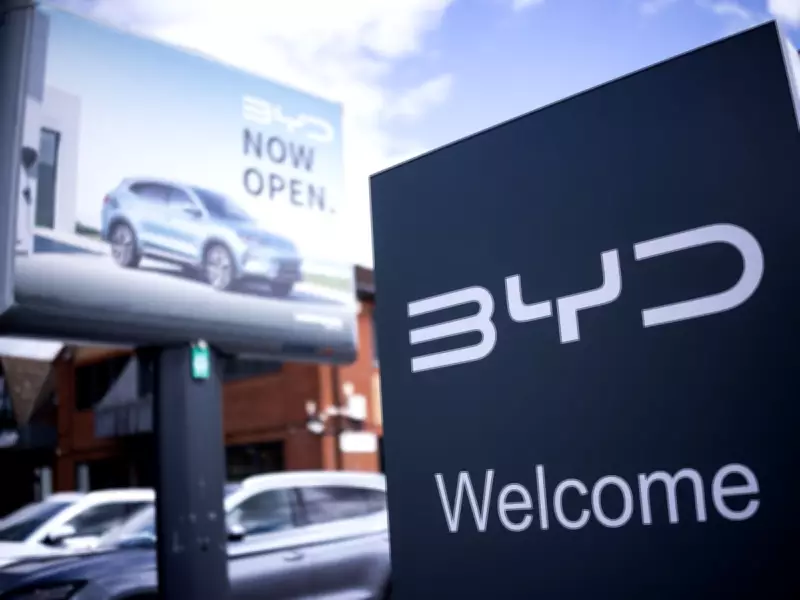
Reports indicate that Chinese EV manufacturer BYD Co. Ltd. is interested in establishing a dealership network in Canada, though some industry sources question the logic of this move given the limited number of vehicles permitted to enter the country. Other Chinese automotive brands have also reportedly expressed interest in the Canadian market.
Broader Industry Context and Future Concerns
Like other automakers operating in Canada, Stellantis maintains a joint-venture partnership with a Chinese EV manufacturer, though the company has not indicated plans to operate such a partnership within Canada. Notably, Stellantis paused a multi-year renovation of its Brampton assembly plant last year, adding to industry uncertainty.
Amid these developments, some within the sector have questioned whether reopening a closed plant with CKD kits represents a better outcome than keeping the facility shuttered entirely. This debate occurs against a backdrop of declining Canadian auto production in 2025, attributed to tariffs and market uncertainty.
The arrival of Chinese electric vehicles presents a complex challenge for Canada's automotive industry, balancing the promise of affordable transportation against the potential erosion of domestic manufacturing capacity and employment.