The global electric vehicle market is shifting gears, moving from rapid acceleration to a period of significantly slower growth. Industry analysts are forecasting a pronounced cooling in 2026, with automakers worldwide preparing for what some are calling an 'EV winter' before a potential rebound later in the decade.
A Global Slowdown in Momentum
According to research firm BloombergNEF, global passenger EV sales are expected to reach 24.3 million units in 2026. While that figure represents growth, the pace is slowing dramatically. The projected increase of only 12 per cent over 2025 compares weakly to the 23 per cent growth seen the previous year. This deceleration is the result of simultaneous pressures in the world's largest automotive markets.
Nathan Niese, Boston Consulting Group's global lead for EVs and energy storage, specifically pointed to the United States, where producers are facing this challenging 'EV winter.' He indicated that automakers will need to navigate difficult months ahead, with a likely revival in sales not expected until 2027 or 2028. While the long-term outlook for battery-powered transport remains positive, Niese stated there isn't "a 2026 story buried in there that says there's lots to be optimistic about."

Regional Challenges: Policy Shifts and Subsidy Cuts
The headwinds are coming from multiple directions. In the U.S., the Trump administration's withdrawal of up to US$7,500 in consumer tax credits after September 2025, combined with a rollback of stringent fuel-economy standards, has sent the market into a tailspin. U.S. EV sales plunged 41 per cent in November 2025 year-over-year. BloombergNEF forecasts a 15 per cent contraction in U.S. passenger EV sales for the full year 2026.
This policy environment has triggered major strategic reversals. Ford Motor Co. highlighted the sector's fragility in December 2025 by taking a staggering US$19.5 billion in charges related to an overhaul of its EV business. A key part of this plan involves converting its flagship electric F-150 Lightning truck into an extended-range hybrid vehicle.
Even in China, the world's undisputed EV leader, growth is expected to moderate. The Chinese government is winding down support, having cut the EV tax break in half for 2026 and added new restrictions to a cash-for-clunkers program. Authorities have criticized "rat-race competition" and are cracking down on the deep discounts used to spur demand.
Intensifying Competition and Market Saturation
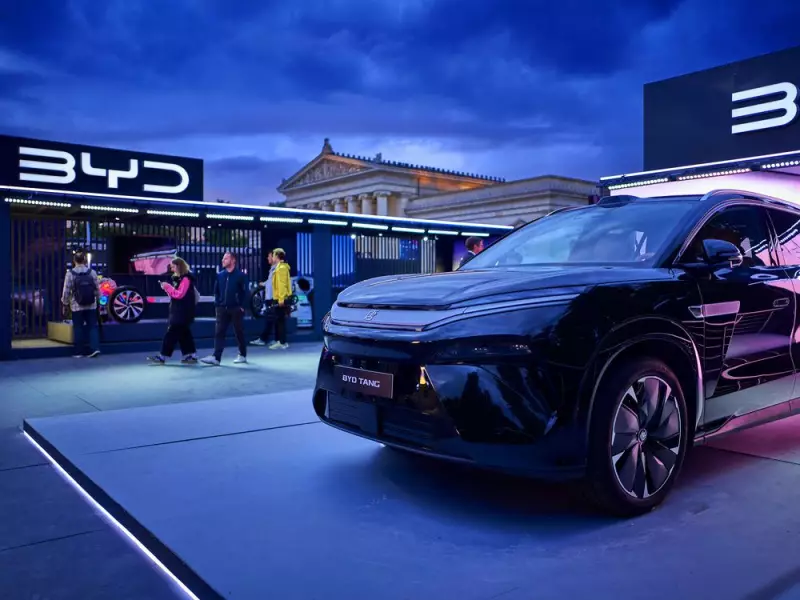
The fierce rivalry in China's crowded auto sector is taking a toll on its champion. BYD Co. posted its weakest annual sales growth since 2020 last year, as rivals like Geely Automobile Holdings Ltd. and newcomer Xiaomi Corp. gain ground. Chinese automakers are also finding it harder to grow as they expand into tougher, less saturated markets like smaller cities and rural areas.
Bloomberg Intelligence estimates China's passenger EV sales, including plug-in hybrids, reached 15.6 million in 2025, a 27 per cent annual increase. For 2026, growth is projected to slow to just 13 per cent. Michael Dunne, CEO of Dunne Insights, noted that "The Chinese government is definitely trying to cool the price war."
As Chinese demand softens, the nation's auto producers have aggressively tapped export markets, adding to competitive pressures globally. With Europe also wavering on its combustion engine phase-out timeline, the path for electric vehicles in 2026 is set to be bumpy, marking a pivotal transition year for the industry after a decade of explosive growth.