Ford Motor Company's chief executive has underscored the vital importance of the continental trade pact linking the United States, Mexico, and Canada for the future of automotive manufacturing.
A High-Profile Plant Tour with a Trade Message
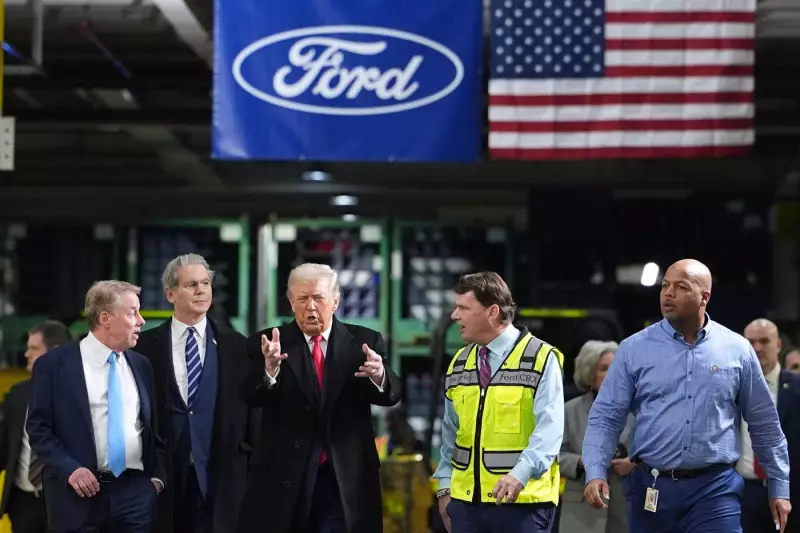
On Tuesday, January 13, 2026, Ford CEO Jim Farley hosted former U.S. President Donald Trump for a tour of the historic Ford River Rouge complex in Dearborn, Michigan. The visit, documented by Associated Press photographer Evan Vucci, also included Ford Executive Chairman Bill Ford, U.S. Treasury Secretary Scott Bessent, and River Rouge Plant Manager Corey Williams.
During the high-profile event, Farley highlighted the indispensable role of the United States-Mexico-Canada Agreement (USMCA) for the industry's supply chains and competitive health. The CEO's comments come as the trade deal continues to shape manufacturing and investment decisions across North America.

Why the Trade Pact Remains a Cornerstone
Farley's declaration that the agreement is 'critical' signals the ongoing reliance of major automakers on the integrated economic framework established by the USMCA. The deal, which replaced the older NAFTA, governs billions of dollars in cross-border trade in vehicles and auto parts.
For automotive giants like Ford, which operate complex assembly and parts networks spanning all three nations, the stability and rules provided by the USMCA are foundational. The pact influences everything from sourcing materials and components to determining where final vehicles are assembled for duty-free access to the massive North American market.
The tour at the River Rouge plant, a symbol of American industrial might, provided a potent backdrop for reinforcing the message that modern auto manufacturing is inherently a North American endeavor.
Implications for the Future of Auto Manufacturing
The CEO's public emphasis on the trade deal serves as a reminder to policymakers in Washington, Ottawa, and Mexico City of the sector's priorities. As the automotive industry undergoes a massive transformation toward electric and connected vehicles, predictable trade rules are seen as essential for securing the investments needed for this transition.
Farley's stance aligns with the broader industry view that maintaining strong, tariff-free trade across the continent is necessary to compete globally. Any significant disruption or renegotiation of the USMCA could force costly reorganizations of supply chains that have been built over decades.
The event in Dearborn, therefore, was more than a simple facility tour; it was a strategic reaffirmation of the economic ties that bind the North American auto industry together, with the USMCA at its core.