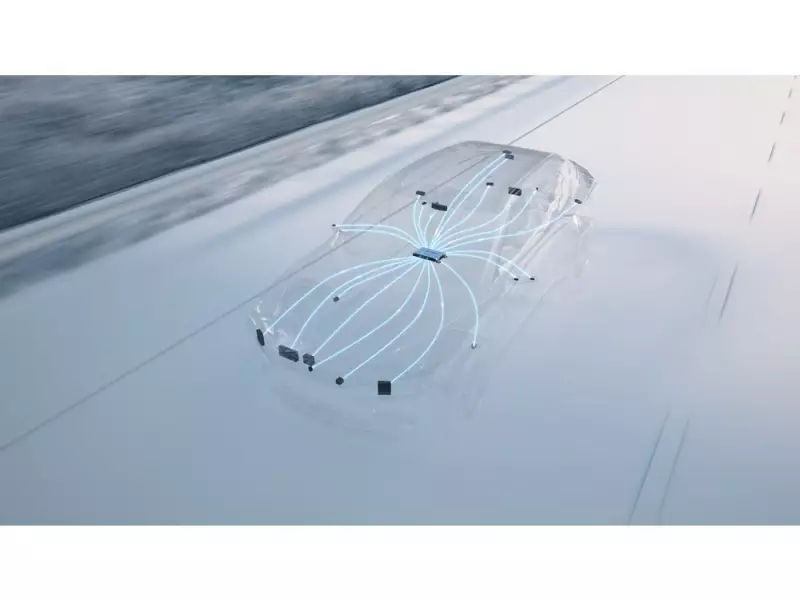
In a significant move for the automotive technology sector, Magna International Inc., based in Aurora, Ontario, has announced an expanded strategic partnership with tech giant NVIDIA. The collaboration, revealed on January 5, 2026, is designed to help global automakers accelerate the deployment of next-generation, software-defined vehicles.
Core of the Collaboration: Integration and Validation Services
The heart of the expanded partnership involves Magna offering a comprehensive suite of services to original equipment manufacturers (OEMs) utilizing the NVIDIA DRIVE Hyperion platform. Magna will provide system integration, validation, and vehicle launch services specifically for the NVIDIA DRIVE AV software stack, which runs on the powerful DRIVE AGX Thor accelerated computing platform.
This initiative positions Magna as a critical tier-one integrator, bridging NVIDIA's advanced artificial intelligence and computing hardware with the complex realities of automotive manufacturing and safety certification. The services are tailored to support a wide spectrum of assisted and automated driving systems, covering L2++, L3, and L4 levels of autonomy.

What This Means for Automakers
For automotive companies looking to bring advanced features to market, this collaboration aims to simplify a notoriously complex process. Magna's role is flexible, allowing OEMs to engage with the full range of services or select specific components. Key offerings include:
- System Integration: Coordinating hardware and software—including electronic control units (ECUs) and sensors—to ensure seamless operation.
- Rigorous Testing and Validation: Employing advanced tools and real-world driving scenarios to confirm system performance, reliability, and safety ahead of production launches.
- Global Launch Support: Assisting with the regional rollout of new platforms while ensuring they meet stringent local quality and safety standards.
Executive Perspectives on the Strategic Move
Suresh Boddi, Vice President of Core Engineering and Technology Partnerships at Magna Electronics, emphasized the company's strategic goal. "Magna is driving the shift to software-defined vehicles by enabling automakers to achieve complete, integrated systems at scale," Boddi stated. "Our collaboration with NVIDIA on its DRIVE Hyperion with DRIVE AGX Thor highlights Magna’s systems-level expertise and ability to help automakers bring next-generation technologies to market faster."
From NVIDIA's perspective, partnerships like this are essential for building the ecosystem required for the future of transportation. Rishi Dhall, Vice President of Automotive at NVIDIA, commented, "Magna’s expanded support for NVIDIA DRIVE Hyperion reflects the growing ecosystem around AI-defined vehicles. By combining Hyperion-compatible hardware with deep system integration and validation expertise, Magna is helping OEMs accelerate the development and deployment of advanced assisted and automated driving systems across multiple levels of autonomy."
Leveraging Global Scale and Expertise
Magna's global manufacturing and engineering footprint is a key asset in this venture. The company is poised to manage full system launch activities—encompassing integration, verification, validation, safety approval, and final deployment. This is particularly crucial for the high-performance compute ECUs and sophisticated sensor suites that form the backbone of modern autonomous driving systems.
The NVIDIA DRIVE AV software enabled by this partnership goes beyond standard features like emergency braking and lane keeping. It incorporates advanced AI software for complex urban navigation, allowing vehicles to safely handle intricate intersections and interact with pedestrians, cyclists, and other road users.
This announcement from Aurora, Ontario, underscores the increasingly pivotal role that Canadian automotive technology and integration expertise will play in the global race toward software-defined and autonomous vehicles.