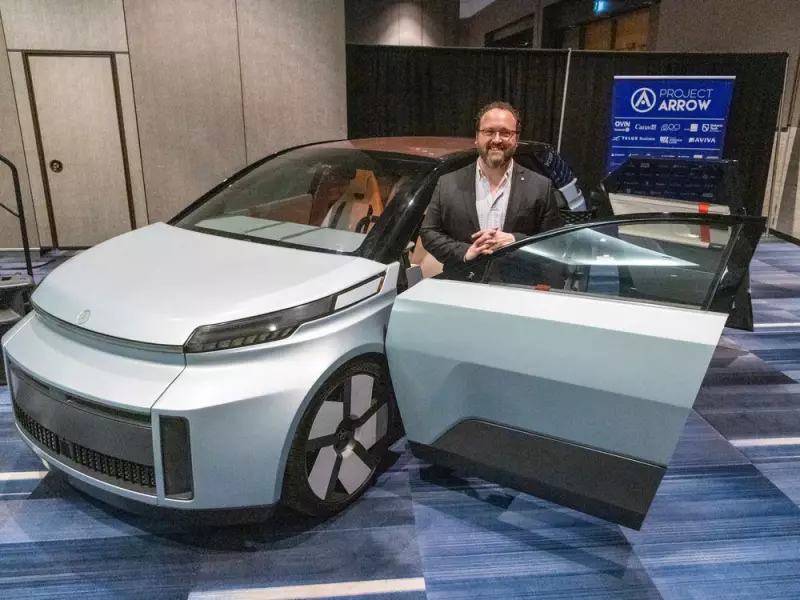
The revival of a fully domestic Canadian automotive industry could find its engine in the country's growing defence budget, according to a leading industry figure. Flavio Volpe, president of the Automotive Parts Manufacturers' Association (APMA), argues that strategic military investments present a unique opportunity to develop and build an all-Canadian vehicle.
Leveraging Defence Dollars for Dual-Purpose Development
Canada has committed to a significant increase in military spending, pledging approximately $80 billion over five years. Volpe suggests that a portion of this substantial funding could be directed towards creating a "dual purpose" vehicle. This Canadian-made machine would be designed to serve the military, particularly in harsh northern climates, and could be sold to NATO allies.
A consumer version of the same vehicle could also be marketed domestically and for export, creating a new pillar for the national auto sector. "Some defence spending could be for fleet vehicles for harsh, northern climates, a vehicle we could sell to northern NATO countries," Volpe stated. This approach, he believes, could help stabilize and grow Canadian auto manufacturing while reducing dependency on the United States.

The Case for Automotive Independence and Advanced Manufacturing
The proposal aligns with a recent report from the Trillium Network for Advanced Manufacturing at Western University, which examined the challenges and opportunities of establishing a domestic auto industry. Volpe strongly supports the concept, citing the need for greater industrial independence from the U.S., especially after tariffs and a shift in production south of the border.
Beyond independence, Volpe emphasizes that vehicle assembly is a profound industrial discipline that drives broader economic and technological advancement. "The most expensive and advanced of consumer goods is a car," he explained. "It clusters other technology around it, it draws on academic institutions and government policy on research and development." He notes that building vehicles involves expertise in metallurgy, critical minerals, hardware, and software, employing thousands and significantly driving the economy.
Expert Consensus on Potential, But Questions on Risk Appetite
The idea of a military-turned-consumer vehicle has historical precedent. Dimitry Anastakis, a business history professor at the University of Toronto and an automotive sector expert, pointed to the Mercedes G63 as a successful example of a military vehicle that evolved into a luxury SUV.
Anastakis agrees that Canada possesses the technical capability and extensive auto supply chain to manufacture its own vehicle. However, he expresses skepticism about the nation's willingness to shoulder the enormous financial risk involved. "We can do this. It can be done if there is political will to assume incredible financial risk," Anastakis said. "Whether Canadians have a stomach for it, is difficult to know."
The concept represents a bold vision for the future of Canadian manufacturing, suggesting that the path to a new, iconic "made in Canada" car might not run through traditional consumer markets alone, but through the specialized needs of national defence and international alliances.