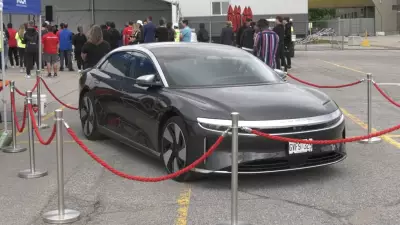
Quebec experienced a substantial 25% decline in vehicle thefts during 2025 compared to the previous year, according to a comprehensive industry report released by the Équité Association. This marks the second consecutive year of decreasing theft rates in the province, signaling a potential shift in a troubling trend that had escalated dramatically following the COVID-19 pandemic.
Steady Decline in Theft Numbers
The latest data reveals that Quebec recorded 7,742 vehicle thefts in 2025, representing a significant drop from 10,290 incidents in 2024 and 15,225 in 2023. This downward trajectory contrasts sharply with the record spike observed between 2021 and 2023, when vehicle thefts in Quebec surged by nearly 60%.
Bryan Gast, national vice-president of Équité Association, emphasized that Quebec has historically been a hotbed for vehicle thefts, with numbers peaking in the years immediately following the pandemic. "The decline we're seeing now is encouraging, but we must remain vigilant," Gast noted in the association's 2025 report on vehicle thefts across Canada.

Factors Behind the Improvement
According to the report, the primary reasons for the decrease in vehicle thefts include:
- Enhanced law enforcement strategies and coordination
- Improved collaboration between government agencies and industry stakeholders
- Targeted efforts to disrupt export networks used by criminal organizations
George Iny, director of the Automobile Protection Association, confirmed that police forces and port authorities have significantly improved their communication and coordination in combating vehicle theft. "This collaborative approach is yielding measurable results," Iny stated.
Organized Crime Adapts with Sophisticated Methods
Despite the positive statistics, experts warn that organized crime groups are developing increasingly sophisticated techniques to circumvent security measures. Pierre-Marc Houle, section chief for vehicle theft investigations with the Montreal police, highlighted several emerging strategies employed by criminal networks.
One concerning development involves vehicles being purchased at dealerships using stolen or fraudulent identities. Criminals then place these vehicles on shipping containers before ceasing payments, effectively exporting stolen cars before they're officially reported as missing.
Houle explained, "We're seeing cases where someone with a false identity purchases or leases a vehicle, makes payments for a month or two, then stops altogether. Meanwhile, a criminal group exports the vehicle, so it's not even reported stolen in the traditional sense."
Changing Police Strategies
Since vehicle thefts peaked in 2023, Montreal police have implemented new strategies focused on prevention and intervention. A key component involves targeting youth who are vulnerable to recruitment by criminal organizations.
"We know that many young people, including minors, are exploited by organized criminal groups for vehicle theft," Houle said. "We now meet with their families, siblings, and friends to help change their trajectory and turn their lives around. This new approach is yielding positive results."
The Montreal police have also intensified efforts to dismantle export networks, collaborating with the Canada Border Services Agency on operations like the June 2025 project that resulted in the arrest of five suspects allegedly leading a large-scale vehicle theft operation in the Greater Montreal area.
Geographic Factors and Criminal Opportunities
Gast identified three main factors that have made Quebec particularly vulnerable to vehicle theft:
- High volume of targeted vehicles popular in international markets
- Substantial population centers providing ample targets
- Proximity to major ports including Montreal and Halifax
"These factors create prime opportunities for criminal groups," Gast explained. "They have vast opportunities and numerous vehicles to target."
The Pandemic's Role in Theft Surge
The COVID-19 pandemic created unique conditions that facilitated the dramatic increase in vehicle thefts. Global supply chain disruptions in the auto industry created shortages that organized crime exploited.

"When vehicles became hard to obtain legitimately, with wait times stretching for months, organized crime entered the space aggressively," Gast noted. "That's when car theft skyrocketed in the post-COVID years, as more criminal groups recognized this as a high-reward, low-risk venture."
Technological Solutions and Future Regulations
Anti-theft technology represents a crucial component of the long-term solution, according to industry experts. Gast emphasized that built-in protections at the manufacturing level could significantly reduce theft rates.
Transport Canada is currently conducting consultations to modernize vehicle security standards, which haven't been updated since 2007. These discussions focus on making vehicles inherently harder to steal through improved factory-installed security measures.
Iny pointed to European manufacturers as examples of effective built-in protection. "Brands like Mercedes and BMW have much lower theft rates relative to their desirability in overseas markets," he explained. "They're not stolen at the same level as Toyotas, Hondas, or Ford pickup trucks because they have superior factory-installed protections that make them harder to steal."
As Quebec celebrates the declining theft statistics, law enforcement and industry leaders remain focused on staying ahead of evolving criminal tactics while advocating for stronger regulatory frameworks and technological solutions to protect vehicle owners across the province.