Uber Makes Major Investment in Canadian Autonomous Vehicle Technology
In a significant move to accelerate its presence in the rapidly evolving autonomous vehicle market, Uber Technologies Inc. has announced a substantial investment in Canadian artificial intelligence start-up Waabi. The ride-hailing giant is committing up to US$500 million to partner with the Toronto-based company, marking a strategic push into the competitive robotaxi sector.
Strategic Partnership and Investment Details
According to sources familiar with the arrangement, Uber will participate in Waabi's latest funding round with an initial investment of US$250 million. This forms part of a broader US$750 million raise that values Waabi at approximately US$3 billion. Additionally, Uber has committed to providing another US$250 million to support Waabi's expansion into the robotaxi market, contingent upon the achievement of specific performance milestones.
The collaboration between these two companies has an ambitious goal: deploying at least 25,000 vehicles equipped with Waabi's advanced sensor technology across Uber's extensive ride-hailing network. This partnership represents a significant step forward in Uber's autonomous vehicle strategy, which has evolved considerably in recent years.

Industry Context and Executive Perspectives
Uber Chief Executive Dara Khosrowshahi emphasized the importance of this development, stating that "Waabi's expanded focus on robotaxis marks an important milestone for their team and the autonomous vehicle industry more broadly." This investment represents the latest in a series of strategic moves by Khosrowshahi to position Uber as a dominant player in the emerging robotaxi marketplace.
Over the past year, Uber has established partnerships with more than a dozen autonomous vehicle providers worldwide. These collaborations include agreements with Alphabet's Waymo in the United States and China's Baidu for operations in Asia and the Middle East. The company has also invested in several other self-driving start-ups, including U.K.-based Wayve, demonstrating its commitment to diversifying its autonomous vehicle portfolio.
Waabi's Background and Expansion Plans
Founded in 2021 by University of Toronto professor Raquel Urtasun, Waabi has primarily focused on developing adaptable self-driving technology suitable for various vehicle types. Urtasun previously led research at Uber's Autonomous Technologies Group before establishing her own company. Uber subsequently sold that unit to Aurora Innovation in late 2020 as part of a cost-cutting initiative aimed at achieving profitability.
Urtasun commented on the significance of Uber's investment, noting that it enables Waabi to expand into the robotaxi market during a period when few automotive manufacturers are developing fully autonomous capabilities. "We've seen an evolution from car manufacturers wanting to develop their own technology to a realization that they should partner with an autonomous vehicle provider," Urtasun explained. "There might be a few who are trying to do their own solution, but there are very few."
Additional Investors and Future Developments
Waabi's latest funding round attracted participation from several prominent investors beyond Uber. These include G2 Venture Partners, Khosla Ventures, Porsche, and Volvo, indicating strong industry confidence in the company's technology and growth potential.
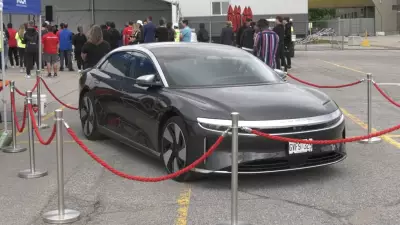
While neither Uber nor Waabi has disclosed which automotive manufacturer will partner with them to develop the robotaxis, Urtasun confirmed that an agreement is expected to be finalized in the coming months. This development follows Uber's July agreement with start-up Nuro and U.S. electric-car manufacturer Lucid to deploy approximately 20,000 robotaxis on Uber's network over a six-year period.
The substantial investment in Waabi underscores Uber's strategic shift toward partnership-based approaches in autonomous vehicle development, rather than pursuing costly in-house technology initiatives. As the autonomous vehicle industry continues to evolve, this collaboration between a global ride-hailing leader and a Canadian AI innovator represents a significant development in the race to bring robotaxis to mainstream markets.