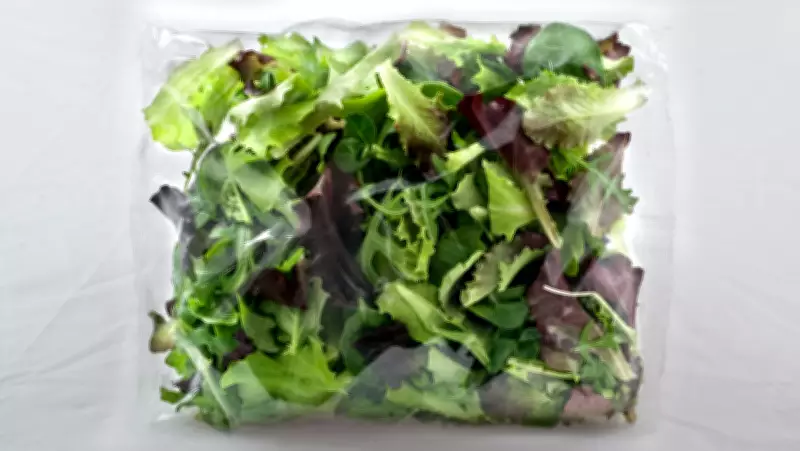
Many consumers purchase certain grocery items for convenience, aiming to save a few steps during meal preparation. Prewashed bagged greens, including lettuce and spinach, appear to be an obvious choice for those seeking nutritious eating options. However, food safety experts caution that these products are not as safe as they seem. Bacteria and contamination are far more common in prewashed bagged greens than most shoppers realize.
The Hidden Dangers in Convenience Foods
"While consumers expect convenience and safety, the reality is that prewashed bagged greens remain one of the riskiest items in the grocery store due to contamination risks throughout the supply chain," explains Darin Detwiler, a professor of food policy at Northeastern University and author of "Food Safety: Past, Present, and Predictions." Detwiler personally avoids purchasing bagged greens because of the potential for deadly E. coli contamination. "When you examine past outbreaks, bagged salads have been a leading cause of foodborne illness, with some outbreaks resulting in hospitalizations, kidney failure (hemolytic uremic syndrome), and even death," Detwiler emphasized. The frequency of these outbreaks is not a mere perception; they occur regularly.
Multiple Factors in Supply Chain Contamination
Numerous elements within the supply chain can introduce pathogens like E. coli, listeria, or salmonella to greens, potentially causing severe illness, hospitalization, or worse. "Bagged greens are washed and processed in large batches, which is an effective way to spread pathogens," stated Olivia Roszkowski, chef-instructor of plant-based culinary arts and food safety certification at the Institute of Culinary Education's New York City campus. Outbreaks linked to leafy greens happen more frequently than anticipated, prompting the FDA to establish a Leafy Greens STEC Action Plan in 2020, updated in 2023, to reduce various strains of E. coli in these products.

For instance, shiga toxin-producing Escherichia coli O157:H7 is a pathogenic strain commonly associated with lettuce and leafy green outbreaks. Detwiler notes that it "is particularly dangerous because it takes a very small amount to cause severe illness. The risk isn't theoretical—it's been repeatedly proven in outbreak after outbreak." The greens packaged in bags often originate from multiple farms and locations, complicating traceability and increasing contamination potential.
Persistent Outbreaks Despite Regulatory Efforts
Despite ongoing efforts to mitigate leafy green-related outbreaks, they continue to occur. According to a report published in the Journal of Foodborne Illness in April 2024, leafy greens account for "up to 9.2% of known pathogen-caused foodborne illnesses" in the United States. The report estimates that over 2.3 million illnesses annually are linked to contaminated leafy greens.
Contamination Points in the Food Supply Chain
Contamination can happen at various stages before bagged salad greens reach store shelves and ultimately your plate. "In the field, produce can become contaminated with pathogens from sources such as contaminated irrigation water, wild or domesticated animals, soil, or air," said Kimberly Baker, a food systems and safety program team director at Clemson University. Roszkowski added that contamination is more likely "when the field is in close proximity to livestock farms or feedlots where animals are held in densely populated conditions."
Arizona and California, major producers of leafy greens in the U.S., are frequently located near large cattle operations, according to Detwiler. E. coli, salmonella, or listeria can be introduced to crops through contaminated irrigation water from nearby cattle farms. "Runoff from manure lagoons can seep into irrigation canals and contaminate fields with deadly bacteria like E. coli O157:H7," Detwiler continued. Manure lagoons are large pits where livestock waste is stored, as defined by Environmental America.

Contaminated water is not the sole issue; some farms utilize unregulated water sources for irrigation. "Some farms use untreated or minimally treated surface water from rivers, lakes, or canals, increasing the risk of contamination," Detwiler explained. During harvest, additional risks emerge for pathogens and bacteria to contact lettuce. "Contamination can occur through human handling, contaminated equipment, or water used in post-harvest processes to transport, produce, or remove soil," Baker noted.
Processing Plant Vulnerabilities
Once greens reach a processing plant, further opportunities for pathogen contact arise. The greens in a bag typically come from multiple farms, not a single field, which complicates traceability and heightens contamination risks. Greens are processed centrally and distributed, a convenience for companies involved but problematic from a food safety perspective. "Greens from different farms are mixed, washed, and packaged together, so one contaminated leaf can impact thousands of bags across multiple states," Detwiler clarified.
Lettuce is washed in large vats, added Rosemary Trout, associate professor and program director of Culinary Arts & Food Science at Drexel University. Trout pointed out that "plant foods are usually more often associated with foodborne illness than animal products," a fact many consumers may not suspect.
Transportation and Storage Challenges
Maintaining cold temperatures is essential to prevent pathogen growth and spread. According to Roszkowski, "Not keeping the greens consistently cold throughout the process of harvesting, processing, and transporting can cause bacterial growth to occur." However, refrigeration does not eliminate pathogens; it merely slows them down. "Refrigeration slows bacterial growth but does not kill bacteria, meaning contaminated greens can still cause illness, even if stored properly," Detwiler said.
Does Washing Prewashed Greens Help?
If you're considering washing prewashed greens for added safety, think again. Washing greens at home does not enhance safety because water cannot remove pathogens, Detwiler asserted. Rinsing prewashed greens might introduce pathogens lurking on your counter or sink. "Prewashed greens should not be rewashed at home, as doing so can introduce contamination if the sink, utensils, equipment, or hands of the preparer are not properly cleaned or sanitized," Baker advised.
Bacteria or pathogens are not visible and cannot be detected by sight, smell, or taste. "If greens are contaminated with pathogens, they cannot be detected by sight, smell, or taste ... and can't be removed by washing," Baker explained. Detwiler added, "Bacteria like E. coli and salmonella can form biofilms that help them stick to the surface of the leaves. Once attached, these bacteria do not simply rinse off." Harmful pathogens require cooking to be eliminated, as heat kills them, Detwiler noted. A significant issue with lettuce is that it is typically consumed raw, not cooked, "making it challenging to reduce the risk of foodborne illness," Baker said.
Recommendations for Purchasing Bagged Greens
If you still prefer buying bagged greens for convenience, several precautions can help minimize risks.
Check for Recalls
Before purchasing any salad greens, check for recalls, advised Detwiler and Roszkowski. "Stay updated on recalls via the FDA and CDC websites," Detwiler recommended. "If your greens are part of an outbreak, throw them away immediately."
Examine Expiration Dates
Experts emphasize looking at expiration dates before buying. Trout suggests purchasing only what you will consume within a day or two.
Assess Freshness
Avoid bags with excess moisture that appear wet, as damp environments promote bacterial growth, Detwiler cautioned. "Inspect the package to ensure the lettuce looks fresh, without wilting or discoloration, as these signs may indicate improper storage or reduced freshness," Baker said. Additionally, steer clear of bags with slimy leaves, Roszkowski added.
Minimize Temperature Fluctuations
After purchasing greens, do not leave them in a hot car, garage, or on the counter. "Avoid drastic changes in temperature when transporting them from the store and when preparing a meal," Roszkowski advised. "This leads to condensation and creates a moist and warm environment that can encourage both spoilage and bacterial growth."
Store Properly
Greens should be refrigerated at or below 40 degrees Fahrenheit, according to Detwiler and Trout.
Consider Whole Heads of Lettuce
Purchasing a head of lettuce or a bunch of spinach involves an extra step of rinsing and drying but may reduce the risk of lurking pathogens. "Whole heads of lettuce or spinach have less surface area for contamination compared to pre-cut, mixed bagged greens," Detwiler explained. He recommends rinsing them under cold water—not soaking—to remove dirt, debris, insects, and surface-level bacteria. "Wash them at home before eating."