Restaurants Abandon Political Neutrality as Patrons Seek Alignment with Values
For decades, restaurants, bars, and hospitality establishments typically avoided political engagement. The prevailing wisdom suggested that alienating potential customers in this notoriously low-margin industry was unwise, making political neutrality the safer business strategy. However, the pervasive political chaos originating from Washington and spreading across the nation—and indeed globally—has compelled many individuals and businesses to "choose a side." The hospitality sector is no exception to this trend.
"Many restaurants are trying to be as neutral as possible, but some on both sides don't seem to care about neutrality," explained Heather Turner, a hospitality consultant based in New England. "Their perspective is that they don't want customers who lean in a direction they disagree with anyway."
Polarized Establishments: From Idaho to Minnesota
One prominent example is the Old State Saloon in Eagle, Idaho, which embraces its MAGA beliefs so fervently that the owners made headlines late last year. They offered a month of free beer to any guest who could prove they provided tips to Immigration and Customs Enforcement leading to the deportation of an undocumented immigrant.

Conversely, Modern Times Cafe in Minneapolis demonstrated its political stance by rebranding as "Post Modern Times Cafe" on January 31—the day of the ICE Out protests. The cafe offered free food and drink to protesters and announced its intention to provide a daily special of a free meal to anyone in need until ICE departs Minnesota.
Thanks to social media, the public now has ample opportunities to piece together clues and deduce the political sympathies of local businesses. But how reliable are these indicators? What signs might suggest a restaurant's political persuasion? We consulted sociologists, political researchers, and hospitality consultants for insights.
Why Patrons Care: Economic Power and Polarization
In recent years, guests have shown increased interest in visiting restaurants that align with their beliefs. Stacy Rosenberg, associate teaching professor at Carnegie Mellon University's Heinz College, succinctly explains: "Economic power is power." This is especially true during tough economic times when households must be discerning about their spending.
Emily Wagner, a doctoral researcher in sociology at the University of Nevada Las Vegas, notes that national polarization extends into all lifestyle aspects, including dining decisions. "Through participant observation over three and a half years, I see people intentionally seeking out bars or restaurants that align with their views," Wagner said. She adds that society increasingly desires to "hang out with people who are similar-minded and consume media in like-minded spaces."
Arianna O'Dell, a New York City-based digital marketing consultant specializing in hospitality and travel, identifies this as the core reason why guests today "are highly attuned to cues that suggest who a place is 'for.'"
Decoding Political Cues: From Decor to Menus
Some indicators emerge from decor and displayed symbols. Turner observes "a huge difference in restaurant decor and online/offline marketing in recent years," noting changes in television programming, window posters, and literature in waiting areas. Subtler signs may relate to employees; for instance, restaurants supporting undocumented workers might display no-trespassing signs in kitchen areas.
Regarding MAGA-aligned decor, O'Dell cautions that "nationalist or politicized décor choices, especially when American flags or patriotic imagery are used prominently beyond neutral civic symbolism," often appear in such spaces. However, these aren't definitive indicators.
Restaurants wanting to be recognized as MAGA hangouts typically aren't subtle. Overt symbols of white nationalism—like Confederate flags, Nazi iconography, or far-right group logos—clearly signal the desired customer base.

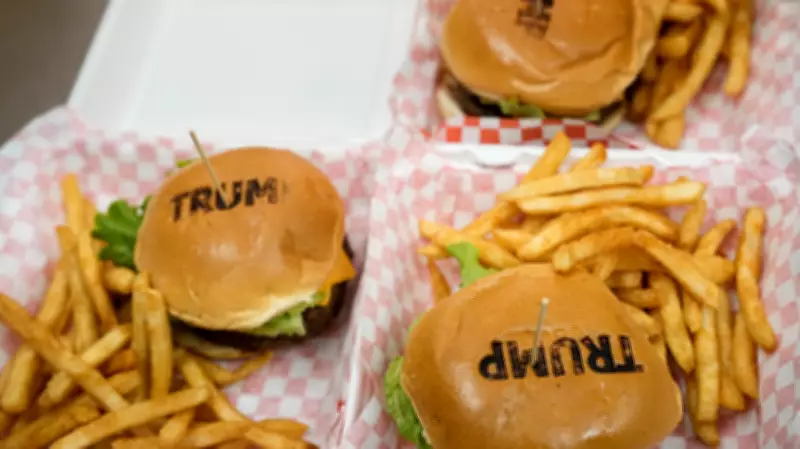
Menu contents also offer hints. While serving burgers and fries doesn't inherently signal political affiliation, restaurants courting MAGA crowds share certain cuisine choices. Trump Burger, a short-lived Texas fast-casual chain, featured well-done hamburgers (Trump's preference) and campaign-themed design elements. Even high-end establishments like Butterworth's in Washington D.C.—a favorite of right-wing figures—include a "Cheeseburger Americain" on their otherwise upscale French-American menu.
Environmental Clues: TV Networks and Clientèle
At sports bars or venues with guest-facing TVs, simply observing the screen can reveal the environment. "If they're playing Fox News, that's quite common among places where MAGA guests tend to go," Wagner noted. Screening even more right-wing channels like OAN or Newsmax provides clearer signals.
Environmental factors also include the clientèle and overheard conversations. Wagner suggests considering: "Who are the people there? Is it a younger crowd? Are they wearing political clothing? Is it primarily older white males, or a more diverse group?" Again, these aren't definitive indicators but contribute to the overall picture.
Social Media: The Most Revealing Evidence
While previous evidence is circumstantial, social media offers concrete proof of restaurant owners' political affiliations. O'Dell highlights indicators like "overt political social media behavior, such as publicly following or engaging with partisan political figures," or "online tone and captions emphasizing grievance, culture-war language, and 'us vs. them' framing."
Recent events demonstrate how social media reveals political views through participation or non-participation. The January 31 ICE Out strikes in Minneapolis gained rapid traction online because, as Rosenberg explains, "when individuals feel they can collectively act to advance politics they consider moral, they use social media to promote those campaigns."
Many businesses closed in solidarity with the protests, while others—concerned about employees relying on daily wages—posted on Instagram or X explaining their reasoning and expressing support for Minneapolis. Establishments that mocked the protests or ignored them entirely were perceived by social media users as revealing their political stance.
Beyond Partisanship: Shared Values and Economic Voting
Ultimately, Rosenberg believes the desire to determine where a restaurant "stands" politically relates less to partisanship and more to shared values. "We see this as a form of moral reasoning," she said. Like it or not, we "vote" with our dollars. Using responsible methods to decide where to spend time and money—without jumping to conclusions—helps navigate a challenging economy and deeply fraught political, social, and cultural environment.
The hospitality industry's shift away from political neutrality reflects broader societal polarization. As customers increasingly seek establishments aligning with their beliefs, restaurants face new pressures to either maintain neutrality or openly declare their positions—with significant implications for business success in an increasingly divided marketplace.