Bathtub Reboot: How Home Design is Redefining the Classic Tub
For years, the "death of the bathtub" has been declared with near-annual certainty. Showers are bigger, bathrooms are tighter, and lifestyles are faster. Yet, step inside enough new residential projects, and the tub hasn't disappeared—it has evolved dramatically.
The Shift from Default to Deliberate
"In recent residential projects, we don't see tubs vanishing," says Golara Ghasemi, Creative Director and Principal Designer of Toronto-based Studio Golara Design. "They're being used more intentionally, based on how clients actually live."
This shift—from default fixture to deliberate choice—is reshaping today's bathroom layouts. The once-standard tub-and-shower combination has largely been replaced by generous, spa-like showers designed for everyday use. Bathtubs, meanwhile, are reserved for specific roles:

- Family needs, especially for households with young children
- Wellness rituals and self-care environments
- Primary suites where space allows for something more indulgent
"The tub is no longer automatic," Ghasemi explains. "Most homeowners opt for one carefully placed tub—often in a secondary bathroom for kids and resale—or choose a sculptural soaking tub in the primary bath when the footprint supports it."
When the Tub Gets Cut: Spatial Realities
When a bathtub is removed from a plan, the decision is rarely ideological. It's spatial. "Size is almost always the deciding factor," Ghasemi says. "In many primary bathrooms, you can't fit both a generous shower and a tub that feels meaningful—the shower always wins."
This reality is especially common in urban homes, where square footage is limited and daily routines take priority. Clients who don't regularly bathe are more inclined to invest in a high-performance shower rather than compromise the experience by forcing in a tub.
Budget considerations come into play later—and often indirectly. "Clients aren't necessarily saving money by removing the tub," Ghasemi notes. "They're reallocating it, choosing better tile, custom glass, or upgraded fixtures instead of spreading the budget across features they won't use."
Who Still Wants a Tub: Diverse Motivations
Despite the dominance of shower-forward design, some homeowners continue to choose bathtubs—and for very different reasons.
- Families with young children almost always keep at least one tub. In these homes, the tub remains a daily-use essential, valued for function over form.
- Luxury homeowners approach tubs from an entirely different angle. Here, a freestanding tub becomes a visual anchor—less about frequency of use and more about presence. Sculptural forms and refined materials communicate restraint and intention rather than excess.
- Wellness-focused homeowners use tubs as part of a broader self-care environment. Even if showers handle daily routines, a deep soaking tub supports rest, recovery, and ritual—reinforcing the idea that bathing has shifted from necessity to choice.
From Utility to Experience: The Evolution of Tub Design
This experiential shift marks the most significant change of all. The bathtub has moved beyond pure function to become an element of atmosphere. "People aren't sitting in a tub to get clean anymore; they're using it to feel better," says Braden T. Bourque, outside sales for TAPS Bath Centre. "The demand hasn't vanished—it's evolved from a chore into a choice."
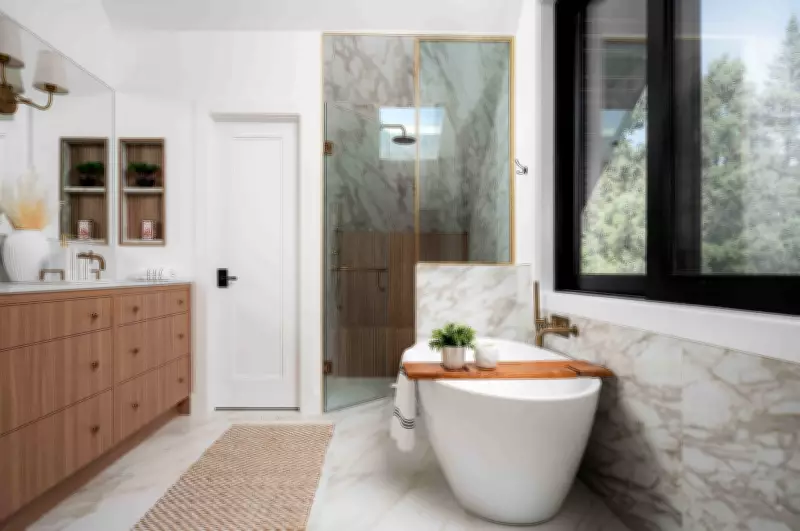
Freestanding tubs now read as architectural objects. Positioned as focal points and paired with natural materials, ambient lighting, and oversized showers, they introduce softness and balance into increasingly streamlined bathrooms. "Tubs today are about how the space feels as much as how it functions," Bourque adds. "They bring visual warmth and emotional balance to rooms that can otherwise feel very technical."

Design innovation is also driving this evolution. "We're moving past the basic freestanding oval into more wellness-driven designs," Bourque explains. "We're seeing integrated heat zones, hydrotherapy, and deck-surrounded installations that allow for easier entry as homeowners think about aging in place. It reflects a focus on longevity and physical therapy rather than trend-driven silhouettes."
Is the Bathtub Really Dying? A Nuanced Perspective
So, is the bathtub really dying? Not exactly. "The narrative misses the nuance," Ghasemi says. "Bathtubs aren't disappearing—they're being repositioned." Family homes still rely on them. Guest bathrooms benefit from their flexibility and resale appeal. And in primary suites, a well-designed tub continues to signal care, comfort, and quiet luxury.
Today, the decision to include a bathtub has little to do with convention and everything to do with context. Space, lifestyle, family stage, and design priorities now lead the conversation—not trend headlines. "The question isn't whether bathtubs are relevant," Ghasemi concludes. "It's whether they're relevant to your home."