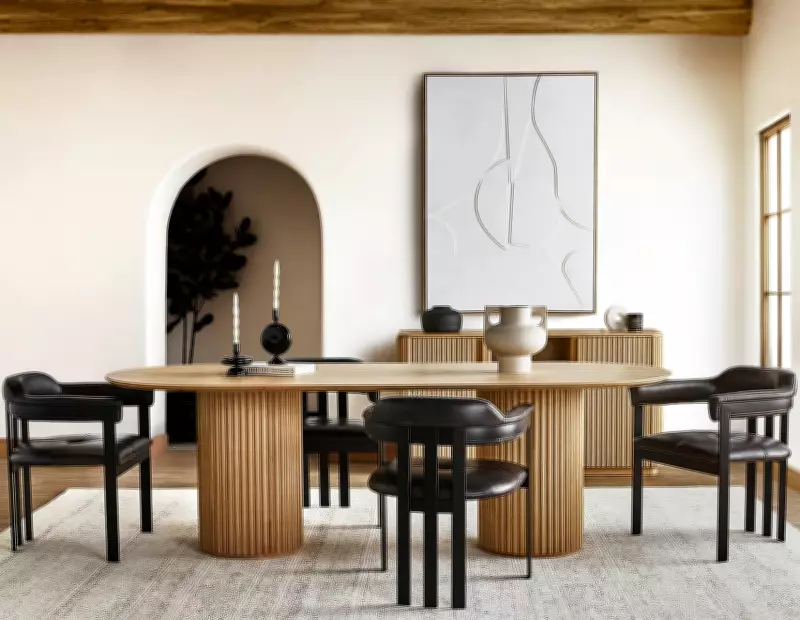
Curves in Design: How Oval Tables Are Reshaping Modern Dining Spaces
In a design world long dominated by rigid straight lines, the emergence of cigar and oval-shaped dining tables represents a collective sigh of relief. These curved forms are not merely aesthetic choices but signify a cultural shift toward more relaxed and resilient home environments.
The Rise of Soft Edges in Contemporary Interiors
Curves in furniture design are increasingly seen as tools for spatial choreography rather than simple decoration. They soften sightlines and improve circulation, creating spaces that feel accommodating rather than demanding. The ellipse, in particular, introduces a calm, continuous perimeter that acts like a contour line on a map, shaping how people gather in open-plan layouts without the constraints of walls.
Practical and Aesthetic Benefits of Oval Tables
Beyond their visual appeal, oval tables offer significant practical advantages. Corners in traditional rectangular tables can be domestic hazards, catching hips and snagging pockets, especially in multi-functional areas shared with kitchens and living spaces. The ellipse eliminates these sharp protrusions, allowing for more generous and fluid movement around the room.

From an aesthetic standpoint, the lack of visual punctuation in oval shapes lends an inherent elegance. Unlike rectangles that end abruptly at corners, ovals flow seamlessly, appearing streamlined and refined. When scaled appropriately, they provide ample length for entertaining without the formal rigidity of their rectilinear counterparts.
Enhancing Social Dynamics and Material Choices
The behavioral impact of curved tables is profound. Rectangular tables often impose a hierarchical seating arrangement with designated "head" positions, whereas ovals promote a more democratic and conversational atmosphere. This design encourages eye contact and relaxed body language, turning meals into shared experiences that extend beyond the dining hour.
Material selection further defines the character of these tables. Pale oak or ash evoke a clean, Nordic-inspired calm, while walnut introduces a richer modernism with mid-century nods. In stone, terrazzo, or marble, cigar-shaped tables take on an architectural quality, echoing elements like kitchen islands and custom millwork.
Construction and Styling Considerations for High-End Aesthetics
For those pursuing a premium look, construction details are crucial. A thin elliptical top paired with a sculptural base—such as fluted plinths or ribbed timber—creates a dynamic balance between lightness and mass, reminiscent of architectural cantilevers. When styling, restraint is key; a single centerpiece like a low ceramic bowl or cluster of candles can enhance the table's form without overwhelming it.
The Enduring Appeal of Curves in Design
While oval and cigar-shaped dining tables are currently trending, their appeal is likely to persist as a corrective to years of hard-edged minimalism. In spaces designed for connection and conviviality, curves offer a welcoming alternative to straight lines, making them a significant evolution in the design landscape. As homes continue to prioritize layered and resilient environments, these tables stand out as both functional and beautiful additions to modern living.