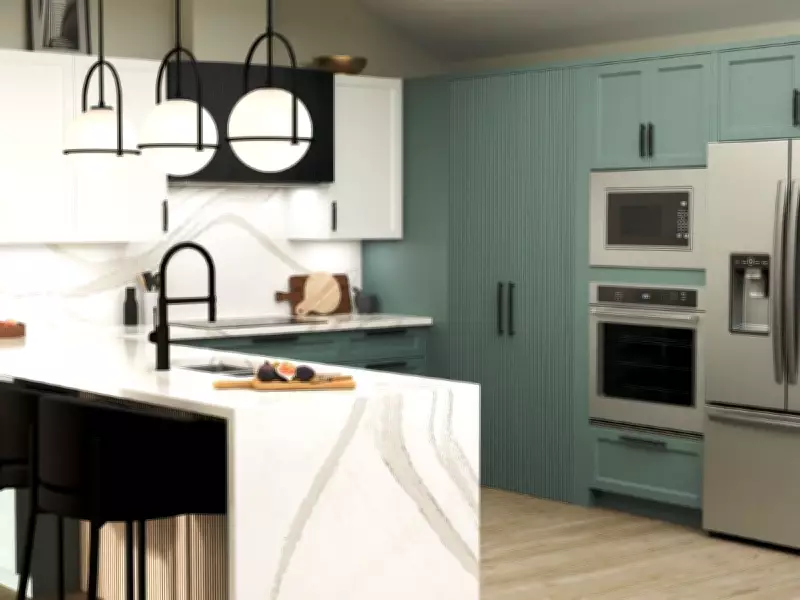
For years, the open-concept kitchen has been a coveted feature in residential design, with the kitchen island serving as its undisputed centerpiece. These islands can be tailored for specific purposes, such as a dedicated prep station with an additional sink, a cooking hub equipped with a built-in range, or a versatile multifunctional area for dining, entertaining, and even homework. However, as design trends continue to shift, peninsulas are experiencing a quiet resurgence, offering compelling alternatives for many homeowners.
The Peninsula Advantage in Modern Kitchens
Peninsulas provide many of the same benefits as islands, including extra workspace, seating options, and a communal gathering spot. According to Cynthia Soda, founder and principal designer of Soda Pop Design Inc. in Stouffville, "Because they're connected to the perimeter cabinetry, they often work much better in smaller or narrower kitchens." This connectivity can enhance efficiency and flow, though it's worth noting that peninsulas may limit movement around them, potentially leading to traffic congestion compared to islands.
Creative Solutions for Compact Spaces
In smaller kitchens, designers are exploring innovative layouts beyond traditional islands. Soda highlights options like a galley kitchen paired with a breakfast nook, a peninsula with a simple extension for seating, or L- or U-shaped designs combined with a small table. "It creates a more relaxed, flexible dining area that still feels connected to the kitchen," she explains. "In some homes, this can actually feel more inviting and practical than a traditional island with stools."

The Evolving Role of Kitchen Islands
Despite the growing popularity of peninsulas, kitchen islands are far from obsolete. Soda clarifies, "Kitchen islands aren't disappearing; they're simply no longer the automatic answer they once were." This shift reflects a broader trend toward more thoughtful and intentional planning in kitchen renovations. In the past, incorporating an island—or even two—was "almost expected" in every project, regardless of whether it was the optimal choice for the space.
Prioritizing Function Over Fashion
Today, designers and homeowners are increasingly questioning whether an island genuinely improves kitchen functionality. "In some kitchens, an island is still the perfect solution," Soda notes. "In others, different layouts can create better flow and more usable storage and counter space." Islands excel at creating a natural gathering point, offering additional workspace and casual seating, often becoming the social hub of the home. However, they come with limitations, such as higher installation costs and the need for a substantial footprint to function properly.
Practical Considerations and Challenges
Islands can sometimes become obstacles in kitchens that lack sufficient space. "If the kitchen isn't large enough, an island can actually disrupt circulation and make the room feel cramped rather than open," Soda warns. "An island only works when the kitchen truly has the space for it—otherwise, it can create more congestion than convenience." Practical issues, like navigating around an open dishwasher door, can exacerbate these challenges. Additionally, islands may accumulate everyday clutter if not designed with adequate storage and organization in mind.
Ultimately, the decision between an island and a peninsula hinges on careful evaluation of your kitchen's dimensions, layout, and daily needs. By moving beyond automatic assumptions and embracing thoughtful design, homeowners can create kitchens that are both beautiful and highly functional, whether through a classic island, a versatile peninsula, or another innovative configuration.