







Modernist Beach House on Scarborough Bluffs Maximizes Light and Views
Modernist Beach House on Scarborough Bluffs Maximizes Light

Modernist Beach House on Scarborough Bluffs Maximizes Light and Views

A striking modernist residence perched on the Scarborough Bluffs has been meticulously designed to embrace its dramatic natural surroundings, creating a seamless connection between indoor living spaces and the breathtaking lakefront landscape.

Architectural Vision Meets Client Collaboration

Principal architect Betsy Williamson of Williamson Williamson Inc. collaborated closely with the homeowners—an artist who serves as head of scenic design for the National Ballet of Canada and a senior manager at a major Canadian construction firm—to realize their vision. While the clients arrived with well-formed ideas about their ideal home, they granted the architects considerable creative freedom to explore concepts related to light, materiality, and both interior and exterior vistas.

"They possessed a particular fascination with the aesthetic qualities of concrete, steel, and wood, materials they regularly employ in their professional work," Williamson explained. "They intuitively understood our architectural drawings and models, which facilitated a highly productive partnership."

Wide Pickt banner — collaborative shopping lists app for Telegram, phone mockup with grocery list

Design That Prioritizes Light and Landscape

The architectural design, developed by Betsy Williamson alongside her partner Shane Williamson and their team, deliberately minimizes traditional walls and enclosures. Instead, the interior layout is organized around capturing specific views and facilitating the graceful transfer of natural light throughout the day.

Key design elements include thoughtful variations in floor and ceiling levels, strategic attention to both interior and exterior sightlines, and a series of innovative floor-to-roof "light monitors." These vertical columns of illumination open the home to abundant sunlight, supplemented by other clever architectural features that enhance interior brightness without creating glare.

Harmonizing with a Protected Natural Environment

The building site occupies a tableland position set back from the crest of a 300-foot drop to Lake Ontario, a location that proved deeply evocative for the design team. The Scarborough Bluffs escarpment historically experienced erosion rates approaching one meter annually until the 1960s.

Concerned about the potential loss of this unique geological formation, the Toronto and Region Conservation Authority intervened, planting the cliffs densely to stabilize them. Today, the TRCA continues to manage the area rigorously, providing environmental stewardship and working collaboratively with residents and architects on new construction projects. This partnership ensures responsible building practices that carefully balance architectural ambition with essential site protection.

Material Choices That Reflect the Setting

The home's material palette consciously echoes its natural context. The slatted Douglas-fir cladding on the upper storey provides a modernist interpretation of the surrounding wooded landscape. A swath of front windows features wooden slats that can be fully opened, nearly disappearing from view, or angled to admit light while preserving privacy.

On the main level, the concrete floor evokes the greyish clay soil characteristic of the Bluffs themselves. The fabrication process left behind distinctive details that contribute to the space's muscular beauty, including impressions from the pouring forms, regularly spaced holes from wall ties, and natural imperfections within the concrete.

Innovative Lighting and Spatial Flow

Two primary light monitors—floor-to-ceiling columns of illumination—brighten the home from roof to foundation and front to back. A north-facing clerestory window allows light to cascade gently over the artist's studio, avoiding the harsh glare that more direct sources like skylights can produce.

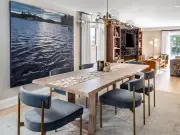
Under the cantilevered overhang of the carport, a reeded glass front door forms part of a bank of floor-to-ceiling windows opening into the front vestibule. Inside, to the right past a powder room with a vanity crafted from two marble cubes, the dining room is illuminated by the first and largest light monitor. This expansive opening soars the full height of the house to a clerestory window approximately 26 feet above.

Pickt after-article banner — collaborative shopping lists app with family illustration

The main staircase, featuring open risers that permit light to filter through, ascends to the art studio on the right. To the left, a bridge overlooking the dining room below leads to the primary suite at the rear. Continuing straight ahead, past a large still-life painting of the Bluffs created by the homeowner, are the home office, guest room, and the slatted front windows that define the facade.

This meticulously crafted residence demonstrates how modernist architecture can create profound connections between built environments and their natural settings, transforming a house into a true beach home that celebrates "the wind, the sand and the light" of its spectacular location.