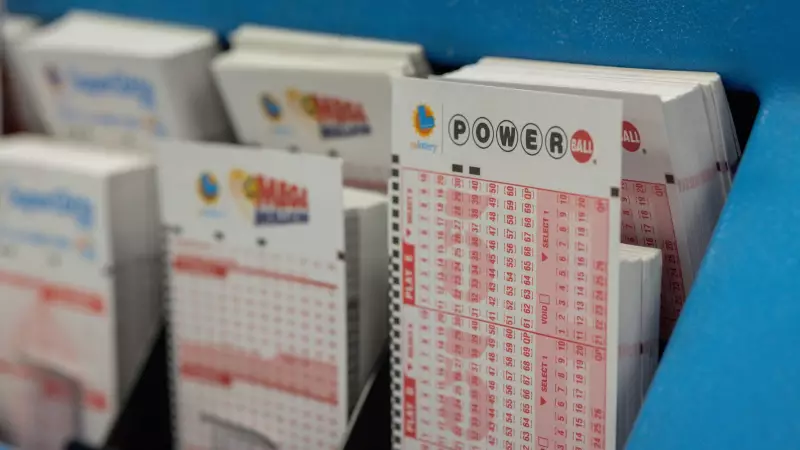
The top prize in the Powerball lottery has ballooned to a staggering $1.6 billion ahead of Monday night's drawing, marking a record 46th consecutive draw without a jackpot winner. This monumental sum now ranks as the fifth-largest lottery jackpot in United States history.
A Jackpot Built on Long Odds
This windfall comes after more than three months without a grand prize winner, with the last jackpot claimed on September 6 by players in Missouri and Texas for $1.787 billion. The current prize has been driven by the game's incredibly long odds, which were intentionally made tougher in 2015 to create larger jackpots and generate more excitement, while also improving players' chances of winning smaller prizes.
For Monday's drawing at 10:59 p.m. ET, the odds of matching all six numbers stand at 1 in 292.2 million. Before the 2015 rule change, the odds were a slightly better 1 in 175 million. Despite the slim chance, the dream of a massive payout has enticed countless players to purchase $2 tickets.

"Everybody wants to be a millionaire," said Saqi Anwer, an Atlanta gas station manager who reported selling $800 worth of tickets in a single day.
The Potential Payout and Tax Implications
The winner of the estimated $1.6 billion jackpot will face a significant choice. They can opt for the annuity, which pays the full amount over 29 years with an initial payment and annual increases of 5%. Alternatively, nearly all winners choose the immediate cash option, which for this draw is valued at $735.3 million.
It is crucial to note that both of these eye-popping figures are before federal and state taxes are applied, which would substantially reduce the final take-home amount.
Perspective on the Prize and the Odds
Matt Strawn, Chair of the Powerball Product Group, noted that the back-to-back billion-dollar jackpots this year are simply a function of the game's odds. He mused about the timing, suggesting it would be "magical" for a winning ticket to emerge during the holiday season.
Experts emphasize that the lottery is operating precisely as designed. Tim Chartier, a mathematics professor at Davidson College, provided a vivid analogy for the daunting odds.
"Picking a winning lottery ticket is equivalent to selecting one marked dollar bill from a stack 19 miles high — roughly the height of more than 115 Statues of Liberty," Chartier explained.
He added that while the dream can be fun, players should recognize the odds were never in their favor, and the "twinkle of possibility" is what makes the experience worthwhile for most.
As players in cities like Atlanta lined up for their final chance, dreams ranged from philanthropic deeds and grand trips to more immediate desires, like a new Xbox. Regardless of the outcome, the record-setting jackpot has once again captured the public's imagination, proving the enduring allure of a life-changing fortune.