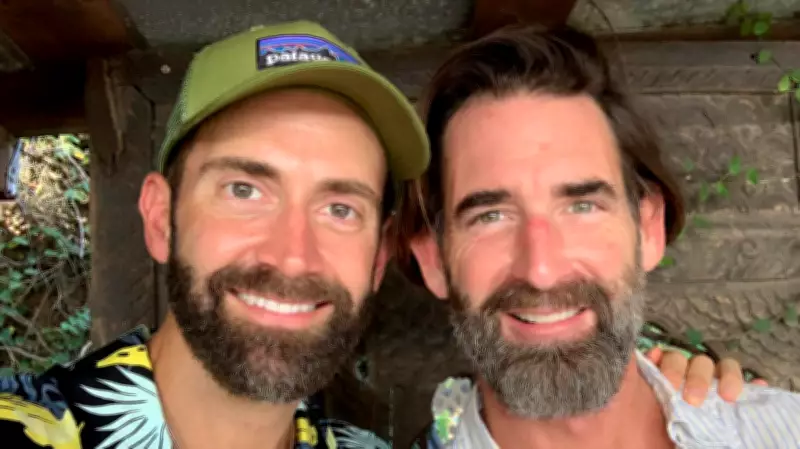
Finding Love in Lockdown: A Pandemic Romance Blossoms from Florida to Peru
During the COVID-19 lockdown in the Andes mountains, isolated from dating apps and social connections, I turned to cooking, writing, and excessive sleeping. Several mornings each week, wearing double masks for protection, I would leave my mud-brick cottage to visit the local market for essentials like eggs and purple potatoes. It was during this period of isolation that I began regular FaceTime calls with Tony.
An Unexpected Connection Across Continents
Tony described himself as a gay virgin—a rugged, adventurous man who conducted endangered species surveys professionally. We had initially matched on Tinder several months earlier while I was visiting friends in my Florida hometown. When we met for coffee on New Year's Eve, he reminded me of the surfers I had admired during high school. Nearly five years my senior, he possessed a unique blend of red panda charm and Hugh Jackman's Wolverine intensity, with the distinguished salt-and-pepper appearance of a ship's captain you would invent reasons to visit on the bridge.
In the bustling coffee shop, Tony shared his background growing up in a strictly evangelical household, so conservative that watching "The Golden Girls" was forbidden. He lived in constant fear that his loving parents would disown him if they discovered he wasn't straight. After being married to a woman for a decade, they divorced without having children.

"I thought we were soulmates," he confessed. "Then one day I came home, and I was served divorce papers."
The experience shattered him. Over time, he stopped using alcohol to cope, gradually came to terms with his complex sexuality, and eventually, at age 42, came out to his closest friend.
Building Trust Through Vulnerability
"You're bodacious," I whispered, deeply moved by his courage. Unlike Tony, I hadn't grown up in the church and had come out at fifteen, eventually severing ties with my family. I had done whatever necessary to avoid confronting my profound loneliness.
As I sipped my dirty chai and listened to his story, I felt an unexpected sense of safety. Perhaps it was because I was leaving the country the following day for a semester-long research sabbatical, or because I no longer lived in Florida while he did. Regardless, our connection felt different from the frantic late-night messaging with faceless profiles on dating apps. We were connecting authentically, as human beings, sitting across from my former middle school that had since been converted into condominiums.
"Can I kiss you?" I asked before he dropped me off at my car.
"Uh, yes," he responded, fluttering his eyes, "yes, you can!"
This was his first kiss from a man. For me, it might have been my 300,000th, having been distracted by casual relationships that prevented me from settling down. Yet in that moment, our kiss felt as significant as my very first.
Navigating Distance and Doubt
After our date, Tony texted me enthusiastically, though sometimes I took a week to respond. I found myself questioning why someone who lived in Florida would be so interested in me, worrying he might be breadcrumbing me only to ghost when someone more convenient appeared.
Despite my reservations, I felt genuinely attracted to him. On Valentine's Day, I sent him a shirtless selfie from a Peruvian bathroom, and he reciprocated with his own. Instead of exchanging suggestive emojis, I called him to say hello. Through our meaningful conversations, I realized he wasn't playing games. Like me, he was gradually discovering his capacity for committed love with another man.
While speaking with him from South America, where I was writing a book about psychedelics, I kept most of my past private. Though I explained how consuming and soul-numbing my experiences with Grindr had been, he didn't press for details. We shared dad jokes, and trust began to blossom between us. We became like two boys at summer camp, effortlessly developing a deep friendship.

From Virtual to Reality
When what was supposedly the last emergency flight to the United States became available in late April 2020, I seized the opportunity. As I pulled into Tony's driveway in Florida for our second in-person date, he knocked his knees together, dancing with joyful excitement. Laughing and swooning, I exited the car, breathing in the salty air. We shared a joint, and from sheer exhaustion, I spent the night collapsing into his bed. The following day, he built a bookshelf for the volumes I had unpacked and gave me a house key. Apparently, I was moving in.
He had requested that we take things slowly, though neither of us fully understood what that meant. On nights when we became physically intimate, he struggled to fall asleep. When he asked me to be less handsy and suggested sleeping in separate bedrooms, I began packing my belongings to leave.
"If you don't want me, why am I here?" I asked.
"Repeat after me," he said, "it's been six days since Tony had his first sexual experience with a man." I repeated the words, cracking a smile. "I don't want you to leave. But I have lived alone for ten years since the divorce, so I need room to breathe. We're winging all of this, and we knew it would be risky."
Creating a Shared Life
Two weeks later, we were sharing the same bed again, though I learned not to spoon him too tightly. We shopped for patio pillows at T.J. Maxx, and I unpacked my things once more. Around that time, we visited a nearby island where he had previously worked as a park ranger. Walking along a beach lined with dead oak trees, we discovered a makeshift shelter constructed from driftwood. I sat while Tony, like an osprey fortifying its nest for a mate, repaired it with additional wood.
Suddenly, a boat landed nearby, discharging sunburned men with dad bods and their girlfriends onto the sand, a Confederate flag waving prominently.
"Let's get going," Tony urged.
"People think we're brothers anyway," I reassured him, gathering our belongings. "We're fine."
Walking back to the car, he moved far ahead of me, as if he were alone on the beach—a "straight" ranger once again. We drove home in silence, teetering on the edge of another argument. Part of him wanted me to leave, but a much larger part knew I needed to stay.
Pandemic Partnership as DIY Therapy
Living together during the pandemic before vaccines became available felt like twenty-four-seven DIY couples therapy. We took turns playing therapist and experiencing emotional breakdowns. As Tony described it, we were like two feral raccoons thrown into the same cage—bonding with each other brought up anguish we had spent decades trying to self-medicate. We learned that pain does eventually subside, but you must first allow yourself to feel it fully. You can practice feeling safe even when you're terrified.
Sometimes when I wept, he would rock me like a baby, and I would do the same for him. He became my personal trainer, guiding me through challenging workouts I would never attempt alone, while I served as his gay sherpa and meditation coach. Much healthier now, I no longer spend weekends on the couch scrolling through Grindr—or ever, for that matter. Our old associations with home—fear, distrust, and shameful secrets—were transforming into coziness, mutual respect, and honesty.
Healing and Transformation
As Tony worked through the trauma of being closeted for forty-two years, even simple physical affection could trigger panic. Like many men, he associated same-sex tenderness with ostracism and damnation. Yet he remained determined to deprogram himself. We would ride around town on his moped, with me holding onto him as we received waves and funny looks from passersby. In our living room, I led a mushroom ceremony for him that resulted in a breakthrough in mutual trust: he heard his deceased mother speak my name and express her happiness for us, offering to be my mother too. Our relationship was forever changed.
"You ever hear you look like a cross between a mop bucket and a moose?" I would joke to lighten the mood.
"Well, goopy goop blart-tootle!" he'd reply like a tipsy preschooler. "Come here and give me a hug."
Commitment and New Beginnings
After a year of teaching via Zoom, I was required to return to my university in Virginia. Tony, a lifelong Floridian, moved with me to the Shenandoah Valley, leaving behind everything familiar so we could be together. Two years later, a lesbian interfaith minister named Barb married us in our succulent-filled sunroom.
"You are everything I have always wanted," he told me through sobs during the ceremony, "even when I didn't know what that was. You are my hero, my savior, my forever boo boo, and the love of my life. You brighten every day in ways I never thought possible. My dark clouds have been lifted."
"I see the sacrifices you've made for us to be together," I responded, struggling to maintain composure. "I hope our souls are intertwined forever. I promise to stay faithful to you. That I vow. I also promise not to fart under the covers. Tony, I love you galaxies and galaxies."
A Spiritual Union
Long before we exchanged tungsten wedding rings from Amazon, it felt like we were already married. We had created a family—the one I needed but never had. When did our spiritual union truly begin? I believe it was when I brought him to a waterfall in the mountains near West Virginia. We had the water, crayfish, and ancient maple trees entirely to ourselves, with light shimmering across sandstone boulders.
After playing in the natural pool, he sat quietly on a flat rock.
"I listen to my breath," he said, "and hear the tides," recalling how his mother would close her eyes in the nursing home and find complete peace for minutes at a time. He expressed longing for one last Miracle Whip and bacon sandwich with her.
Wearing only my underwear, I stepped onto the ledge beneath the waterfall. The water breaking over me was cold and relentless, possessing an integrity and freedom that felt transformative. Throwing my hands up, I hooted and hollered as if Oprah had given me a car, and soon Tony joined me under the water. We weren't merely making noise; we were declaring ourselves worthy of love, grateful that people can change and love can heal, however messy the process might be. For an hour in the forest, my husband and I forgot the world's unfairness, washing ourselves clean.
Greg Wrenn, a former Stegner Fellow at Stanford University, is the author of "Mothership: A Memoir of Wonder and Crisis," which explores how ayahuasca and coral reefs saved his life and awakened his ecological consciousness. His work has been featured in The New Republic, Al Jazeera, The Rumpus, and other publications. As an associate English professor at James Madison University, he integrates climate change science into literary studies. He resides in the Shenandoah Valley with his husband and their expanding family of trees.