Heteroflexible: The Fastest-Growing Sexual Identity on Dating Apps Explained
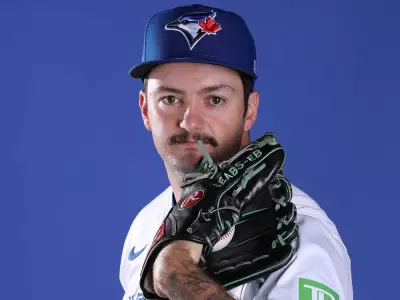
If you were to ask dating app user and content creator Terry Rhea about his sexual orientation, he would confidently identify as "heteroflexible." For those unfamiliar with the term, Rhea is eager to clarify its meaning. "To me, heteroflexible means that under the right circumstances — the right place, time, person and environment — I would potentially have fun with someone of the same sex," Rhea explained in a recent interview.
He emphasizes that sex should be an enjoyable, intimate, and connecting experience. "As long as everyone has been tested, boundaries are established, and all parties are consenting adults, I see no issue with that," Rhea stated. The "mostly straight" messaging of "heteroflexible" resonates with him in a way that "bisexual" does not.
Defining the Distinction
"Bisexual, to me, means you are romantically attracted to and would date or marry either sex," Rhea elaborated. "Heteroflexible means you are primarily attracted to the opposite sex, but under the right conditions, you'd be open to same-sex experiences — for me, it's strictly for fun, nothing more."

Rhea is far from alone in embracing this label. Feeld, a dating app that markets itself to open-minded individuals, recently released its annual data analysis, revealing that "heteroflexible" is the fastest-growing sexuality on the platform. The number of users selecting this identifier skyrocketed by an astonishing 193% over the past year.
Rhea expressed no surprise at this trend. "We have more nuanced terminology to describe the full spectrum of sexual identity these days," he observed. "People aren't forcing themselves into boxes that don't quite work anymore."
Expert Perspectives on a Fluid Identity
But how does "heteroflexible" differ from established terms like bi-curious, bisexual, or pansexual? And is there an element of queerbaiting in aligning with heterosexuality while hinting at queerness, as some critics suggest? Experts provide valuable insights.
Jesse Kahn, director and sex therapist at the Gender & Sexuality Therapy Center in New York, explained that for some individuals, heteroflexible feels like a genuine orientation, while for others it serves as a descriptive label for behavior or curiosity. "Experiences like this have always existed, and the language continues to evolve as people look for words that feel accurate and affirming," Kahn noted. "The word reflects a broader shift toward understanding sexuality as fluid, contextual, and not always fixed or binary."
The term "heteroflexible" first gained popularity in the early 2000s on U.S. college campuses and in online forums, coinciding with what some recall as the "I kissed a girl, and I liked it" era. Its counterpart, "homoflexible," describes individuals who are mostly gay but open to opposite-sex experiences under specific circumstances.
Contrasting with Established Orientations
Alexandra Askenazi Marcus, a therapist and clinical supervisor at the same center, highlighted key distinctions. "Bisexuality and pansexuality are more established sexual orientations that involve consistent attraction to more than one gender, with pansexuality emphasizing attraction regardless of gender," she clarified.
"Heteroflexibility differs in that it often maintains heterosexuality as the primary identity while allowing for exceptions," Marcus added. "It's less about identity."
Jaunté Marquel Reynolds-Villarreal, another therapist and clinical supervisor at the Gender & Sexuality Therapy Center, attributed the label's growing acceptance to evolving societal attitudes. "Younger generations have been more open to viewing sexuality and sexual orientation as a spectrum," Reynolds-Villarreal said. "In the past, we tended to use labels as very restrictive constructs, binding people into specific interests or attractions that just don't really hold true today."
Criticism and Societal Context
However, the label is not without its critics, particularly within the queer community. Some question why individuals would choose a term that centers heterosexuality when describing queer experiences. Given the current hostile political climate facing LGBTQ people, sex therapists note that there is undeniable safety in being "straight adjacent."

Mary Hellstrom, a therapist and clinical supervisor at The Expansive Group in Honolulu, Hawaii, suggested that for some, heteroflexible may function similarly to the 1990s term "bi-curious." She poetically described it as "like a beautiful stepping stone along the path, or a set of water wings as one begins wading into the deep waters of queer sexuality for the first time."
Hellstrom offered a vivid analogy: If bisexual, pansexual, or queer identities are like permanent houses with walls and windows, heteroflexibility operates more like a pop-up camper. "It's available for use when needed and easily packed away in storage when it isn't," she explained. "Pop-up campers are wonderful inventions, perfect for those spontaneous, off-road weekend adventures, but they differ from a house and require much less effort to create and sustain."
Gender Dynamics and Privilege
An interesting demographic trend has emerged: most users identifying as heteroflexible on Feeld tend to be cisgender men. This has sparked discussions about privilege and masculinity. "The most obvious difference between pansexual, queer or bisexual and heteroflexible is that those other identities are all subject to marginalization and a lack of safety within our patriarchal systems," Hellstrom pointed out.
Rhea acknowledges these concerns. "Because of how patriarchy functions, straight men who also experience any inkling of a homosexual thought or feeling often experience this as deeply threatening to their sense of self and masculinity," he said. "The system is designed to evoke this feeling."
Despite the criticism, Rhea maintains that the distinctions between these terms are meaningful and valid. "To me, bisexual is the umbrella term. Heteroflexible and homoflexible are subsets within it," he proposed. "Heteroflexible means you primarily date and partner with the opposite sex but are occasionally open to same-sex play. Bisexual, in my view, sits in the middle: open to dating, partnering with, or marrying either sex. These aren't the same thing, and the distinctions matter."
For Rhea, identifying as heteroflexible is an ethical choice that ensures transparency in his dating life. He doesn't want to mislead potential male partners about his openness to relationships. "I'm glad that Feeld offers heteroflexible as an option," he concluded. "We've been placed into a worn-out box of compulsory heterosexuality. It's refreshing to see that people are experimenting with little pushes against its walls."