Monaco Symposium Positions Sustainability as Central to Yachting's Future
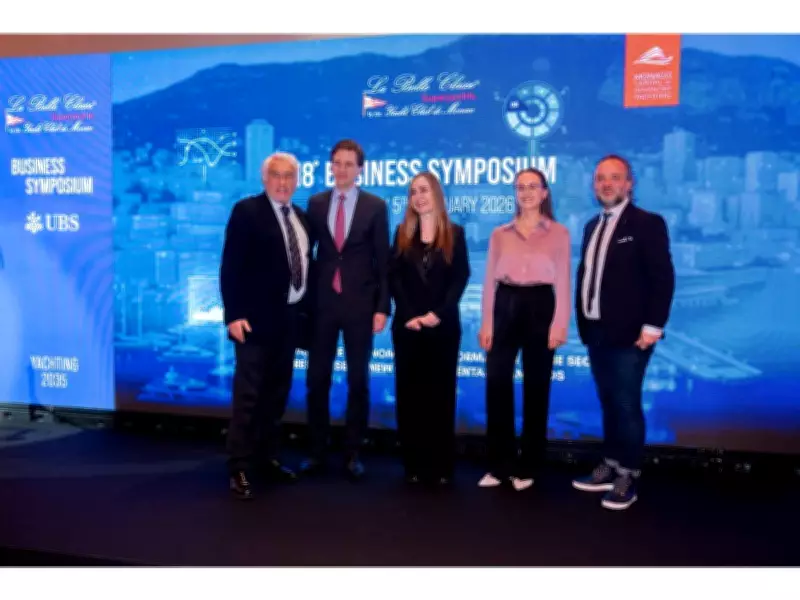
The 18th Economic Symposium - La Belle Classe Superyachts, hosted by the prestigious Yacht Club de Monaco, has emerged as a pivotal platform where the luxury yachting industry confronts its environmental responsibilities while navigating economic transitions. This annual gathering, which brings together yacht owners, shipyard representatives, designers, financial institutions, and international media, framed 2035 not as a distant target but as an immediate consideration influencing current industrial, financial, and design decisions across the sector.
Decarbonization: The Industry's Defining Challenge
Bernard d'Alessandri, Managing Director and General Secretary of the Yacht Club de Monaco, emphasized that "the main challenge remains decarbonization" for the global yachting community. He articulated a fundamental shift in perspective, noting that utilizing ocean spaces now demands "a cultural shift even before a technological one." D'Alessandri stressed the importance of maritime respect, stating, "Every time we go to sea, we enter a world that is not ours. We must do so with the greatest possible respect."
Monaco itself aims to position as a neutral platform for dialogue and experimentation within this transition. "Monaco cannot lead this transition, but it can offer a neutral platform to present solutions," d'Alessandri explained, highlighting how the Principality fosters a unique ecosystem for networking and sustainable development initiatives.

Economic Resilience Meets Environmental Transformation
From an economic standpoint, the yachting sector demonstrates remarkable structural robustness. The industry generates an estimated global economic impact of €54 billion, with Europe accounting for approximately 80% of worldwide production. Francesca Webster, Chief Editor of SuperYacht Times, described a market that has regained momentum and stability following early 2025 uncertainties. "We closed 2025 stronger than the previous year, and our forecasts for 2026 are very solid," she noted, referencing a stabilization phase after post-pandemic peaks.
Current industry metrics reveal:
- More than 6,200 yachts over 30 metres currently in operation worldwide
- A healthy order book confirming sector resilience despite economic headwinds
- Decision-making timelines extending as projects grow more complex
- Sustainability factors directly influencing asset values and market access
Webster observed that "owners, especially younger ones, are increasingly aware" of environmental considerations, noting that "more sustainable yachts will be able to access more areas in the future, and this has a direct impact on value."
Refit Emerges as Strategic Sustainability Lever
The symposium highlighted refit operations as a crucial component of the industry's sustainable transformation. With an estimated economic impact of €5.6 billion independently, refit services are positioned to become primary strategic levers for environmental progress. Given that more than 10,000 yachts over 24 metres already comprise the global fleet, adapting existing vessels represents a critical pathway toward reduced environmental impact.
"Solutions exist, but they must be adapted to boats that are already built," d'Alessandri reminded participants, identifying fleet modernization as the true testing ground for the industry's environmental transition.
Environmental Performance as Economic Indicator
Nathalie Hilmi, an expert in macroeconomics, international finance, and sustainable development, elaborated on emerging environmental regulations targeting 2035. She emphasized how environmental performance is progressively evolving into a comprehensive economic indicator capable of influencing investment decisions and operator competitiveness. Within this framework, costs associated with retrofit operations, alternative fuels, and new technologies transform from burdens into potential competitive advantages for forward-thinking industry participants.
Macroeconomic Forces Reshaping Luxury Maritime
Maximilian Kunkel, Chief Investment Officer at UBS, contextualized yachting within five major long-term forces:

- Demographic shifts
- Deglobalization trends
- Decarbonization imperatives
- Digital transformation
- Debt dynamics
"We are emerging from a period of significant geopolitical and economic uncertainty," Kunkel explained. "We are seeing signs of greater clarity, from the stabilization of tariff dynamics to fiscal stimulus measures in the United States." He positioned the green transition as "financially sustainable in the long term and, above all, necessary," while acknowledging that "in the short term it requires substantial investment and may generate inflationary pressures." Ultimately, Kunkel concluded that environmental transformation becomes "a factor of resilience and value creation" over extended timelines.
For private finance sectors, Environmental, Social, and Governance (ESG) criteria are evolving beyond compliance requirements to become structural tools for capital allocation decisions. The Monaco symposium thus established sustainability not merely as an environmental consideration but as a fundamental economic driver reshaping the future of luxury yachting worldwide.