The Alberta government under Premier Danielle Smith has ignited constitutional debate by invoking the Charter of Rights and Freedoms' notwithstanding clause to shield three bills affecting transgender youth from judicial challenges.
Constitutional Clash Over Charter Interpretation
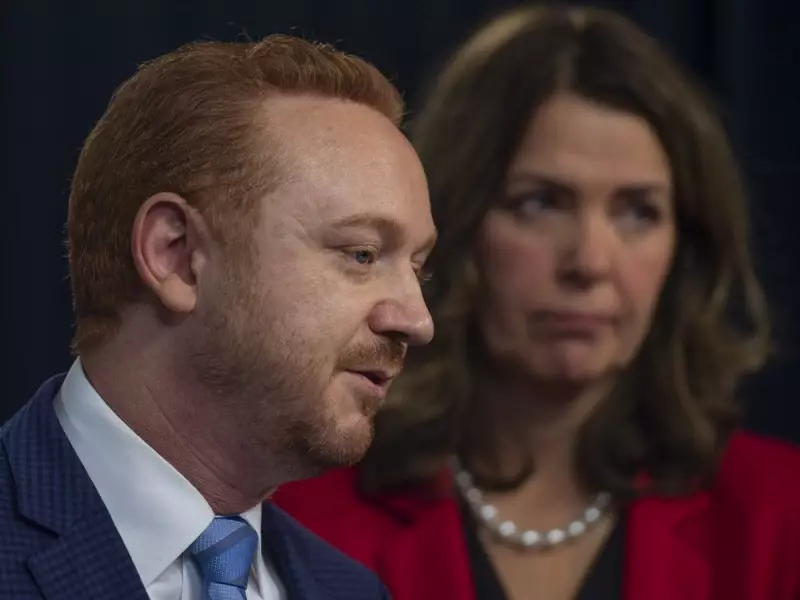
On Monday, November 17, 2025, Justice Minister Mickey Amery and Premier Smith introduced Bill 9, legislation that employs Section 33 of the Charter to prevent courts from overturning measures concerning children, families, and women in sports. The move has drawn criticism from constitutional experts who claim the clause was never intended to limit Charter rights.
Contrary to these claims, historical evidence confirms the notwithstanding clause was specifically designed to allow Parliament or provincial legislatures to override certain Charter rights when elected officials deemed necessary. This constitutional tool emerged as a crucial compromise during 1981 negotiations over Canada's constitutional repatriation.

The Historical Compromise That Created Section 33
Prime Minister Pierre Trudeau's insistence on judicial review powers during constitutional talks nearly derailed the entire Charter project. Six provincial premiers demanded a counterbalance that would preserve the supremacy of elected representatives over unelected judges.
The opposing coalition included Alberta's Peter Lougheed, Manitoba's Sterling Lyon, and Saskatchewan's Allan Blakeney - representing both Conservative and New Democratic parties. Their persistence led to the creation of Section 33, which explicitly states that Parliament or provincial legislatures may declare that legislation operates "notwithstanding" certain Charter provisions.
Without this compromise, the Charter might never have been adopted, as six provinces would have rejected the entire document.
Alberta's Expanding Use of Constitutional Power
Alberta has recently employed the notwithstanding clause twice within a short timeframe. The Smith government first invoked Section 33 in legislation compelling teachers back to work. The current usage protects three specific measures affecting transgender youth:
- Requiring schools to inform parents if their child changes name or gender identity at school
- Preventing transgender women from competing in women's sports
- Prohibiting puberty blockers and other gender-affirming medical treatments for children under 16
Research by Geoffrey Sigalet of the University of British Columbia and Dave Snow of the University of Guelph suggests why provincial governments are increasingly turning to Section 33. Their findings indicate a growing willingness among provinces to assert legislative authority in areas traditionally dominated by judicial interpretation.
The debate over Alberta's actions reflects broader constitutional questions about the balance between elected representation and judicial oversight in Canadian democracy.