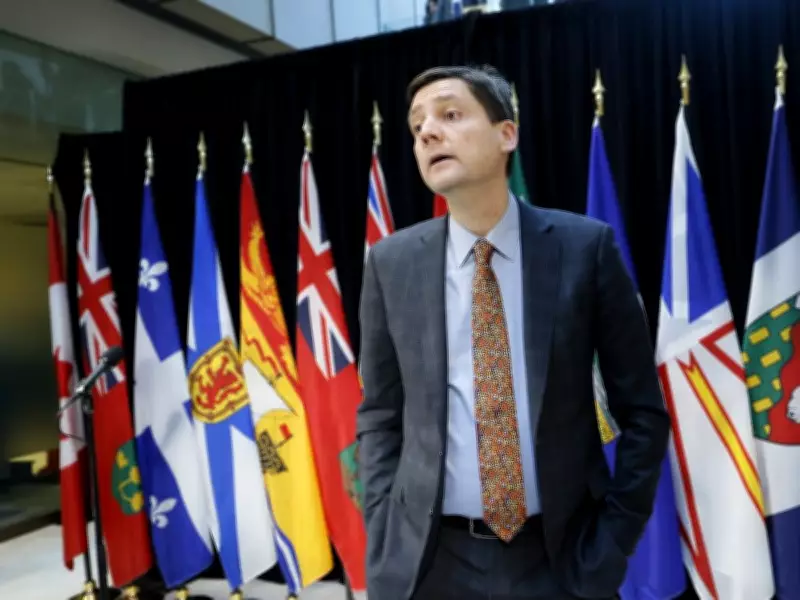
In British Columbia, the NDP government led by Premier David Eby finds itself paralyzed by its own policies. Unable to reverse its decision to embed the United Nations Declaration on the Rights of Indigenous Peoples (UNDRIP) into provincial law, the province has effectively handed First Nations a veto over development on any claimed territory. This situation has far-reaching consequences that extend well beyond British Columbia's borders.
Expert Warning on Co-Governance
Retired Aboriginal law expert Geoffrey Moyse observes, "You have a First Nations advocacy organization co-governing a province." He points to a clear example: "We saw it pretty clearly yesterday when the First Nations Leadership Council told Eby what was going to happen. They told him he couldn't legislate, couldn't change legislation, without their consent." This dynamic raises serious questions about the balance of power in provincial decision-making.
Conflicting Realities at the UN
At the United Nations Permanent Forum on Indigenous Issues, Governor General Mary Simon delivered a keynote address celebrating the 20th anniversary of UNDRIP. However, Assembly of First Nations National Chief Cindy Woodhouse Nepinak sharply criticized the B.C. NDP government for attempting to amend or suspend parts of the Declaration on the Rights of Indigenous Peoples Act (DRIPA). She called these moves "regressive" and "shameful," urging the UN to condemn them. Meanwhile, Amnesty International accused Canada of backsliding on Indigenous rights, claiming new laws to fast-track nation-building projects threaten self-determination.

The cognitive dissonance is striking, presenting two competing versions of reality. On one hand, there is celebration of Indigenous rights; on the other, criticism of efforts to modify those rights for practical governance.
Implications for National Projects
In Alberta, talks on an energy memorandum of understanding with Ottawa are stalled over who pays to decarbonize oil. Yet many experts expect that First Nations' demands will dwarf the carbon issue. If Prime Minister Mark Carney's ambitious nation-building plans are to succeed, Canada must clarify the meaning of Section 35 of the Constitution. This clause imposes a duty to consult and accommodate Indigenous groups when their treaty or Aboriginal rights may be affected. Experts argue that Canada must decisively back away from Justin Trudeau's unconditional embrace of UNDRIP.
Canada's Unique Constitutional Situation
Canada is unique in being the only country that constitutionally affirmed Aboriginal and treaty rights in Section 35. Geoffrey Moyse notes, "And yet we think we should have UNDRIP on top of that." To his knowledge, the only other nation that has effectively given First Nations a veto through UNDRIP is Bolivia. This creates a double whammy for development projects.
Geoffrey, who lives on Vancouver Island, spent 31 years in the B.C. Attorney General's office advising six different administrations. Now retired, he focuses on educating the 98 per cent of British Columbians who are non-Indigenous about their rights. Reflecting on his legal education at the University of Victoria, he recalls, "I went to UVic before it was usurped by the wokesters." Graduating in 1989, his training was steeped in Charter rights. He adds, "Nobody knew what they were playing with when they put Section 35 in the Constitution. And to be fair to those who were in the room, they had no idea what the Supreme Court of Canada was going to do with that provision — in effect turning themselves into a government and deciding public policy on reconciliation from the Supreme Court building in Ottawa."
The consequences of this law will reach far beyond British Columbia, potentially stalling major infrastructure and energy projects across the country. As Canada grapples with reconciliation and development, the tension between Indigenous rights and nation-building remains a critical challenge.