Canada's Selective Historical Memory: A Tale of Two Figures
Canada maintains a dual standard in how historical figures are remembered and commemorated, creating a clear distinction between Indigenous and colonial figures. This two-tier approach to historical interpretation reveals significant inconsistencies in how the nation confronts its complex past.
The Honored Indigenous Leader: Joseph Brant
Joseph Brant, the renowned Mohawk leader and statesman who lived from 1742 to 1807, remains widely celebrated across Canada. During the American Revolutionary War, Brant served as a British ally fighting for the Crown in North America. The British commissioned him as a captain, and he traveled to England to meet with King George III to advocate for Mohawk interests.
Following the war, Brant led Mohawk Loyalists and other Indigenous peoples to a tract of land on the Grand River in southwest Ontario. This territory was granted to the Six Nations as compensation for their losses during the conflict.

Today, Brant's legacy is prominently displayed throughout Ontario. A magnificent three-meter-high statue weighing 2,000 kilograms stands in Brantford, the city named in his honor. This impressive monument, crafted from bronze melted down from cannons used in the Battle of Waterloo and Crimean War, was unveiled in an elaborate ceremony in 1886 with Lieutenant-Governor John Beverley Robinson presiding.
Additional commemorations include another statue in Ottawa, a distinguished portrait in the National Gallery of Canada, schools bearing his name, Joseph Brant Hospital, and Joseph Brant Museum in Burlington, Ontario. Despite historical records indicating Brant owned slaves, no significant movement has emerged to deface or remove his statues.
The Toppled Education Pioneer: Egerton Ryerson
In stark contrast stands Egerton Ryerson, who lived from 1803 to 1882 and has been referred to as the "father of public education" in Ontario. For 74 years, his name adorned Ryerson University in Toronto, and his statue, funded by public donations, was unveiled in 1889.
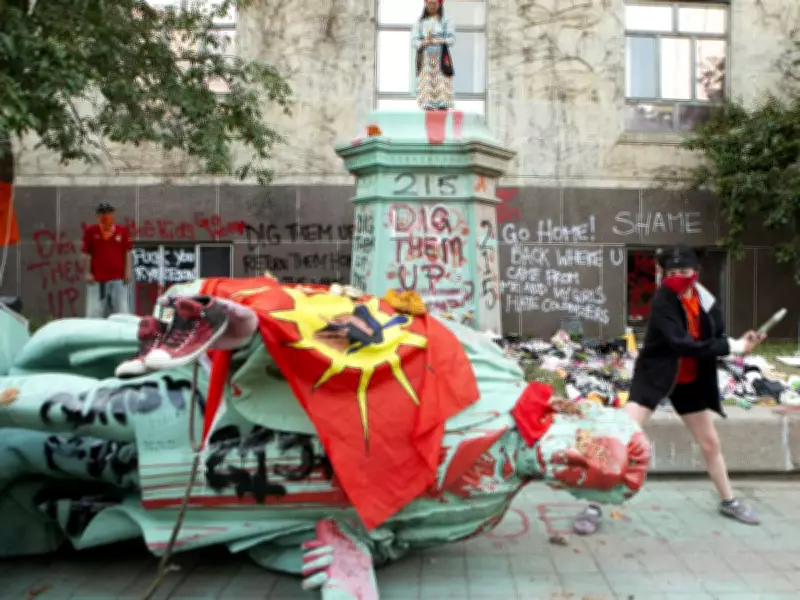
The turning point came following the Tk'emlúps te Secwépemc First Nation's announcement on May 27, 2021, regarding 215 potential unmarked graves detected by ground-penetrating radar outside the former Indian Residential School in Kamloops, British Columbia. It's important to note these findings remain unconfirmed, as no human remains have been exhumed or identified.
In the aftermath, Ryerson's statue was vandalized and decapitated using torches, pry bars, hammers, and angle grinders. Media coverage frequently suggested Ryerson was "one of the main architects of Canada's residential school system," a characterization that requires closer examination of the historical facts.
Examining the Historical Record
In 1847, Ryerson, recognized as an education expert, was asked for his thoughts on establishing training schools for Indigenous youth. His response focused on voluntary schools where Indigenous people could learn agricultural skills and how to use farming tools and equipment.
This letter has been taken out of context by activists determined to connect Ryerson directly to the residential school system. The Standing Strong Task Force at Ryerson University, in its August 2021 report, made several claims that media outlets widely reported as fact.
The report stated that Ryerson's 1847 letter represented "his most explicit contribution to Indigenous educational programs" and that it "buttressed efforts to use schooling to Christianize and assimilate Indigenous People." It further claimed the document "continued to be influential in the later development of Canada's residential school system" and was cited by the Department of Indian Affairs in 1898.
However, Ryerson had no direct involvement with residential schools, which began operating decades after his death. The selective interpretation of his limited contribution to Indigenous education discussions stands in sharp contrast to the unquestioned celebration of Joseph Brant, despite his documented history as a slaveowner.

This disparity raises important questions about Canada's approach to historical memory and whether the nation applies consistent standards when evaluating figures from different cultural backgrounds. The contrasting treatment of these two historical personalities reveals a complex and often contradictory relationship with Canada's past.