Legal Scholar Warns Trump's Election Nationalization Plan Would Face Immediate Court Challenges
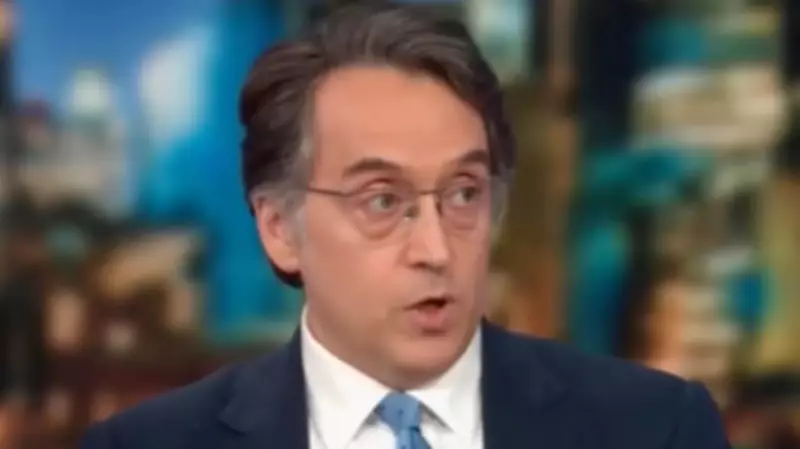
New York University law professor Ryan Goodman delivered a stark warning on CNN Thursday, asserting that President Donald Trump "can't legally" nationalize elections through executive action. The former Defense Department special counsel suggested that individuals involved in such efforts might already have committed serious crimes under federal conspiracy statutes.
Executive Order Draft Targets China as Pretext
Goodman's comments came in response to a Washington Post report revealing that MAGA activists had drafted an executive order accusing China of interfering in the 2020 elections. According to the report, this accusation would serve as a pretext for declaring a national emergency ahead of the 2026 midterm elections.
"He can't legally do it, so I don't think this survives first contact with the courts," Goodman stated during his appearance on Erin Burnett's "OutFront" program. "If [Trump] passes this kind of executive order, I imagine within hours there will be people who have already developed their litigation strategy to counter it."

Missing Russia Reference Raises Questions
Burnett noted a significant omission in the draft order: despite bipartisan Senate Intelligence Committee findings confirming Russian interference in the 2016 election that Trump won, the document makes no mention of Russia while focusing exclusively on China.
"Not saying that China would or wouldn't do it, but I just am making the point here that bipartisan Congress acknowledged that Russia did interfere, and they're not mentioning that," Burnett observed. "So ... the premise, right, is off to begin with."
Previous Executive Order Already Failing in Courts
Goodman pointed to recent history as evidence that such presidential overreach would fail judicial scrutiny. He referenced an executive order from mid-2023 that attempted to impose voting restrictions, including requiring proof of U.S. citizenship and prohibiting states from counting mail-in ballots arriving after Election Day.
"That order was then contested in court and so far has lost," Goodman explained. "He is now appealing it, but it's losing on the same idea that there's no presidential control over state and local elections."
Criminal Exposure for Participants
The legal expert expressed particular concern about potential criminal liability for those involved in drafting or promoting the election nationalization scheme.
"It's madcap in a certain sense of how extraordinary the idea is," Goodman told Burnett. "And I think people that are involved in this machination might need to worry about their own criminal exposure."
Goodman specifically cited 18 U.S.C. § 241, a federal statute prohibiting conspiracies to deprive people of their rights, including "the right to exercise one's vote."
Trump's Public Statements on Election Control
The legal discussion follows Trump's recent public statements advocating for Republican control of voting processes. Earlier this month, Trump declared that "Republicans ought to nationalize the voting," and during his State of the Union address Tuesday, he claimed Democrats "want to cheat" in upcoming elections while vowing to "stop it."
The Washington Post analysis warned that declaring a national emergency under the guise of protecting elections from foreign interference would grant Trump "extraordinary" new powers over the voting process. Goodman characterized such a move as "election interference on steroids."
Despite the draft order's existence and Trump's public statements, Goodman remained optimistic that the judicial system would ultimately block any attempt to nationalize elections through executive action, just as it has thwarted previous attempts to expand presidential authority over state-run election processes.