Quebec Government Argues No Limits on Notwithstanding Clause at Supreme Court
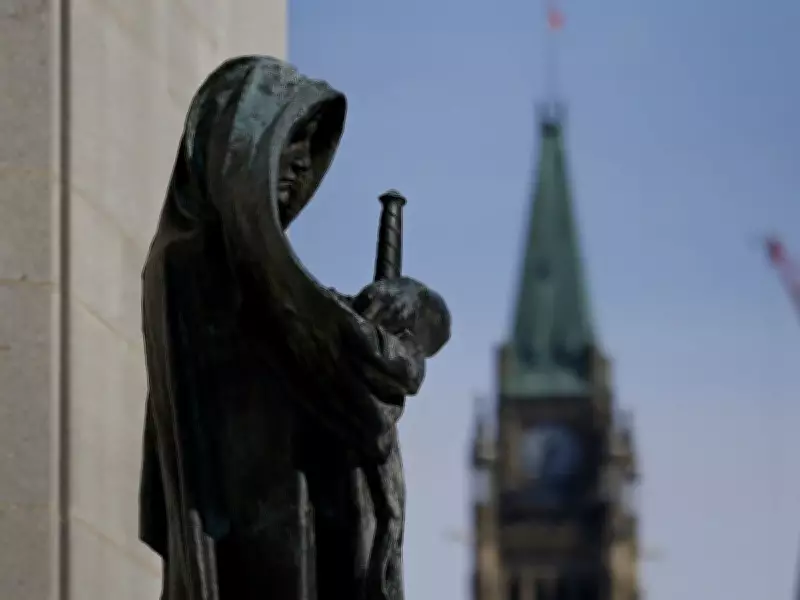
In a landmark case before Canada's highest judicial body, the Quebec government has asserted that there should be no new restrictions imposed on the use of the notwithstanding clause, even if a potential "tyrant" might one day exploit this constitutional provision to violate fundamental rights. This argument emerged during hearings at the Supreme Court of Canada in Ottawa, where Quebec's controversial secularism law, commonly referred to as Bill 21, is being challenged.
Defending Provincial Powers
Representing Quebec's attorney general, lawyer Isabelle Brunet addressed the court in French on Tuesday, stating emphatically that it is not the judiciary's role to decide political questions that are not justiciable. On the second day of a four-day hearing, proponents of Bill 21 maintained that invoking the notwithstanding clause is entirely within a province's rights and should not be subject to judicial review.
"We must have confidence in our democracy," Brunet told the court, responding to concerns raised by Chief Justice Richard Wagner about hypothetical scenarios where a tyrant could use section 33 to trample on basic freedoms. "We must also presume that the government will govern itself according to the public good; we cannot assume the contrary."

Background on Bill 21 and the Notwithstanding Clause
Bill 21, passed in 2019 under Premier François Legault's government, prohibits certain public sector workers—including judges, police officers, teachers, and prison guards—from wearing religious symbols while on duty and requires them to perform their duties with their faces uncovered. To enact this flagship legislation, Legault invoked section 33 of the Charter of Rights and Freedoms, known as the notwithstanding clause.
This constitutional provision allows governments to override specific Charter rights for periods of up to five years, after which the use of the power must be re-evaluated. Brunet argued that the clause can be invoked pre-emptively to prevent any Charter challenge of a law, and there is no limit to how many times it can be renewed for additional five-year terms. "There is nothing that prevents that in the text of the Constitution," she emphasized to the justices.
Broader Implications of the Case
Although the immediate focus is on Bill 21, the case raises fundamental questions about whether there should be limits to a province's power to invoke the notwithstanding clause. This clause was a cornerstone of the Charter that persuaded most provinces to sign the document in 1982. Opponents of Bill 21, along with the federal government, support imposing such limits, arguing that unchecked use could lead to abuses of power.
On the first day of hearings, six groups opposing Quebec's secularism law told the Supreme Court that it violates numerous Charter rights, including religious and language freedoms, multiculturalism, and gender equality. One group warned that without judicial reinterpretation, the clause could enable a "mini-Trump" to legally enact policies similar to those seen in the United States within Canada.
Trust in Democratic Systems
Brunet's defense centered on trust in democratic institutions, asserting that the system itself provides adequate safeguards against misuse. She rejected the notion that courts should intervene in what she described as political matters, reinforcing Quebec's position that the notwithstanding clause remains a vital tool for provincial autonomy.
The outcome of this Supreme Court case could have far-reaching consequences for constitutional law across Canada, potentially reshaping how the notwithstanding clause is applied and interpreted in future legislative actions.