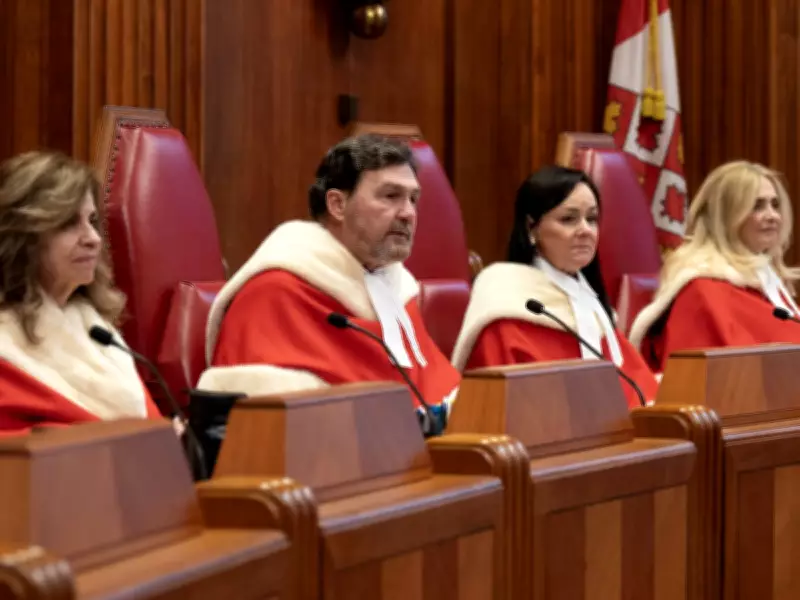
Supreme Court's Bill 21 Hearings Spark Concerns Over Judicial Overreach
The Supreme Court of Canada is currently conducting hearings on Quebec's Bill 21, the controversial laïcité legislation that prohibits public servants from wearing religious symbols while on duty. These proceedings have generated significant commentary and debate, with many observers questioning whether the court is venturing into territory that could fundamentally alter Canada's constitutional framework.
A Judicial Gathering That Resembles Parliamentary Proceedings
What makes these hearings particularly noteworthy is their unprecedented scale and scope. The court has allowed an extraordinary 51 interveners to participate in the proceedings, including human rights organizations, legal associations, religious groups, secularist organizations, think-tanks, and five provincial governments. This extensive participation has transformed what should be a focused legal examination into something resembling a parliamentary committee hearing.
As legal commentator Jamie Sarkonak noted, this approach seems at odds with the Supreme Court's traditional role as an apex appellate court. The court's primary function is to provide final rulings on points of law, not to conduct comprehensive fact-finding missions or gather evidence that should properly belong to lower courts. The week-long proceedings with numerous interveners raise questions about whether the court is overstepping its constitutional boundaries.

The Notwithstanding Clause at the Center of Controversy
The core issue before the court involves the potential reinterpretation of the Charter of Rights' notwithstanding clause. The federal government has presented arguments that would effectively grant the Supreme Court new powers to block certain uses of this constitutional provision. Specifically, the government proposes that the court should be able to prevent uses of the notwithstanding clause that might create what it terms "irreparable impairments" to suspended rights and freedoms.
This proposed expansion of judicial authority represents what some critics describe as a potential judicial coup d'état. The government's position suggests that courts should be empowered to issue "declarations of invalidity" on statutes employing the notwithstanding clause, even for explicitly electoral purposes. This argument rests on the premise that voters and their elected representatives may not always be capable of determining whether legislation respects Charter rights.
Constitutional Implications and Democratic Concerns
The implications of these proceedings extend far beyond Bill 21 itself. Critics argue that granting the Supreme Court these proposed powers would fundamentally alter Canada's constitutional balance. The notwithstanding clause was specifically designed as a legislative check on judicial power, allowing elected governments to temporarily override certain Charter rights in specific circumstances.
The current hearings have raised concerns about whether the court is effectively preparing to legislate in areas with profound social and political implications. With seven unelected judges considering input from numerous interest groups while ordinary citizens remain largely excluded from the process, some observers worry that the court is modeling a new form of governance that could undermine democratic accountability.
The outcome of these hearings could reshape the relationship between Canada's judiciary and its elected governments, potentially redefining the constitutional bargain that has governed the country for decades.