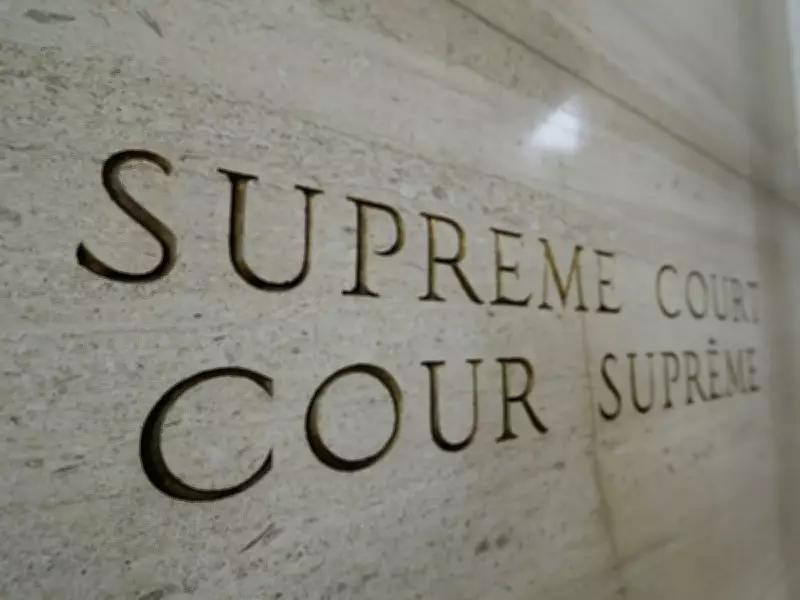
Constitutional Expert Warns Supreme Court May Invent Interpretations to Limit Section 33 Powers
In a provocative discussion on the Full Comment podcast, constitutional scholar Bruce Pardy has issued a stark warning about the Supreme Court of Canada's potential approach to Section 33 of the Charter of Rights and Freedoms. Pardy, a respected academic from Queen's University, suggests the court may creatively reinterpret constitutional provisions to undermine the notwithstanding clause's legislative authority.
The Notwithstanding Clause's Explicit Purpose
The notwithstanding clause, formally known as Section 33, was a crucial compromise that enabled the Charter's adoption in 1982. This constitutional provision explicitly grants federal and provincial legislatures the power to override certain court decisions regarding fundamental freedoms, legal rights, and equality rights for renewable five-year periods. "It doesn't matter that the notwithstanding clause explicitly gives legislatures the right to override certain court rulings, or that it was key to the Charter of Rights being passed in the first place," Pardy emphasized during his March 27, 2026, conversation with host Brian Lilley.
A Pattern of Judicial Interpretation
Pardy argues that the Supreme Court has established a concerning pattern over decades of constitutional interpretation. "The rule of Canadian constitutional decisions is that there are no rules," he stated bluntly. According to his analysis, justices have frequently:

- Invented novel constitutional interpretations beyond the text's plain meaning
- Developed Charter "values" that reflect progressive political perspectives
- Created legal frameworks that gradually constrain legislative authority
This judicial approach, Pardy suggests, aligns consistently with left-leaning political philosophies rather than strict textual interpretation. "For decades, justices have simply invented interpretations and dreamt up Charter 'values' that align with their left-wing politics," he told the podcast audience.
Constitutional Design and Judicial Power
The constitutional scholar further contends that Canada's constitutional framework inherently supports this judicial expansion of power. "And our Constitution is conveniently designed to keep that happening — forever," Pardy asserted, suggesting the system lacks effective checks on judicial interpretation once established.
Pardy's comments come amid ongoing debates about the federal government's potential efforts to limit Section 33's application. His central thesis challenges the assumption that the Supreme Court would respect the notwithstanding clause's explicit legislative override powers when they conflict with the court's constitutional vision.
"If you think the Supreme Court will be reluctant to rewrite the Constitution, as Ottawa wants it to by handcuffing Section 33, then you haven't been paying attention," Pardy warned listeners, suggesting the court might employ creative constitutional interpretation to achieve its preferred outcomes regardless of textual limitations.
The discussion highlights fundamental tensions in Canadian constitutional law between:
- Explicit textual provisions like Section 33
- Evolving judicial interpretation of constitutional principles
- The balance between legislative and judicial authority
This constitutional debate has significant implications for federal-provincial relations, legislative autonomy, and the fundamental structure of Canadian governance as the Supreme Court potentially addresses new challenges to the notwithstanding clause's application and scope.