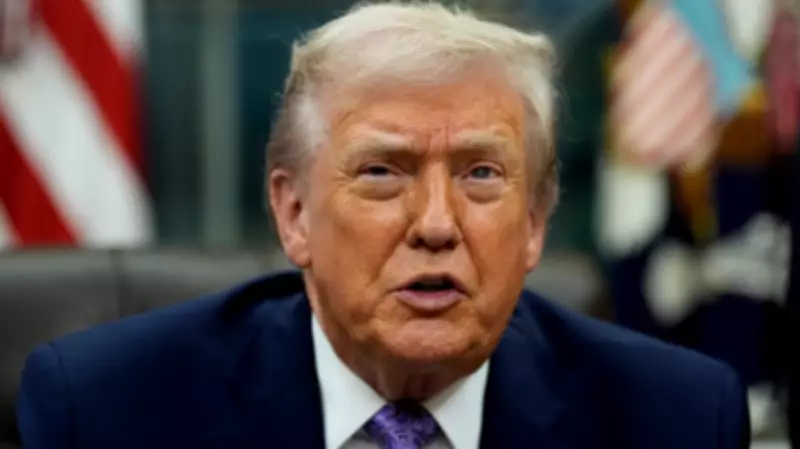
In a landmark decision reinforcing the constitutional separation of powers, the Supreme Court voted 6-3 on Friday to invalidate certain "emergency" tariffs imposed by former President Donald Trump on global trading partners. The ruling affirms that the authority to levy taxes rests with Congress, not the president, striking a blow against executive overreach in trade policy.
Court Rejects Presidential Tariff Authority Under IEEPA
The majority opinion, authored by Chief Justice John Roberts, centered on the interpretation of the International Emergency Economic Powers Act (IEEPA), a 1977 law. The court held that IEEPA does not grant the president the power to impose tariffs, based on a strict reading of its text. Roberts emphasized that the law's language cannot support the broad authority claimed by the Trump administration.
"Based on two words separated by 16 others in Section 1702(a)(1)(B) of IEEPA — 'regulate' and 'importation' — the President asserts the independent power to impose tariffs on imports from any country, of any product, at any rate, for any amount of time. Those words cannot bear such weight," Roberts wrote, highlighting the judicial skepticism that emerged during oral arguments in November.

Oral Arguments Revealed Deep Skepticism
During the November 5 hearing, justices intensely questioned Solicitor General John Sauer about Trump's use of IEEPA to impose tariffs uniformly without congressional oversight. Their probing foreshadowed Friday's ruling, which remanded the case with instructions to dismiss it for lack of jurisdiction, effectively nullifying the tariffs' legal foundation.
Refunds Loom for Trump Administration
The Supreme Court's decision opens the door to potentially costly refunds for the Trump administration, a prospect it has sought to avoid since summer. In August, a U.S. appeals court ruled that most of Trump's "reciprocal" tariffs were illegal but paused the refund process pending the high court's review. With this ruling, that pause is lifted, putting refunds on the table for affected parties.
For the small-business owners who initiated the lawsuit, refunds are a direct outcome of this legal victory. However, the broader implications for U.S. small businesses and international trading partners remain uncertain. While this ruling curtails one avenue for presidential tariff imposition, other statutes still allow tariffs, but they come with stricter congressional oversight and require proof of foreign discrimination against American trade.
Broader Implications for Trade Policy
This ruling underscores the limits of executive power in trade matters, reinforcing that tariffs must align with congressional intent. It sets a precedent that could influence future administrations, ensuring that emergency powers are not misused to bypass legislative checks. The decision also highlights ongoing tensions between presidential authority and congressional prerogatives in shaping U.S. economic policy.
As this story develops, stakeholders will closely monitor how the refund process unfolds and what alternative legal strategies might emerge. The Supreme Court's firm stance on separation of powers marks a significant moment in the intersection of law, trade, and governance.