Supreme Court to Hear Quebec's Appeal on Delayed Electoral Map Redrawing
The Supreme Court of Canada has agreed to hear an appeal by the Quebec government concerning a controversial law that postponed the redrawing of the province's electoral map. This decision follows a ruling by Quebec's Court of Appeal, which struck down the delay as unconstitutional, citing it significantly diluted voting power in certain regions.
Background of the Electoral Map Controversy
In December, Quebec's Court of Appeal declared that the delay, which was unanimously approved by all parties in the National Assembly, violated constitutional principles. The court found that the move "significantly diluted" the votes of residents in the Centre-du-Québec and Laurentides regions, characterizing it as an "effort to circumvent the independent process" outlined in the Election Act.
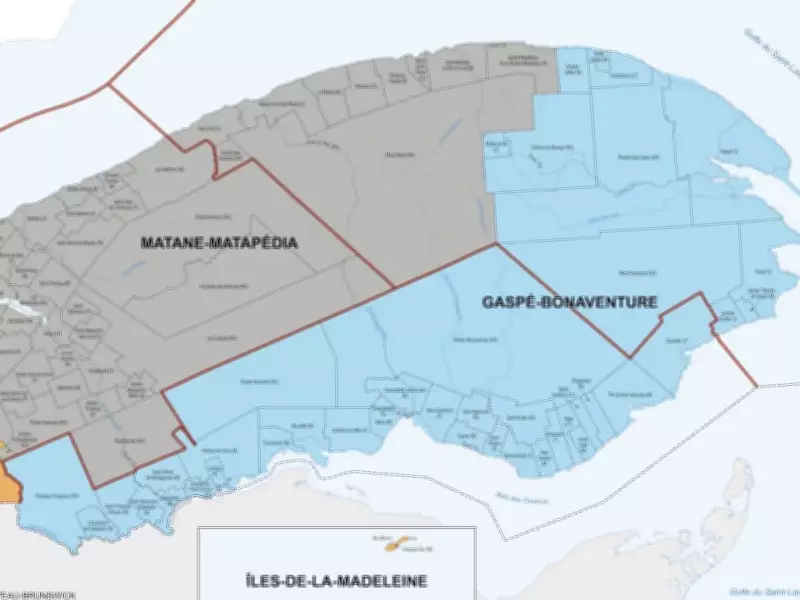
Typically, the Commission de la représentation électorale undertakes a redrawing of electoral boundaries after every second general election to reflect population changes. However, the legislature voted to delay the most recent redrawing until after the upcoming election in October. This decision was motivated by a proposal to eliminate a riding in the Gaspé region, which would have reduced the area's political representation to just two MNAs, thereby diminishing its influence. Additionally, another riding in eastern Montreal was slated for elimination due to shifting demographics.

Legal Challenges and Supreme Court Intervention
The delay sparked a legal challenge from the Conseil des préfets et des élus de la région des Laurentides (CPERL). Initially, Quebec Superior Court sided with the government, but this was overturned by the appeal court. On Friday, the Supreme Court agreed to expedite the application for appeal and accepted to hear the case, highlighting the urgency and national significance of the matter.
Last month, the electoral commission reaffirmed its plan to proceed with the redrawing in its final report to the National Assembly. However, the legislature must still approve the new map before it can be implemented in the general election, adding another layer of complexity to the ongoing dispute.
Implications for Quebec's Political Landscape
This case raises critical questions about electoral fairness and the balance of power in Quebec. The Supreme Court's involvement underscores the constitutional dimensions of the issue, as it examines whether the delay infringes on democratic principles by manipulating electoral boundaries for political gain. The outcome could set a precedent for how electoral maps are managed across Canada, impacting future redistricting efforts and ensuring that representation remains equitable.
As the legal proceedings unfold, stakeholders from various regions will be closely watching, as the decision could reshape political dynamics in Quebec, particularly in rural areas like Gaspé and urban centers like Montreal. The Supreme Court's ruling will ultimately determine whether the delay stands or if the electoral map must be redrawn promptly to uphold constitutional standards.